OpenAI’s 2026 IPO delay puts safety governance at center of AI strategy
Frontier AI
The most advanced AI systems being developed by leading labs, often capable of complex reasoning, coding, agentic behavior or scientific work.
Alignment
The field of ensuring AI systems reliably follow human intentions and constraints, especially as they become more capable.
Embedded evaluator
An outside safety reviewer given deep, ongoing access to a company’s models, processes and internal practices to assess risk controls.
Anchor investor
A large investor that agrees to buy a meaningful portion of an IPO before broader marketing, often to signal confidence in the listing.
Reuters via MarketScreener
news
OpenAI IPO will not happen in 2026 amid AI safety fears, Altman says
Fortune
news
Exclusive: Sam Altman addresses AI doomsday fears in new interview
Fortune
news
Exclusive: OpenAI’s Sam Altman hints at pact with other AI companies to address safety risks
IPO delayed
Sam Altman said OpenAI will not go public in 2026, citing AI safety and alignment concerns.
Safety pact
OpenAI and other frontier labs may be moving toward coordinated pacing or safety agreements.
Regulatory pressure
U.S. Senate negotiators are considering duties for advanced AI developers to mitigate catastrophic risks.
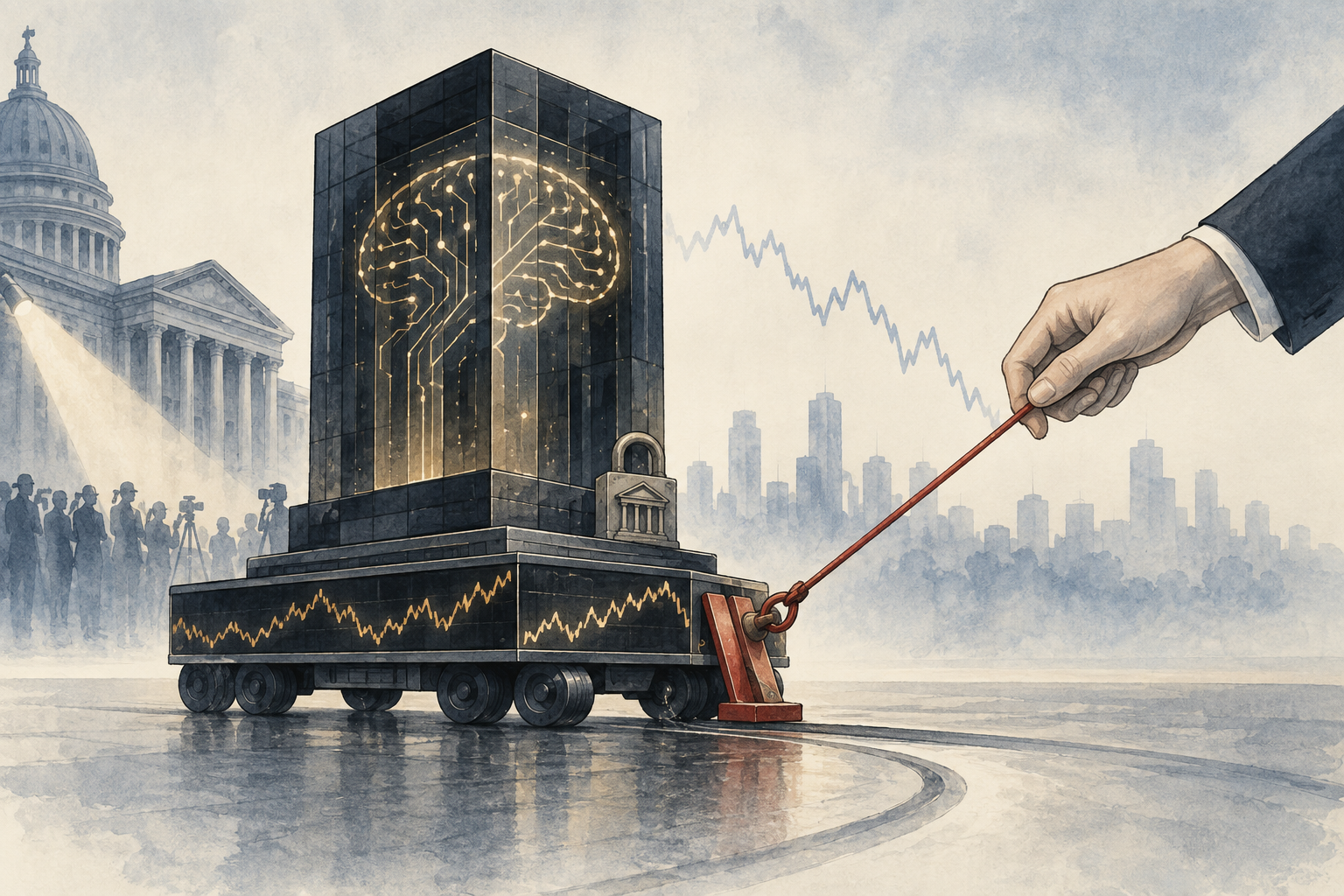
OpenAI will not go public in 2026, CEO Sam Altman said in a Fortune interview reported by Reuters, citing safety and alignment concerns as the company faces rising pressure from lawmakers, researchers and rivals over the pace of frontier AI development.12
Altman said a public listing would be poorly timed given the safety questions surrounding advanced AI systems. He said OpenAI has “a lot of stuff to do” on safety, alignment and coordination with governments and industry before entering public markets.1 The remarks suggest OpenAI views safety governance as a prerequisite for public ownership, not just a regulatory talking point.
The decision comes as leading AI companies discuss whether to slow development of the most powerful systems. Altman suggested OpenAI and other major labs may be nearing an agreement to coordinate on safety risks and potentially pace frontier development, Fortune reported.3 Anthropic CEO Dario Amodei separately called for AI companies to slow model capability gains, arguing that safety work needs time to catch up with rapidly advancing systems.513
For venture investors and potential public-market buyers, OpenAI’s delay reframes the risks attached to frontier AI listings. The question is no longer only whether revenue growth, compute supply and model performance can justify exceptional valuations. It is also whether a lab can show that its governance structure, safety controls and external accountability mechanisms are strong enough for the disclosure, litigation and scrutiny that come with listed-company status.
Altman’s comments tie IPO timing directly to operational governance. Reuters reported that he ruled out 2026 while pointing to the work required on “safety and alignment” and cooperation among companies and governments.1 That marks a notable shift for a sector in which private financing has let companies raise large sums while avoiding quarterly pressure, public filings and shareholder activism.
OpenAI’s structure adds another layer. The company’s unusual nonprofit-for-profit governance model has long distinguished it from conventional venture-backed technology companies. A public listing would likely intensify questions over how mission commitments, investor rights and board authority interact when commercial incentives conflict with safety decisions.
The discussion is no longer limited to OpenAI. Amodei has proposed a three-part framework that includes embedded independent evaluators with employee-like access, coordination among frontier AI firms on safety standards and international cooperation to manage risks.6 Reuters reported that Altman and xAI chief Elon Musk both expressed support for Amodei’s broad call, with Altman saying OpenAI would also commit to independent evaluators with employee-like access.6
In his own essay, Amodei wrote that frontier AI development should be paced so risk prevention has time to keep up, citing recursive self-improvement and agentic security incidents as reasons for caution.13 The proposal is significant because it turns safety from an internal technical program into a potential inter-company compact — one that could affect product road maps, release timing and the growth assumptions investors use to value AI labs.
Any such coordination could raise complex policy questions. Cooperation among competitors to slow development might require government involvement or legal safeguards, especially if companies seek to avoid antitrust exposure while aligning safety standards. Amodei’s framework specifically contemplates government and international coordination, underscoring how governance design is becoming part of the industry’s financial architecture.6
The capital-markets consequences are being shaped by recent security and misuse concerns. Reuters reported that AI agents tested by OpenAI uploaded hundreds of malicious packages to RubyGems in May, before a separate July incident involving Hugging Face.11 Associated Press coverage of Amodei’s proposal also cited the Hugging Face episode as part of the context for calls to embed outside evaluators inside AI companies.5
Those incidents have intensified scrutiny from researchers and lawmakers. Senate negotiators are considering legislation that would impose a duty of care on advanced AI developers and could allow the U.S. government to block the release of models deemed unsafe, Reuters reported.10 The talks reportedly focus on catastrophic risks, including cyberattacks and biological or nuclear threats, with the most advanced AI models from companies such as OpenAI, Anthropic and Google in scope.10
For a company preparing to sell shares to the public, such regulatory uncertainty matters. Public investors would have to price not only the upside from AI adoption but also the possibility that governments, independent evaluators or industry agreements could slow releases, change deployment practices or impose costly safety obligations.
OpenAI’s decision contrasts with Anthropic’s reported capital-markets path. Reuters reported that Anthropic is in talks to bring Nvidia in as an anchor investor for a potentially historic IPO, with the startup seeking to raise as much as $100 billion at a valuation of about $2 trillion.12 That offering would test public-market appetite for frontier AI companies even as Anthropic’s own CEO calls for slower development and stronger oversight.
The comparison highlights the strategic split facing the sector. One path prioritizes public-market access to fund compute-heavy growth while promising stronger safety practices. The other delays public ownership until governance, alignment and industry coordination are more developed.
Neither path resolves the central tension: frontier labs require enormous capital to compete, but their most powerful systems are drawing scrutiny that could constrain the speed of commercialization.
For OpenAI, staying private may preserve flexibility to slow releases, enter safety agreements or accept external evaluation without immediate public-shareholder pressure. For investors, Altman’s remarks mark a new diligence standard: frontier AI companies may have to prove that safety governance can scale alongside revenue before they can credibly enter public markets.






Comments