Smurfit Westrock’s $420 Million CMPC Deal Points to Latin America Consolidation
Containerboard
Paperboard used to make corrugated boxes, typically including linerboard and medium.
Corrugated packaging
Packaging made from fluted paperboard layers, commonly used for shipping boxes and industrial packaging.
Post-synergy EBITDA multiple
A valuation measure that compares purchase price with expected EBITDA after estimated cost savings or operating benefits from integration.
FNE
Chile’s Fiscalía Nacional Económica, the competition authority that reviews transactions for antitrust concerns.
Smurfit Westrock
other
Smurfit Westrock Announces Agreement to Acquire CMPC’s Chilean Containerboard and Corrugated Business
CMPC
other
CMPC acuerda venta de su negocio de Corrugados a Smurfit Westrock por US$420 millones
Reuters via MarketScreener
news
CMPC vende negocio de corrugados en Chile a Smurfit Westrock por 420 millones de dólares
Deal value
Smurfit Westrock agreed to buy CMPC’s Chilean containerboard and corrugated business for $420 million.
EBITDA multiple
CMPC said the price equals about 7.6 times last-12-months EBITDA, while Smurfit Westrock cited a post-synergy multiple below six times adjusted EBITDA.
Chile footprint
The transaction includes one recycled containerboard mill, three corrugated plants, a molded tray facility and a 12-site collection network.
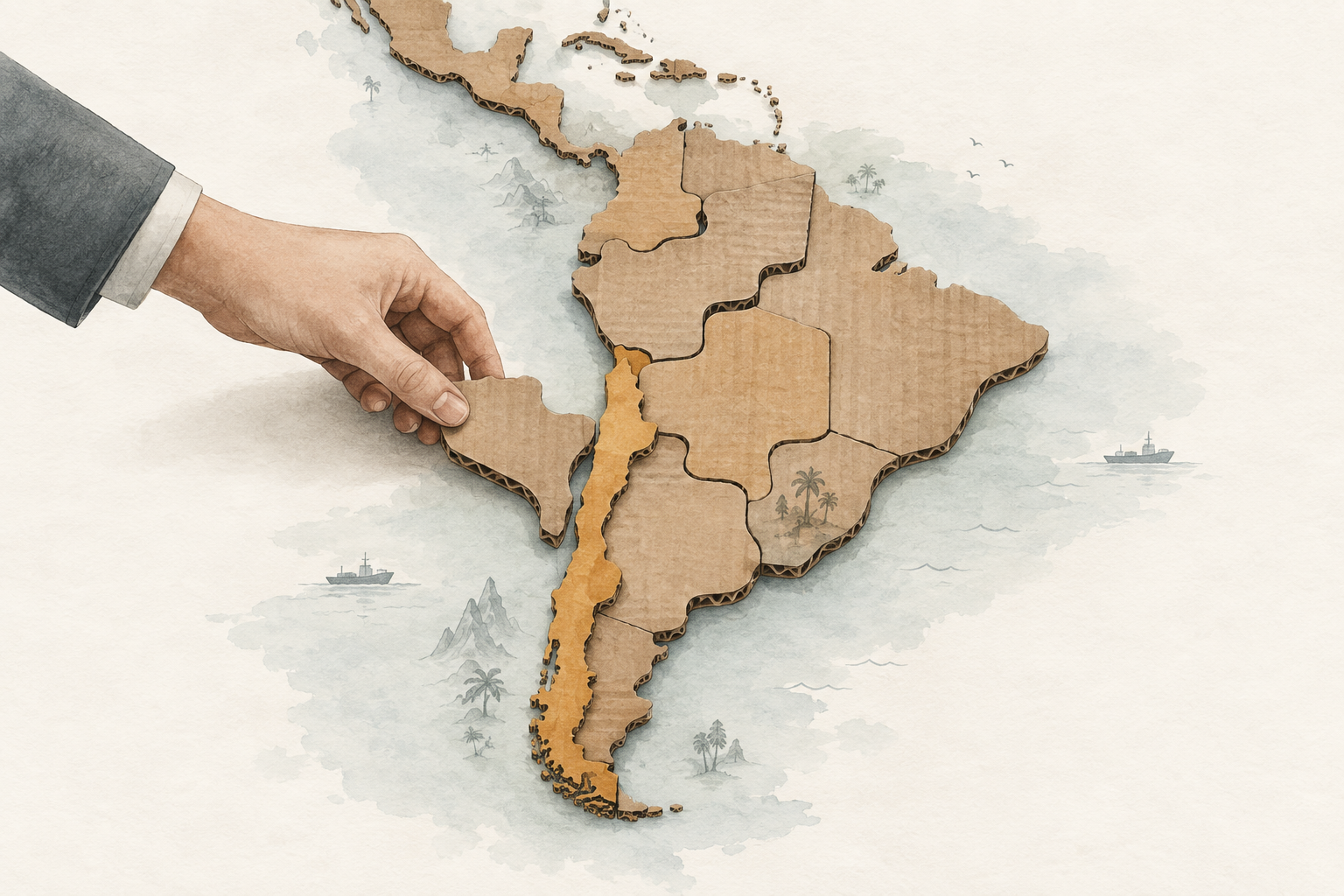
Smurfit Westrock has agreed to acquire CMPC’s Chilean containerboard and corrugated packaging business for $420 million, seeking to strengthen its Latin American platform with a targeted regional deal. The agreement comes little more than two years after the combination of Smurfit Kappa and WestRock created one of the world’s largest paper and packaging groups.15
The transaction, announced September 23, would add one recycled containerboard mill, three corrugated plants, one molded tray facility and a network of fiber collection points in Chile. Smurfit Westrock said the assets would establish a leading market position in Chile and reinforce its southern Latin America operations.
CMPC described the sale as part of a longer-term effort to focus capital and management attention on businesses where it has greater scale and competitive advantages.12
The deal signals a shift in emphasis for Smurfit Westrock, from the scale-building logic of the 2024 merger to selective bolt-on consolidation in markets where fiber supply, converting capacity and customer proximity can be connected to its broader regional system. The company said the Chilean assets are near key fishery and agricultural regions and would complement its existing corrugated operations.16
For packaging executives, the strategic significance lies less in the headline price than in how Smurfit Westrock plans to use the assets. The Santiago paper machine produces about 250,000 tons a year and would strengthen the company’s regional paper system, according to the buyer.16
Smurfit Westrock said the acquisition would allow it to integrate recycled paper into operations in Argentina, Peru and Ecuador, while routing kraftliner from Brazil and North America into the acquired corrugated assets in Chile.1
That is the type of network optimization often sought in containerboard consolidation: balancing recycled and virgin fiber, shortening supply chains and improving mill-to-box integration across markets.
The company also positioned the acquisition within its Latin America growth plan. Álvaro Henao, CEO of Smurfit Westrock Latam, said the company had identified the region as an area for growth through both internal investment and acquisitions, and that the Chile deal would further strengthen its regional footprint.1
For CMPC, the sale removes its Chilean corrugated business while retaining other parts of its domestic industrial presence. The assets being sold include Envases Impresos Cordillera and Chilena de Moldeados, or Chimolsa, covering paper production in Puente Alto, corrugated packaging operations in Buin, Til Til and Osorno, molded packaging and a 12-site paper and cardboard collection network.25
CMPC said it will keep its Softys plant in Puente Alto, which is not part of the transaction.2 The Chilean forestry and pulp group said the sale supports a strategy to concentrate resources where it has greater scale, strengthen its forestry and industrial capabilities, and move toward a more agile structure.23
The transaction value represents about 7.6 times the business’s last-12-months EBITDA, according to CMPC.2 Smurfit Westrock described the same $420 million consideration as a post-synergy multiple of less than six times adjusted EBITDA, underscoring the buyer’s expectation that integration benefits will materially affect deal economics.1
The acquisition remains subject to customary closing conditions, including regulatory approvals. CMPC said the transaction must be reviewed and approved by Chile’s Fiscalía Nacional Económica, the country’s competition authority, before the transfer can be completed.23
Smurfit Westrock expects the deal to close in the first half of 2027. CMPC said it will continue operating the business normally during the approval process. The operations involved employ roughly 1,500 workers.124
Reuters, citing CMPC, noted that Smurfit Westrock operates in 40 countries, with 57 paper mills, about 450 converting plants and around 96,000 employees. That gives the buyer a global network into which the Chilean assets could be integrated if the transaction is approved.3
Smurfit Westrock was formed in 2024 through the merger of Ireland-based Smurfit Kappa and U.S.-based WestRock, creating a larger transatlantic packaging platform with significant exposure to paper-based and corrugated packaging.5
The Chile acquisition suggests the combined company is now using that platform to pursue narrower, regionally strategic additions rather than relying only on broad merger synergies.
In Chile, the rationale is vertical and geographic. The assets add recycled containerboard production, corrugated converting and molded fiber packaging in a market tied to export-oriented food, fishery and agricultural supply chains.
For Smurfit Westrock, that could improve local responsiveness while giving the company more options to move fiber and linerboard across Latin American and North American production networks.16
For CMPC, the transaction is a divestment aligned with portfolio focus. For Smurfit Westrock, it is a test of whether the newly combined group can convert global scale into regional operating advantages through targeted consolidation in fiber-based packaging.






Comments