At IFA Berlin, AI Robots Leave the Stage—but Not Yet for Everyday Life
Physical AI
A term for AI systems that perceive and act in the physical world, usually through robots or other embodied machines.
Embodied AI
AI integrated into a physical body, such as a humanoid, quadruped or mobile service robot, rather than only software.
Perception
A robot’s ability to understand its environment using sensors such as cameras, LiDAR, microphones and depth systems.
Manipulation
The ability of a robot to physically handle objects, such as grasping, lifting, sorting or placing items.
Agent Language
IFA 2026 robotics demos increasingly used AI-agent concepts such as perception, autonomous decisions, learning and physical-world interaction.
Shipped Robots
Pudu Robotics says it has shipped more than 130,000 robots, making its specialized service and cleaning machines more proven than many humanoid demos.
Demo Gap
Runway routines and booth interactions showed motion and sensing, but did not establish long-term reliability in cluttered homes.
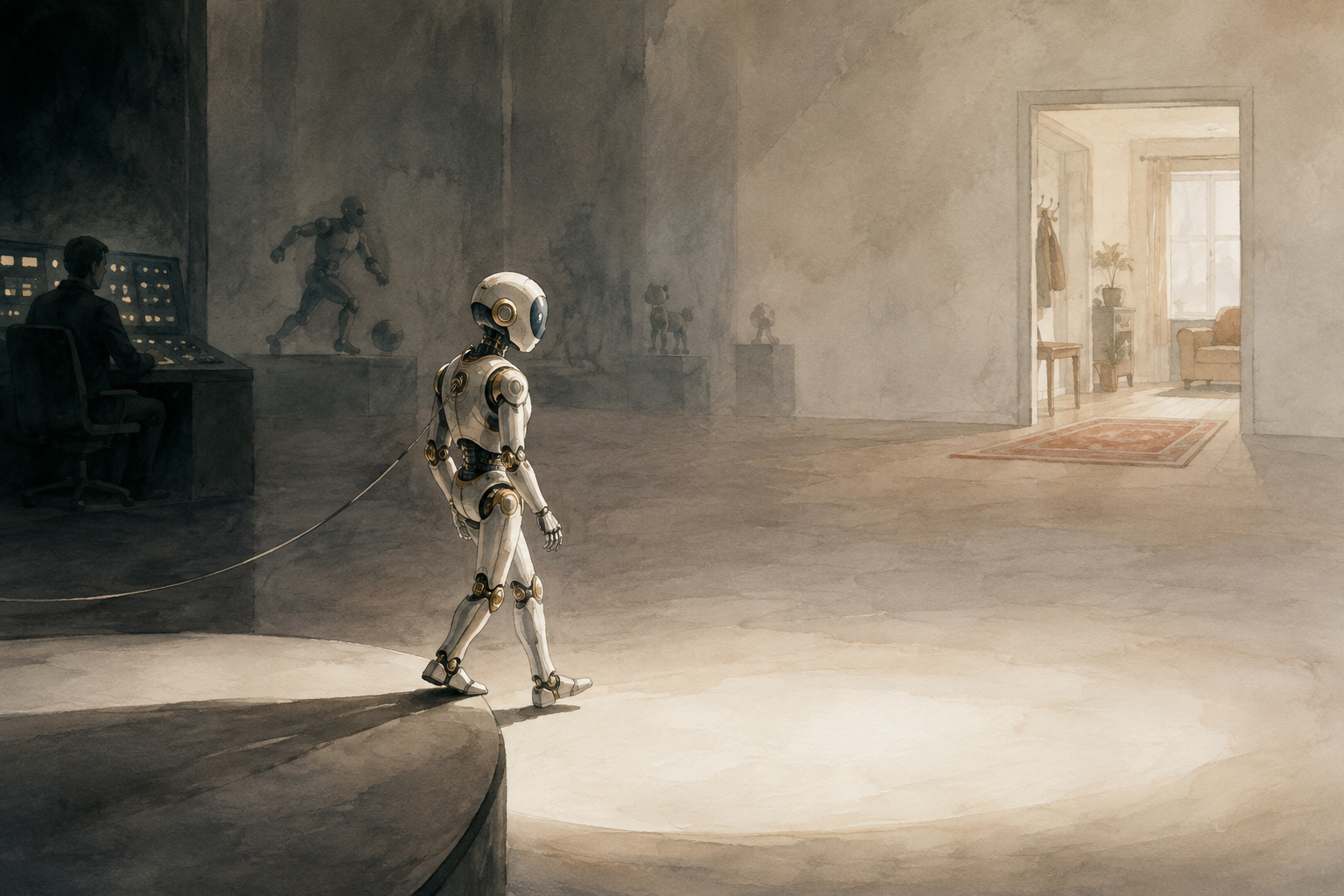
IFA Berlin’s robotics push on September 5 showed how quickly consumer robotics is adopting the language of AI agents: machines that perceive, decide, interact and learn in the physical world. But the key distinction at IFA 2026 was not humanoid versus wheeled, or companion versus industrial. It was shipped product versus staged demonstration.
The show featured humanoids dancing, answering questions and performing runway routines; autonomous robots playing football; NEURA Robotics framing “Physical AI” as the next stage of artificial intelligence; and home-robotics discussions about systems that could eventually understand household habits and food preferences.1 Companies including Unitree, Agibot, DEEP Robotics, Dobot, EngineAI and PrimeBOT appeared in IFA’s “Robots on the Runway” programme, a one-hour live showcase built around motion, entertainment and human-machine interaction.2
Those demos matter. They show progress in locomotion, sensing and interaction. But they do not, by themselves, prove that a robot can reliably navigate a cluttered home, complete multi-step chores, recover from errors, avoid unsafe behavior around people and pets, or deliver value at consumer prices.
The strongest evidence of practical robotics at IFA came from specialized commercial machines, not general-purpose humanoids. Pudu Robotics said it brought a portfolio that includes service delivery, commercial cleaning and industrial transport robots, with more than 130,000 robots shipped across more than 85 countries and regions.3 Its CC1 cleaning line has surpassed 20,000 units shipped worldwide, while the T600 is positioned for autonomous material transport with a payload of up to 600 kilograms.3
That record separates operational robots from concept-stage “embodied AI” demos. A restaurant delivery robot, cleaning robot or warehouse transport platform may be less dramatic than a humanoid, but it operates in a narrower domain with clearer routes, tasks, safety boundaries and maintenance procedures. In robotics, constrained usefulness usually arrives before general autonomy.
D-Robotics offered a similar infrastructure view. The company said its Sunrise AI chips and robotics development kits are used in home companion robots, quadrupeds and floor-cleaning robots, including TCL’s hey AiMe, Vbot’s SuperDog and xLean’s TR1.6 According to D-Robotics, Vbot’s SuperDog has been in mass production and had reached thousands of households since May 2026, with European preorders open.6 Those claims point to a more immediate consumer category: robot companions and task-specific home devices with AI-powered perception and interaction, rather than all-purpose household humanoids.
IFA’s most visible humanoid moments were staged by design. The “Robots on the Runway” event was billed as a live spectacle featuring humanoids, quadrupeds and robotic companions capable of walking, posing, dancing, backflipping or transforming.2 Reuters Connect’s partner-provided ZUMA asset listed robots including Unitree H2 and G1, EngineAI T800, AGIBOT X2 Ultra and D1, DEEP Robotics Lynx M20S, PrimeBOT models and Dobot systems. It also noted that Reuters Connect had not independently verified the partner material.7
The stage setting matters. A runway routine can demonstrate balance, choreography, actuator control and basic interaction. It does not show whether the same robot can handle a toy on the floor, a low-light hallway, a barking dog, an unexpected command or a dropped object blocking its path. Photo-led reporting from JoongAng Ilbo underscored that gap: it showed robots performing movement demonstrations, but also described a Unitree humanoid lying on a ring and noted that some robots on the show floor were idle or charging, including a Haier household robot whose laundry-loading demo could not be seen because it was charging.8
Pudu’s newer embodied-AI systems also belong in the demonstration category, even though the company has shipped many specialized robots. The PUDU D7 semi-humanoid was shown taking photos, responding with gestures and picking up objects on request, while the PUDU D5-W demonstrated mobility over stairs, gravel and sand.3 Those are meaningful technical demos, but the company’s own release distinguishes these newer platforms from the commercial service and cleaning robots already deployed at scale.3
Perception was the most concrete capability on display. Tuya’s Doova home companion robot was announced with LDS LiDAR, four-microphone sound-source localization and AI vision-based skeletal recognition. Tuya says the robot can locate a user after a voice call for help, assess the situation and trigger a family video alert if there is no response within 60 seconds.4
Those components map directly to real robotics problems: LiDAR for spatial mapping, microphones for localizing speech or distress calls, and vision models for detecting posture or falls. The question is how they perform in uncontrolled homes. Fall detection, person recognition and emergency escalation must work across lighting changes, furniture layouts, loose clothing, pets, visitors and partial occlusion. IFA showed the direction of travel, but not independent accuracy, false-alarm rates or privacy safeguards.
D-Robotics’ chip claims also point to the growing compute layer behind consumer robotics. Its portfolio ranges from 5 to 560 TOPS of INT8 performance, supporting robots that need local perception, navigation and interaction.6 More onboard compute can reduce latency and reliance on cloud connections, but compute alone does not prove robust perception. The missing evidence is benchmarked performance over long periods in real homes.
Autonomous robot football was one of the more technically meaningful demonstrations because it forces machines to combine perception, motion, decision-making and coordination under time pressure. IFA said RoboCup systems at the show analyze the game, make decisions independently and coordinate with teammates.1 That is closer to an agentic robotics test than a runway walk because the environment is dynamic and adversarial, even if the field and rules are still structured.
Home robotics is a harder planning problem. PrimeBOT described the T1 and Q1 around mobility, creativity, programmability, personalized interaction and long-term companionship, arguing that personal robots must earn a place in the home before expanding into deeper physical assistance.5 That framing is realistic, but it also reveals the gap. Interaction and companionship can arrive before useful household task planning.
The clearest test for consumer “AI agents” in robot form will be whether they can complete practical routines: find an object, clear a table, fetch medication, clean around obstacles, call for help appropriately, or coordinate with appliances without constant user correction. At IFA, many systems suggested those ambitions; few offered public evidence of long-horizon task-completion rates.
Manipulation remains the hardest capability to evaluate from show-floor demos. Pudu said the D7 can pick up objects on request, and Agibot’s IFA lineup includes claims around locomotion, multimodal interaction and manipulation.39 RoboActu reported that Agibot’s G2 was expected to perform precision-manipulation tasks, while its A3 was shown as part of a broader lineup for reception, retail, industry and cleaning use cases.9
But picking up selected objects in a booth is not the same as operating in a home. Reliable manipulation requires recognizing unknown objects, estimating weight and fragility, choosing grasp points, coordinating arms and hands, avoiding collisions, and recovering when a grasp fails. It also requires knowing when not to act.
That is why specialized machines still look more commercially mature. A floor-cleaning robot or delivery robot manipulates little or nothing. A humanoid or semi-humanoid that promises household assistance must manipulate almost everything, safely, around people.
Safety appeared in several forms at IFA. Tuya’s Doova is framed around senior safety, emergency detection and smart-home coordination.4 Agibot highlighted TÜV Rheinland certifications for parts of its humanoid lineup, including radio and safety-related assessments. RoboActu noted that certification can reduce some regulatory work, even though it does not prove commercial performance.9
For consumer robotics, safety is broader than certification. It includes speed limits, force control, obstacle avoidance, secure remote access, privacy controls for cameras and microphones, child and pet behavior, emergency-stop mechanisms, transparent data handling and maintainable hardware. For robots marketed as companions or care assistants, the bar is higher because users may rely on them during vulnerable moments.
The show also raised a more basic safety-and-reliability issue: uptime. A robot that needs frequent charging, supervision or resets may be acceptable at a trade fair, but not as a household assistant. Reports of idle or charging robots at IFA do not invalidate the technology, but they are a reminder that autonomy includes energy management and recovery, not just walking or talking.8
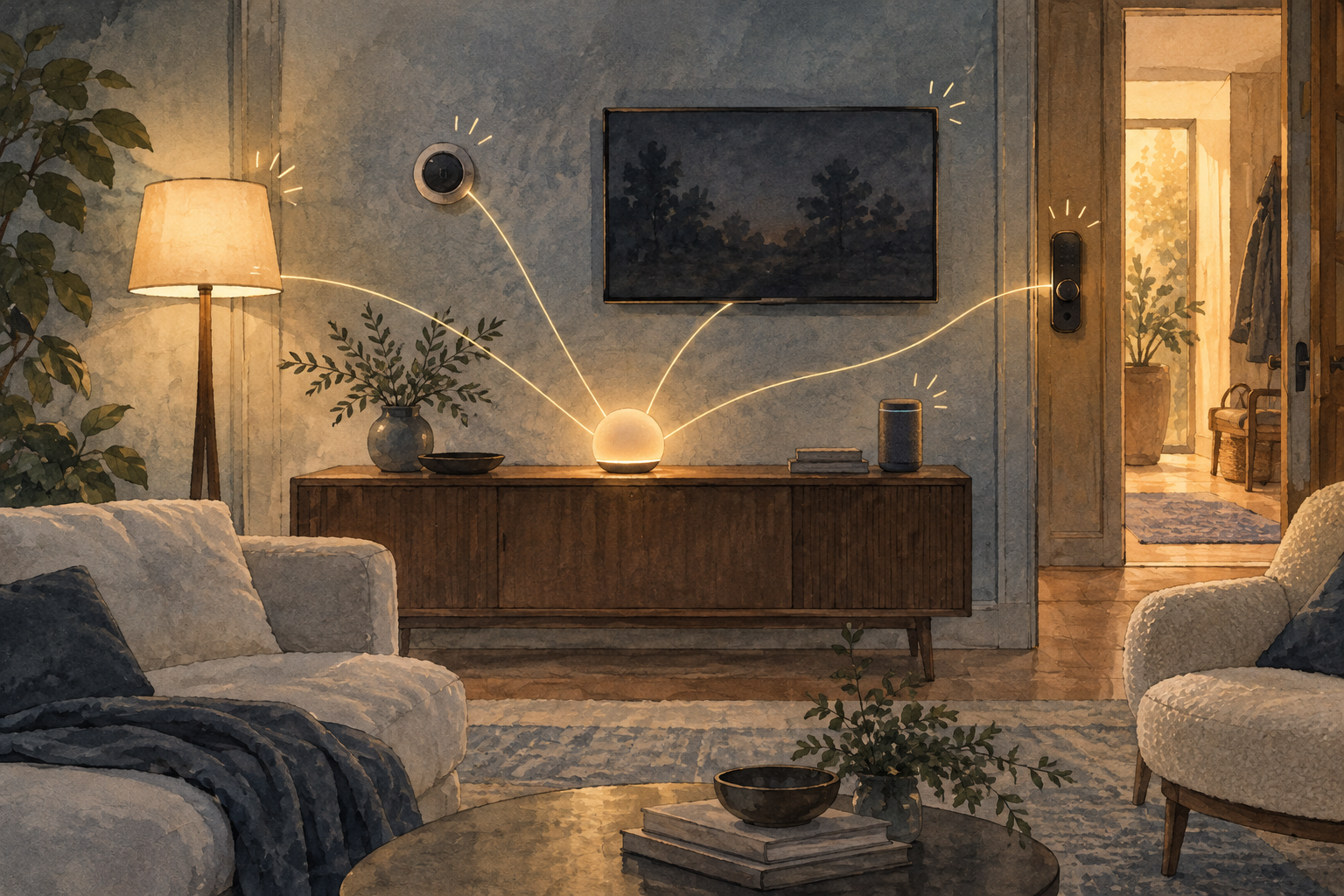
IFA 2026 did not show a single breakthrough consumer robot ready to take over household labor. It showed a market moving in layers. The first layer is already-deployed specialized robots for delivery, cleaning and transport. The second is AI-enhanced home devices and companions that can navigate, converse, monitor and coordinate with smart-home systems. The third, still least proven, is the general-purpose humanoid that can perceive, plan, manipulate and operate safely in unpredictable spaces.
That progression matches the broader direction of the show. Globtechwire’s overview of IFA 2026 noted that robotics has become a major theme, but also raised the practical question of whether show-floor machines can become genuinely useful in everyday life, especially in homes with changing layouts, stairs, furniture, pets and misplaced objects.10
The most credible consumer-robotics claims after IFA are modest but meaningful: better perception, more onboard AI compute, more natural interaction and wider deployment of specialized robots. The least proven claims are the ones that sound most like software AI agents: open-ended autonomy, household understanding and general physical assistance.
For buyers and developers, the next evidence to watch is not another backflip. It is documented runtime, failure rate, task-completion rate, repair model, data policy, safety certification, price and proof that a robot can keep working after it leaves the demo floor.





Comments