Google Home MCP gives AI agents a smart-home control layer
MCP
Model Context Protocol is a standard interface that lets AI clients connect to external tools, data sources and services.
OAuth
OAuth is an authorization framework that lets a user grant an application access to an account or service without directly sharing the account password.
Home structure
In Google Home, a structure generally refers to a configured home environment containing rooms, devices, members and related settings.
Prompt injection
Prompt injection is an attack or failure mode in which malicious or untrusted content influences an AI agent to take unintended actions.
Agent control
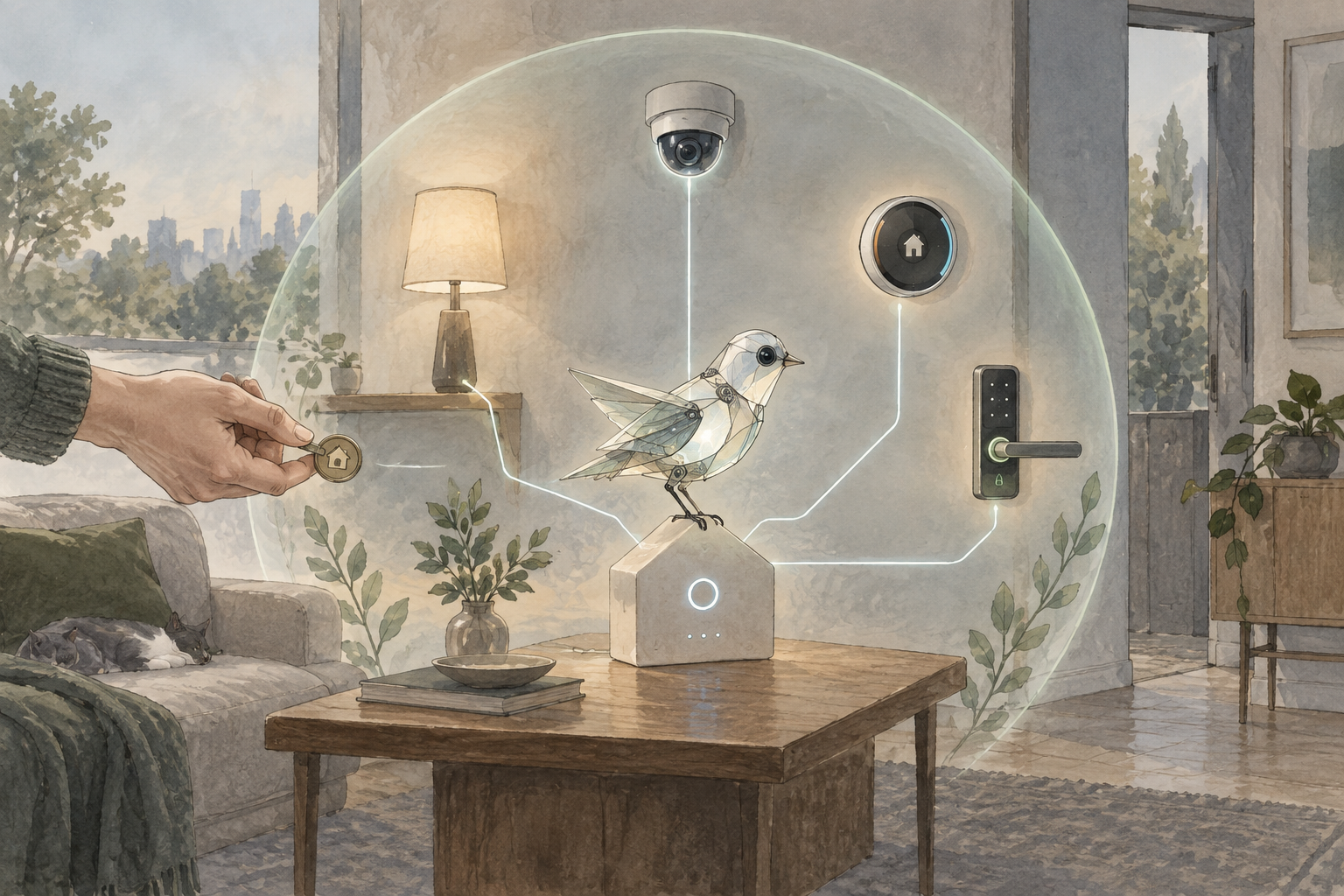
Google Home MCP lets compatible AI agents inspect home structures, read device state and history, and execute supported smart-home commands.
OAuth gate
Setup relies on Google Cloud configuration and OAuth-based authorization, with revocation available through Google account or Home app flows described in coverage.
Safety limits
Early reports identify rate limits and sensitive-action restrictions, including limits around unlocking doors, as core safeguards.
Google is opening early access to a Google Home Model Context Protocol server that lets compatible AI agents query smart-home data and operate connected devices. The move makes MCP less of a developer-convenience layer and more of a control plane for physical environments.1
The Home MCP rollout lets supported agents inspect Google Home structures, enumerate devices, read real-time state, analyze historical events and execute device-control actions, according to coverage of Google’s September 16 release notes and developer documentation.2 Google’s documentation also describes safety limits, including rate limits and restrictions on sensitive actions such as unlocking doors, and requires users to connect agents through OAuth-based authorization flows.6
For AI agent developers and smart-home security teams, the key issue is not just that a chatbot can turn off lights. It is that a general-purpose agent can be granted a standing interface into household telemetry and actuation. That forces smart-home platforms to define authorization, observability and household consent for cases where a user is no longer tapping a single app button, but delegating decisions to software that can plan, call tools and recover from errors autonomously.7
Home MCP is designed to let MCP-compatible clients connect to Google Home through a standard tool interface. Reports describe capabilities including entity enumeration, real-time monitoring, device control and historical event queries.8 In practice, an agent can ask what devices exist in a home, determine whether a device is online, inspect current states such as lights or sensors, query recent events and issue supported commands.5
That makes Home MCP different from many earlier smart-home integrations. Voice assistants and mobile apps typically mediate a narrow action: a spoken command, a routine or a tap in a vendor-controlled interface. MCP instead gives an AI client a toolset it can combine with reasoning, memory, dashboards or workflows. TechBriefly reported that the integration can support use cases such as device and event-history access, connected-device control and dashboard creation.2
The architecture also distributes trust. Google controls the home platform and the MCP endpoint, but the user may invoke the tools through another AI environment. AI Insiders framed this as a trust issue because smart-home and security data may be routed through third-party agents, depending on the client a user chooses.1
Early reports say Home MCP is available in early access, limited to the U.S., and tied to Google Home Premium Advanced, described as a $20-per-month plan.1 Eigen Radar also noted setup friction: developers need a Google Cloud project, Home API enablement and OAuth credentials before connecting a compatible client.3
Those gates matter, but they are not the core security model. Subscriptions and setup steps slow adoption. They do not by themselves answer whether an agent should be allowed to infer occupancy patterns from event history, run device actions without additional confirmation or expose household status in a third-party workspace.
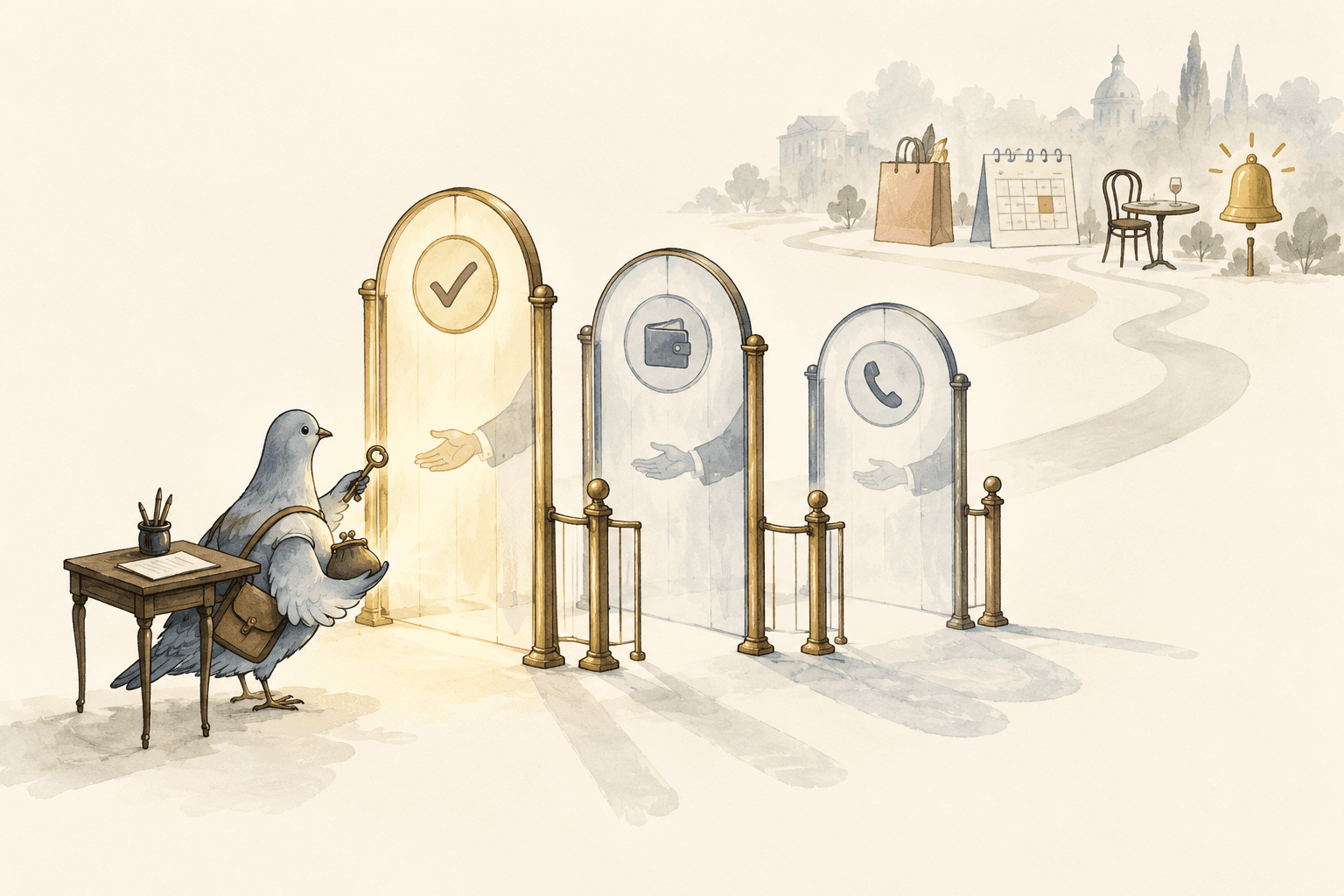
For security teams, the relevant boundary is authorization scope. OAuth offers a familiar way to grant and revoke access, but the operational question is how granular those grants are in practice. A useful agent may need to read structures, device capabilities, current state and history. A safe agent may need narrower access, per-device constraints, action-specific confirmations, short-lived tokens or audit logs that household members can understand.
Google’s developer materials tell users to inform other household members if they connect a shared Google Home to Home MCP, because the agent can control devices and access home data, according to safety-focused coverage of the rollout.6 That recommendation highlights a smart-home consent problem that OAuth alone does not solve.
OAuth generally captures authorization from the account holder. A home, however, is a multi-person environment. Cameras, locks, sensors, thermostats and routines can reveal information about children, roommates, guests, workers or neighbors. A single manager connecting an agent may create privacy and safety effects for everyone in the structure.
This is especially important for event history. Historical device and camera-derived events can reveal patterns: when people leave, when motion occurs, which entrances are used, whether a garage opened or whether a security device changed state. GSMDome’s summary notes that Home MCP access includes structures, device states, event history and command execution, along with OAuth setup, revocation, rate limits and sensitive-action restrictions.5
Security teams should treat “household notification” as part of the control design, not a documentation footnote. At minimum, shared-home deployments need visible indicators of agent access, revocation paths, and records of what the agent read or changed.
Google’s early model appears to combine user authorization, revocation, rate limits and blocked sensitive actions. Multiple reports identify door unlocking as a prohibited or restricted example.3 XenoSpectrum similarly describes early-access limits, OAuth-based authorization, prohibited unlocking actions and the broader physical-world implications of agent control.6
That is a sensible baseline. Some commands should not be available to general-purpose agents, especially when prompt injection, confused-deputy failures or ambiguous user intent could cause harm. But prohibited actions are only one layer.
The harder cases are lower-risk commands that become risky in context. Turning off lights may be harmless at noon and unsafe on a staircase at night. Changing a thermostat may be minor for most users and dangerous for a vulnerable person, a pet or equipment in extreme weather. Disabling a camera notification may be a convenience or a security failure. Opening blinds may reveal occupancy. Smart-home safety is contextual, and agents are often designed to generalize across context.
That means the policy model should distinguish between capability exposure and action authorization. A client might be allowed to read a device schema but not run actions, read current state but not history, control lighting but not security devices, or suggest a change while requiring human confirmation for execution.
The practical engineering challenge is that agent success cannot end at “tool call returned OK.” The Weighted Average’s analysis emphasized testing considerations for delegating household control to agents, including consent, latency and action-result verification.4 That is critical in physical environments, where a delayed or failed action may create confusion or risk.
Agents should verify post-action state where possible. If an agent turns off outside lights, it should check whether the lights actually changed. If a thermostat adjustment fails, it should report uncertainty rather than assume completion. If a camera or sensor is offline, it should avoid declaring a home secure.
Latency also changes user expectations. Google’s documentation has been reported to identify latency as a known issue in the early implementation.3 For routine analytics, latency may be acceptable. For actions involving alarms, access, safety devices or real-time presence, delays should affect whether an action is permitted at all.
MCP’s appeal is that agents can use external tools through a common interface. The security concern is the same: once tools are standardized and easy to attach, malicious prompts, compromised connectors, excessive permissions or weak confirmations can turn an assistant into an unintended operator.
ExplainX highlighted questions around prompt injection, credentials, permissions, confirmations and monitoring in the context of Google Home MCP.7 Those concerns are amplified when the target is a household rather than a spreadsheet or code repository. A prompt-injection attack embedded in a calendar item, message, web page or device name could try to manipulate an agent into calling home-control tools. Poor credential handling could expose long-lived access. Overbroad permissions could let an agent read more telemetry than a task requires.
The defensive pattern is familiar but stricter: least privilege, explicit user confirmation for risky actions, short token lifetimes, detailed logs, anomaly detection, tool-output validation and separation between planning and execution. For smart homes, those controls should be legible to non-developers, because household members may not understand MCP, OAuth scopes or agent toolchains.
Organizations testing Home MCP should start with a dedicated test home or limited device set rather than a primary residence. Reports note that developers may need Cloud setup, OAuth credentials and compatible clients such as Claude-linked environments or other MCP-capable agents.5 Teams should document which agent can access which home, which account granted access, where credentials are stored and how to revoke access quickly.
A practical review should include:
Google Home MCP is early access, gated and limited. But its significance is larger than this first rollout. MCP is becoming an authorization and execution layer between AI agents and real-world systems. Smart-home platforms are among the first places where the consequences are immediately visible: lights change, cameras expose history, locks and safety devices sit nearby, and more than one person is affected.
The next phase of agent infrastructure will not be judged only by how many tools it can connect. It will be judged by whether platforms can make delegation safe through clear consent, narrow permissions, understandable monitoring, fast revocation and hard boundaries around actions that agents should not perform.







Comments