Kiteworks Shutdown Advisory Points to Tougher Playbook for File-Transfer Zero-Days
Zero-day
A vulnerability or attack technique that is not yet publicly patched or fully documented, leaving defenders with limited time and incomplete information.
Managed file transfer
Enterprise software used to securely exchange files between internal systems, customers, vendors and partners, often handling sensitive or regulated data.
Indicators of compromise
Technical evidence such as malicious IP addresses, file hashes, log patterns or domain names that can help defenders detect known attacker activity.
Compensating control
A temporary or alternative safeguard, such as network isolation or access allowlisting, used when a direct patch or permanent fix is not yet available.
The Hacker News
news
Kiteworks Urges Customers to Shut Down Systems for 9 Hours Over Possible Cyber Attack
CloudSwitched
news
Kiteworks Tells Customers to Power Down Servers Over Credible Threat - With No Patch in Sight
0dayNews
news
Kiteworks Flags Potential Zero-Day, Urges Server Shutdown
Preventive downtime
Kiteworks reportedly urged customers to take systems offline as a precaution after federal threat intelligence warned of a possible imminent attack.
No confirmed breach
Reports emphasized that the shutdown guidance was issued before confirmed customer compromise, public CVEs or standard indicators were available.
Operational shift
For high-value file-transfer platforms, security teams may need to plan for emergency downtime even when systems appear fully patched.
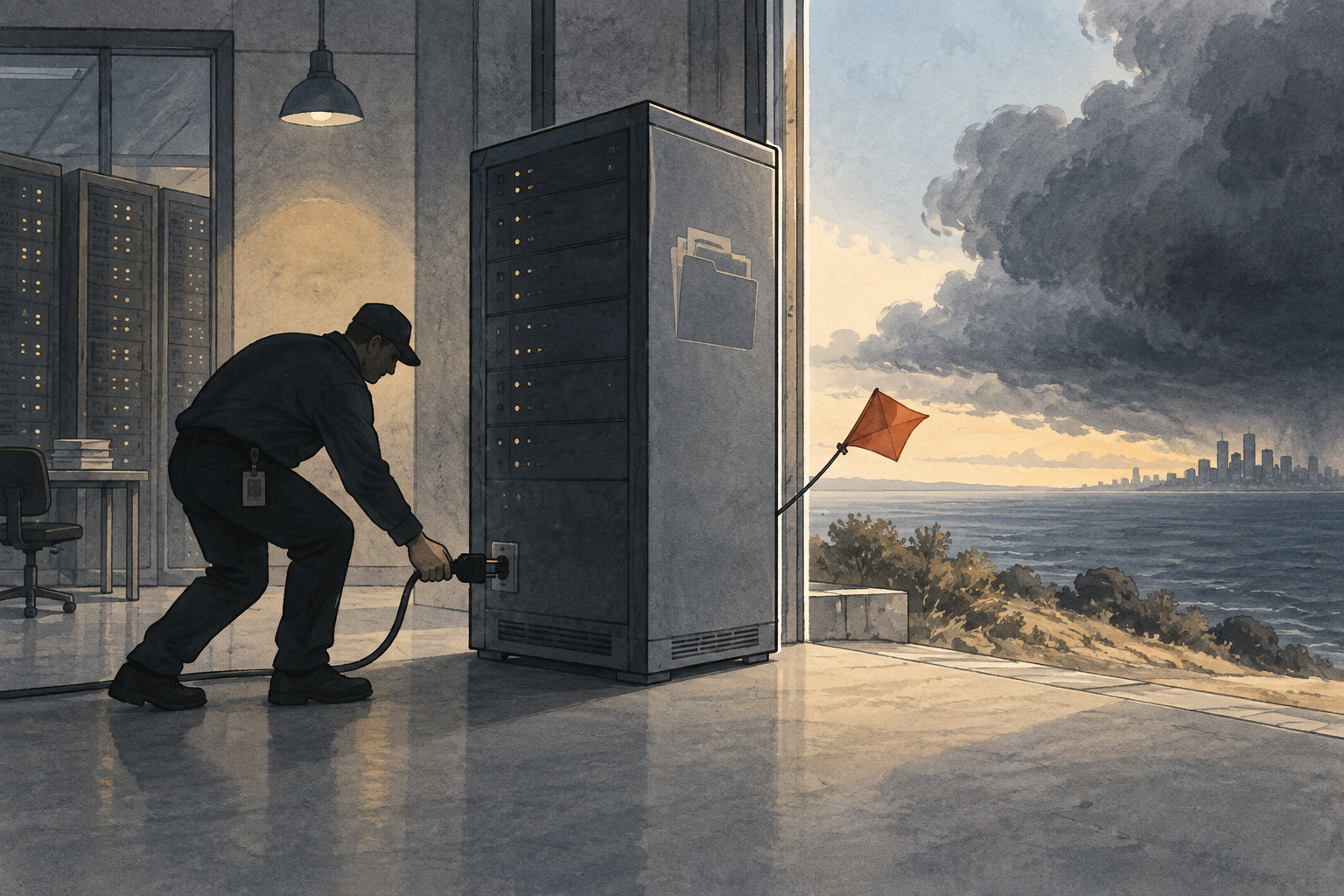
Kiteworks’ reported recommendation that customers temporarily shut down secure file-transfer systems on September 26 was unusual, but increasingly understandable. The company faced a high-risk scenario: credible threat intelligence, a potentially imminent attack window, and no confirmed exploitation or public patch path at the time of the advisory.12
The lesson for enterprise security operations teams is clear: exposed managed file-transfer platforms should be treated as high-value internet infrastructure, not ordinary business applications. When a vendor receives credible warning of a possible zero-day attack against those systems, preventive downtime may be the least damaging option — even before a CVE, exploit indicators or evidence of compromise exists.35
Reports said Kiteworks urged customers worldwide to power down affected systems for a coordinated weekend window after federal authorities provided threat intelligence about a possible imminent attack.16 Some accounts described a six-hour shutdown period, while others reported a nine-hour precautionary window. The variation shows how quickly operational guidance can shift during a developing threat event.34
Available reports also emphasized that Kiteworks said it had not confirmed customer compromise at the time and that the action was precautionary.14
For most enterprise software, the standard response pattern is familiar: identify a vulnerability, assign or reference a CVE, issue a patch, publish mitigations, and tell customers to update. That sequence assumes defenders have enough time to evaluate exposure and remediate before widespread exploitation.
File-transfer systems change that calculation. They often sit at the boundary between external partners and internal data flows. They hold or process sensitive business documents, regulated data, credentials, legal material and customer records. They are also attractive to financially motivated threat actors because successful exploitation can provide direct access to data that can be stolen, extorted or used for follow-on intrusion.
In that context, a vendor may recommend temporary shutdown when three conditions overlap: the platform is valuable to attackers, the suspected attack window is near, and available mitigations are incomplete or uncertain. CloudSwitched characterized the Kiteworks situation as an operational tradeoff in which enterprises were asked to act without the usual anchors of CVEs, indicators of compromise or a patch.2 That is uncomfortable for security teams, but it is not irrational.
The decision resembles emergency isolation in incident response. If defenders believe a system may be targeted before they can reliably detect or block exploitation, taking it offline can reduce attack surface immediately. The cost is business disruption. The benefit is denying attackers a live target during the period of highest concern.
The Kiteworks reports also point to a growing problem for enterprise defenders: being current on software does not always mean being safe during a suspected zero-day window. The Hacker News reported that the current 9.5.1 release posture was part of the situation, while also noting that the advisory was driven by external threat intelligence and that no confirmed compromise had been reported.1 NEXSIGHT similarly described the issue as a precautionary measure tied to federal threat intelligence, with different responsibilities for self-managed and hosted deployments.4
For security operations teams, vulnerability management and incident response can no longer be treated as separate workflows for internet-facing file-transfer infrastructure. A system may be fully patched according to the vendor’s latest available release and still require emergency exposure reduction if the vendor believes attackers may possess an unknown or not-yet-remediated technique.
That is the operational significance of the Kiteworks advisory. The question was not simply whether customers had applied the latest update. It was whether leaving a high-value transfer service reachable during a specific threat window created an unacceptable risk.
Managed file-transfer and secure file-sharing systems occupy a sensitive position in enterprise networks. They are designed to exchange data with third parties, automate document movement and bridge organizational boundaries. Those same features make them difficult to shield completely.
A compromised file-transfer platform can create several immediate risks:
This is why a shutdown recommendation can be justified even when it causes disruption. The downside of downtime is measurable and usually temporary. The downside of mass exploitation of a file-transfer service can include data theft, extortion, breach notifications, legal exposure and loss of partner trust.
0dayNews described the request as unusual for enterprise platforms because it came in the suspected zero-day context without a public CVE.3 TechBeacon framed the shutdown as a coordinated zero-day response and highlighted the need for teams to plan for downtime and restart procedures.5 That framing matters: the operational response is no longer only technical remediation. It is also coordinated service withdrawal and controlled restoration.
The episode also illustrates the practical divide between hosted and self-managed deployments. In hosted environments, the vendor can often make platform-level changes, restrict exposure or perform emergency maintenance centrally. In self-managed deployments, customers control uptime, network exposure, backup posture and local integrations.
That distinction matters during a fast-moving threat window. A vendor can issue guidance, but self-managed customers must execute it: notify business owners, stop services, preserve logs, validate backups, monitor for anomalous access, and bring systems back online safely. NEXSIGHT’s summary emphasized the difference between self-managed and hosted responsibilities in the Kiteworks case.4
For enterprise teams, this creates a governance question: who has authority to take a critical file-transfer system offline on short notice? If that decision requires hours of escalation, the organization may miss the window the shutdown is meant to address.
The Kiteworks advisory should be viewed less as an isolated vendor event and more as a model for future response planning. When threat intelligence points to imminent exploitation of a widely used file-transfer product, security teams may need to choose between uncertain risk and certain disruption.
Enterprises should prepare for that choice before the next advisory arrives. A practical playbook should include:
Snapost reported that the advisory rationale extended even to some non-internet-facing systems, reflecting concern that exposure is not always limited to obvious public endpoints.6 That is a useful reminder: internal reachability, partner tunnels, automation accounts and indirect access paths can still matter during a zero-day response.
The most important shift is cultural. Many organizations still treat downtime as a failure state and patching as the main measure of readiness. For high-value file-sharing systems, that model is too narrow.
A preventive shutdown is not an admission that a breach has occurred. It is a risk-control measure when the probability or impact of exploitation appears high enough to justify interruption. In some cases, it may be the only immediately reliable control available.
That does not mean vendors should issue such guidance casually. Emergency shutdown requests carry real costs: missed business deadlines, broken partner workflows, executive concern and potential loss of customer confidence. To be credible, vendors must communicate scope, timing, product versions, affected deployment types, restoration steps and what is known versus unknown.
But the Kiteworks case shows why the option needs to exist. For exposed enterprise file-transfer systems, zero-day response is no longer just about waiting for a patch. It may also require coordinated removal from the battlefield while defenders determine whether the threat is real, whether mitigations work and whether attackers already had access.
For security operations teams, the planning question is direct: if a file-transfer vendor issues a credible shutdown advisory tomorrow, can the organization act within the window — or will process delays leave the system online when it matters most?








Comments