Google’s 890-MW Nuclear Deal Makes Firm Power Core to AI Infrastructure

PJM Interconnection
A regional grid operator that coordinates wholesale electricity markets and reliability across parts of the Mid-Atlantic, Midwest and South.
Nuclear uprate
An upgrade to an existing nuclear plant that increases its electricity output through equipment, efficiency or control-system improvements.
Power-purchase agreement
A long-term contract under which a buyer agrees to purchase electricity or capacity from a generator, often supporting project financing.
Firm power
Electricity supply that can be counted on to produce consistently, unlike variable resources that depend on weather conditions.
890 MW added
Google’s 20-year agreement with Constellation will fund nuclear uprates adding 890 MW of capacity to PJM.
3.6 GW package
The broader Google-Constellation arrangement includes a separate 2,700-MW, 15-year supply agreement.
AI power race
The deal shows hyperscalers moving from clean-power accounting toward underwriting physical grid capacity.
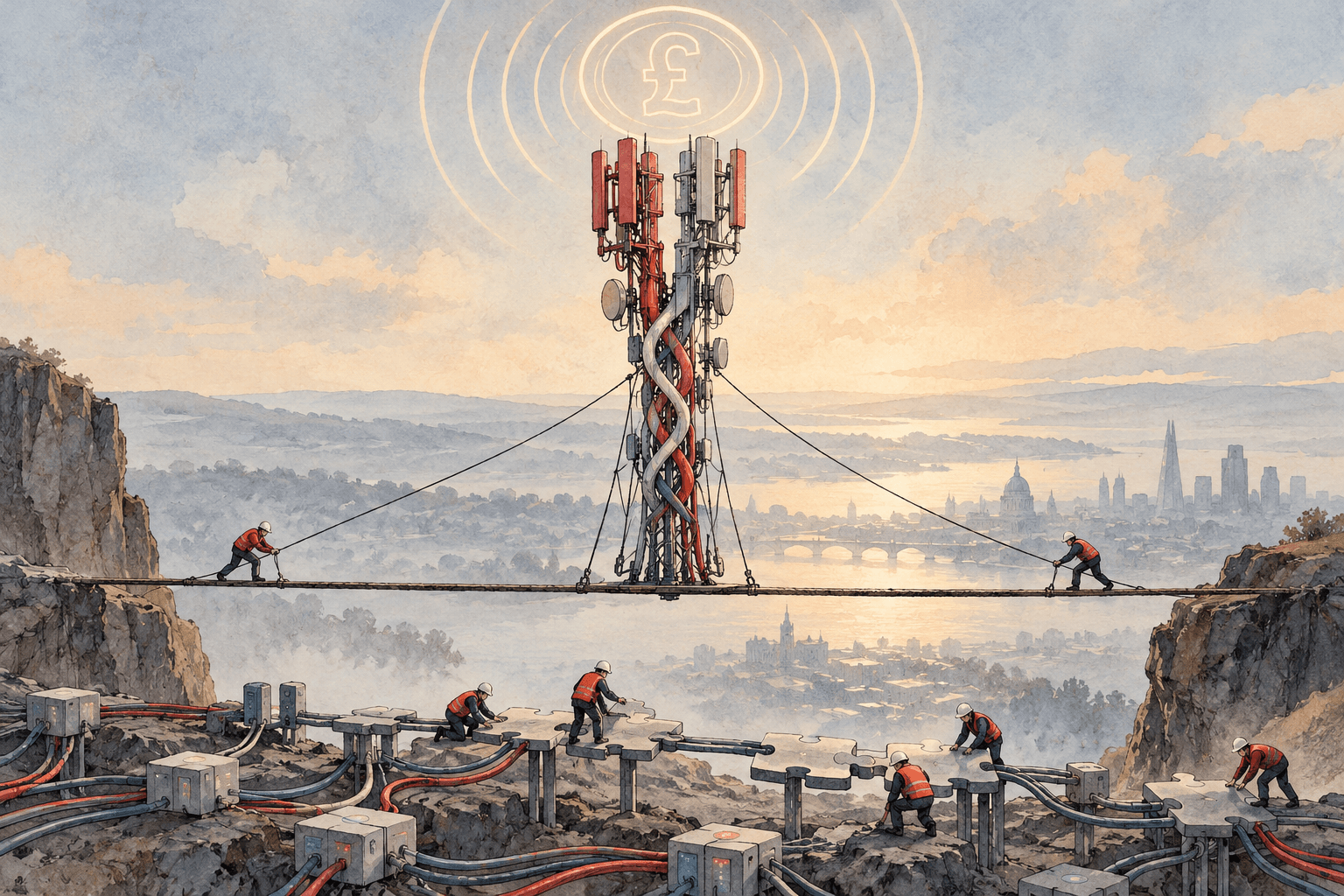
Google and Constellation Energy’s 20-year power-purchase agreement to add 890 MW of nuclear capacity to the PJM grid marks a new phase in the AI infrastructure race. Control over firm electricity supply is becoming as strategic as chips, land and fiber.
The agreement will finance upgrades at 11 existing nuclear units in Illinois, Pennsylvania and New Jersey, creating new baseload capacity on one of the most constrained U.S. grids for data-center development.1
The deal centers on nuclear uprates — equipment and technology improvements that increase output from existing reactors — rather than new reactor construction. Constellation said the program will involve about $4.3 billion in investment across six PJM nuclear sites, with the first uprate expected by 2028.2
For Google, the arrangement helps align long-term AI and cloud growth with firm, carbon-free power physically tied to the regional grid where demand is rising.3
The broader package includes a 15-year agreement for 2,700 MW from Constellation’s existing PJM nuclear fleet, bringing the total Google-Constellation energy arrangement to about 3.6 GW.4 At that scale, the agreement looks less like conventional corporate clean-power procurement and more like an industrial capacity strategy designed to secure dependable supply before grid bottlenecks tighten further.
For more than a decade, large technology companies used renewable-energy certificates and virtual power-purchase agreements to offset electricity use and support new wind and solar projects. Those instruments remain important, but they do not guarantee round-the-clock power in the same market where data centers operate.
AI data centers are changing that calculus. Training and inference loads are large, persistent and increasingly clustered in grid regions already facing interconnection queues, transmission congestion and capacity-market stress.
In that environment, the question is no longer only whether a company can claim annual clean-energy matching. It is whether it can help bring incremental, dispatchable or firm capacity onto the grid where its load is growing.
Google’s agreement points directly to that shift. The 890 MW of uprated nuclear output is intended to expand supply inside PJM, rather than merely assign environmental attributes from generation elsewhere.1 Trade coverage tied the deal to PJM’s “Bring Your Own Power” concept, under which large loads would help add supply rather than rely entirely on existing market capacity.1
The agreement also reframes existing nuclear plants as AI-era infrastructure assets. In a market where new transmission, gas plants, renewables, storage and advanced nuclear projects can face long development timelines, uprates offer a comparatively near-term way to add firm megawatts without building a new power station from scratch.2
That gives incumbent nuclear fleets new strategic value. Existing reactors already have grid interconnections, operating licenses, trained workforces and established host communities. Upgrading them can be faster than developing greenfield generation, though it still requires capital, outage planning, regulatory processes and execution risk.
Market-oriented analysis of the deal argued that existing reactors are becoming scarce assets for AI infrastructure because they allow buyers to work around some grid bottlenecks by directly financing incremental capacity.5
For energy executives, that scarcity could strengthen the negotiating position of nuclear fleet owners. For technology executives, it suggests that site selection and power procurement are converging into a single strategic function.
The 3.6-GW package reflects a broader shift in how hyperscalers approach power markets. Rather than simply buying grid power and separately purchasing clean-energy credits, Google is helping fund capacity additions and support the economics of existing nuclear generation in a region where it expects sustained demand.4
Data-center-focused coverage described the deal as a model for large power users adding supply alongside their own growth, particularly as AI workloads increase the need for reliable electricity.2
The structure is notable because it combines three objectives: new carbon-free capacity through uprates, long-term supply certainty from the existing fleet and operational flexibility through demand-response or load-shaping measures.1
That model could become more common. Hyperscalers with multibillion-dollar AI capital plans are increasingly exposed to power availability, not just power price. A data center that cannot secure interconnection capacity or dependable energy may be delayed, underused or forced into a different market.
Long-term agreements with generators can reduce that risk while giving power producers revenue certainty to justify capital investment.6
PJM is a logical test case. It covers a large portion of the Mid-Atlantic and Midwest, serves major data-center markets and has been central to debates over resource adequacy and load growth. The region’s power demand is being shaped by data centers, electrification and industrial activity, while new generation often faces interconnection and permitting delays.
By targeting 11 units across Illinois, Pennsylvania and New Jersey, the Google-Constellation agreement spreads uprate work across multiple existing nuclear assets rather than relying on a single new project.1 That diversification may reduce project concentration risk, though the full benefit depends on timely execution, regulatory approvals and successful integration into PJM market operations.
The deal also has a political and ratepayer dimension. Constellation and Google have framed the structure as a way for private companies to fund new capacity without shifting costs onto residential customers.1 That framing matters as public scrutiny rises over whether data-center growth will increase household electricity bills or crowd out other users.
The agreement includes a technology component. Constellation plans to use Google Cloud and Gemini Enterprise in an expanded partnership aimed at grid operations, asset optimization and critical-infrastructure protection.3
The companies have described this as an “AI for energy” blueprint, applying AI tools to areas such as site selection, power-flow modeling, outage planning and operational security.1
For executives, the significance is twofold. First, AI companies are becoming deeper participants in power-system planning because their growth depends on grid capacity. Second, power companies may become major enterprise AI customers as they seek to operate aging infrastructure more efficiently, shorten project timelines and manage reliability risk.
That overlap could create new commercial structures. A hyperscaler may not only buy power from a utility or generator. It may also provide cloud, cybersecurity and AI systems that help the generator deliver capacity faster or operate more efficiently. In this case, the energy and technology agreements reinforce each other.
The immediate question is whether the 890 MW of uprates can be delivered on the expected schedule, beginning in 2028.2 Nuclear uprates are proven, but they are not automatic. They require engineering work, equipment procurement, outage coordination and regulatory review. Delays would matter because AI demand is moving faster than traditional power-sector planning cycles.
The second question is whether other hyperscalers follow with similar agreements. If they do, the market for firm clean capacity could tighten further, especially around nuclear, hydro, geothermal, gas with carbon capture, storage-backed renewables and advanced nuclear projects. Power producers with existing interconnections and expandable assets may gain leverage.
The third question is how regulators and grid operators treat large-load-backed supply. If PJM’s “Bring Your Own Power” approach evolves into a broader planning model, data-center developers may increasingly need to show not only where they will consume electricity, but how they will support incremental supply and grid reliability.1
Google’s nuclear agreement does not mean certificates, renewables or annual clean-energy matching are disappearing. It does suggest that the next phase of corporate energy procurement will be more physical, local and capacity-focused.
For the AI sector, the competitive frontier is expanding beyond model performance and data-center construction. Companies that can secure firm, clean and scalable electricity in constrained markets may be better positioned to deploy compute at speed.
For the power sector, the deal shows that existing nuclear plants are no longer just legacy baseload assets. They are becoming strategic platforms for digital growth.







Comments