Lululemon’s C-suite reset signals a broader operating-model overhaul
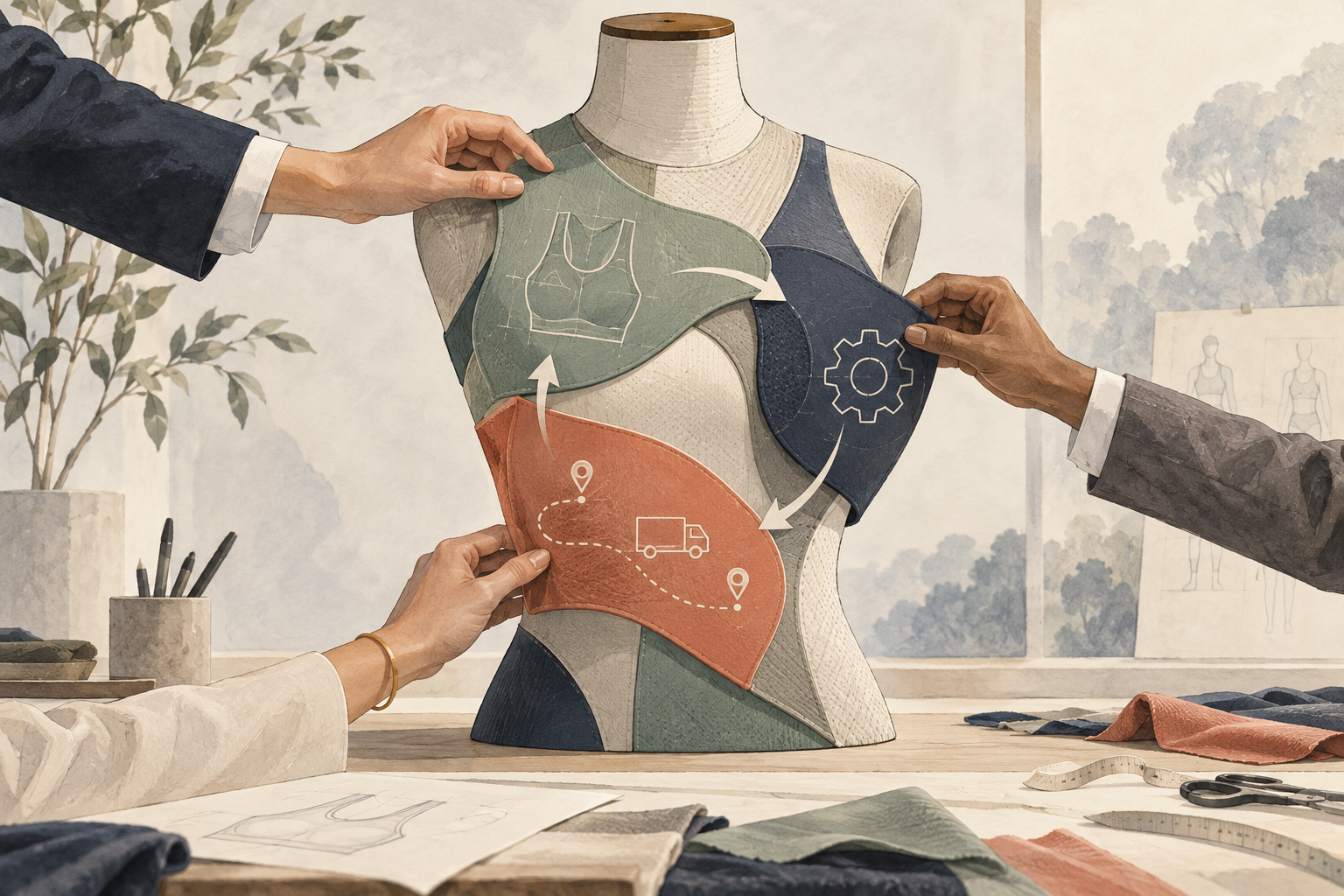
Operating model
The way a company organizes decision-making, roles, processes and technology to execute its strategy.
Speed-to-market
How quickly a retailer can move a product from idea and design through production, allocation and sale.
Comparable sales
A retail metric that measures sales growth or decline from stores and channels open long enough to be compared year over year.
Omnichannel
A retail approach that connects stores, e-commerce, apps, fulfillment and customer data into one shopping experience.
lululemon athletica inc.
other
lululemon Announces New Leadership Team Structure to Drive Next Chapter of Growth
Reuters via Investing.com
news
Lululemon puts Nike veteran in charge of product as CEO O’Neill looks to right ship
Retail Dive
news
Lululemon’s Heidi O’Neill overhauls C-suite in first move as CEO
New roles
Maggie Gauger and Joseph Godsey will take newly created product and operating roles at Lululemon on October 26.
Leadership exits
Nikki Neuburger and Ted Dagnese will leave on November 6 as Lululemon searches for brand, communications and technology chiefs.
Sales pressure
Retail Insider reported second-quarter 2026 comparable sales fell 9%, including a 12% decline in the Americas.
Lululemon’s first major executive reshuffle under new CEO Heidi O’Neill signals that the company’s turnaround is becoming an operating-model redesign, not just a merchandising fix.
The athletic-apparel company said October 7 that Maggie Gauger, most recently president and CEO of Athleta and a longtime Nike executive, will become president and chief product officer. Joseph Godsey, most recently chief growth officer at Walmart Canada, will become chief operating officer. Both roles are newly created and take effect October 26.1
At the same time, Chief Brand and Product Activation Officer Nikki Neuburger and Chief Supply Chain Officer Ted Dagnese will leave the company on November 6. Lululemon has also started searches for a chief brand officer, chief communications officer and chief technology officer.1
The structure puts product creation, operating execution and technology closer to the center of the company’s next phase. Gauger will oversee design, merchandising, footwear, product innovation and materials science, consolidating much of Lululemon’s product engine under one executive.1 Godsey will oversee sourcing and production, commercialization, go-to-market, fulfillment, planning and allocations, and sustainability — a portfolio that links product decisions to the value chain behind them.1
That division of responsibility suggests O’Neill is addressing two linked problems at once: what Lululemon sells and how quickly and consistently it can bring those products to shoppers. Retail Insider described the moves as a rebuild of the leadership structure, with emphasis on product development, brand and operational execution. It noted that Godsey’s background spans supply chain, digital commerce, technology and omnichannel retail.5
O’Neill framed the changes as an effort to put “product, design, and innovation” at the center of how Lululemon operates and to build a stronger pipeline of differentiated product.1
That language matters because the company’s recent challenges have not been limited to marketing or macroeconomic pressure. Reuters reported that Gauger is taking over product after missteps that triggered consumer backlash and recalls. Investors are also watching O’Neill’s turnaround plan as Lululemon faces newer rivals and changing customer preferences beyond its core leggings franchise.3
Gauger’s mandate is broad. Lululemon said her new role is intended to strengthen the “end-to-end product creation engine,” improve speed from product vision to execution and raise the bar for technical innovation and differentiated value.1
Retail Dive noted that her appointment puts merchandising and design teams, footwear, product innovation and materials science under the new product chief, making the role a central node in the company’s attempt to restore product relevance.4
The choice also sends a clear category signal. Gauger spent more than two decades at Nike, including leadership roles in women’s performance, running and tennis. She later led Athleta, a direct competitor in performance and lifestyle apparel.1
For a brand that built its premium position on fabric innovation, fit and product credibility, the move indicates that O’Neill is treating product architecture as the first lever of the reset.
Godsey’s appointment is equally important because it reframes supply chain and fulfillment as strategic turnaround functions, not support operations. Lululemon said the newly created COO role will bring together sourcing, production, commercialization, go-to-market, fulfillment, planning, allocation and sustainability to improve quality, execution and speed-to-market.1
That remit connects product creation with the operating system behind it. Retail Insider reported that Godsey led Walmart Canada’s e-commerce, advertising, financial services, membership, analytics, data services and product. He previously served as chief supply chain officer at Sam’s Club and spent roughly 15 years at Adidas in digital commerce, retail, technology, marketing, omnichannel and supply chain roles.5
For Lululemon, that background points to a practical priority: reducing friction between design intent, inventory planning, allocation and the in-store or online guest experience. Total Retail interpreted Godsey’s hire as a sign of greater emphasis on speed-to-market, supply-chain efficiency and closer links between product decisions and operations.7
In a more crowded activewear market, faster execution can be as important as a stronger design brief. If competitors can move quickly around color, silhouette, fabrication and social demand signals, Lululemon’s premium positioning depends on more than brand loyalty. It needs a product-to-market system that can sense demand, allocate inventory and refresh assortments without diluting quality.
The open chief technology officer role is another sign that the reshuffle is not simply a personnel swap. Lululemon said the CTO will lead product and supply-chain technology, digital and omni technology, corporate technology, enterprise data and artificial intelligence, and cybersecurity.1
The company said the role is intended to improve collaboration, support a more connected and AI-enabled technology approach, drive process efficiency, increase agility and speed-to-market, and create more personalized guest experiences.1
That scope aligns technology with product and operations, rather than isolating it as a digital-commerce function. If executed well, the structure could give Lululemon better data loops between product development, inventory allocation, stores, e-commerce and customer behavior. If executed poorly, it risks adding complexity during a period when the company is already searching for several senior leaders.
Chief Financial Officer Meghan Frank will provide continuity during the transition. Lululemon said Frank will keep leading finance and strategy while taking interim oversight of global brand and technology functions until a chief brand officer and CTO are in place.1
Retail Dive reported that Frank and Chief Commercial Officer André Maestrini remain in key roles after previously running the company as co-CEOs following Calvin McDonald’s departure, giving O’Neill some continuity alongside the new hires.4
The reorganization comes as Lululemon faces pressure in its core North American business and a more competitive premium activewear market.
Retail Insider reported that in the second quarter of 2026, revenue declined 4% to about $2.4 billion, comparable sales fell 9%, Americas revenue declined 8% and Americas comparable sales fell 12%.5 It also reported that the company lowered its 2026 revenue forecast to about $10.35 billion to $10.50 billion, a decline of roughly 5% to 7%.5
Reuters reported that Lululemon shares had nearly halved in value for the year to date and were on track for a third straight year of declines. Net income was expected to fall nearly 40% from fiscal 2024, according to LSEG data cited by Reuters.3
The Canadian Press reported that O’Neill’s first public moves come as the company tries to compete with rivals such as Alo, manage pressure from founder Chip Wilson and lift a sagging stock price.6
Those pressures explain why the reshuffle is broader than a brand campaign. Total Retail said the leadership changes suggest O’Neill sees Lululemon’s problems as more than a temporary sales slowdown and is trying to rebuild around product innovation, brand relevance and faster execution.7
The new structure gives O’Neill clearer accountability across product, operations, brand, communications and technology. But it also creates near-term execution risk. Two senior leaders are departing, two newly created roles are being installed, and searches remain open for brand, communications, technology and strategy leadership.1
That means the operating-model redesign is still incomplete. The company has clarified where it wants more control — product creation, supply chain, technology, brand expression and guest experience — but it has not yet filled all the roles needed to run that model.
For consumer and retail leadership watchers, the significance is the shift in diagnosis. Lululemon is not treating its slowdown only as a merchandising miss or a marketing problem. O’Neill’s first month suggests she is trying to rewire the company around a tighter product-to-market loop: better product ideas, clearer brand translation, faster commercialization, stronger allocation and a more connected technology layer.
The test will be whether that structure produces visible change for shoppers. In activewear, operating-model redesign only matters if it shows up as more compelling product, fewer misses, better availability and a stronger reason for customers to return.







Comments