TD SYNNEX-BlueStar Deal Signals Shift Toward Specialized IT/OT Distribution
AIDC
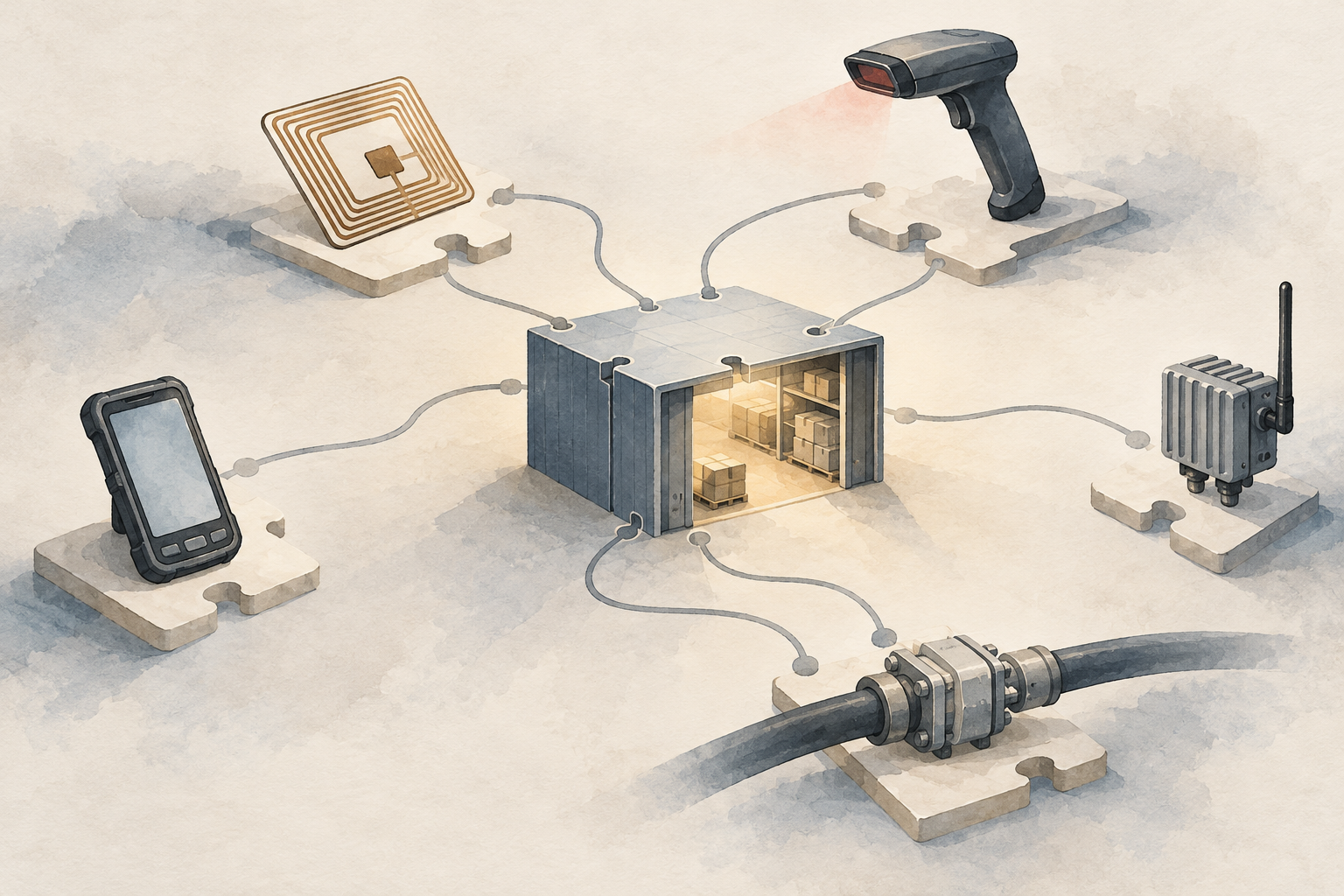
Automatic identification and data capture refers to technologies such as barcode scanning, RFID and related systems used to identify and track items, people or assets.
IT/OT convergence
The blending of enterprise information technology with operational technology used in physical environments such as factories, warehouses, stores and logistics networks.
Value-added distribution
A distribution model that goes beyond product resale by offering services such as configuration, technical support, partner enablement and solution design.
Edge devices
Hardware deployed close to where work happens or data is generated, including scanners, sensors, cameras, payment terminals, mobile devices and robots.
Definitive deal
TD SYNNEX said on October 7, 2026, that it entered a definitive agreement to acquire specialty distributor BlueStar.
Edge expertise
BlueStar focuses on AIDC, RFID, mobility, point-of-sale, robotics, security and related edge technologies.
Scale meets depth
The acquisition pairs TD SYNNEX’s broad global distribution scale with BlueStar’s specialized value-added channel model.
TD SYNNEX’s agreement to acquire BlueStar signals a more specialized phase of channel consolidation, as large technology distributors seek deeper capabilities in the systems connecting enterprise IT with warehouses, stores, factories, health care sites and other operational environments.
The companies said on October 7, 2026, that TD SYNNEX had entered into a definitive agreement to acquire BlueStar, a specialty distributor focused on automatic identification and data capture, RFID, mobility, point-of-sale, robotics, security and adjacent technologies.1 Terms were not disclosed. The transaction remains subject to regulatory approvals and other customary closing conditions.4
The strategic message is clear: in distribution, breadth is no longer enough. Enterprise customers and channel partners are increasingly building systems that link cloud platforms, enterprise software, devices, sensors, scanners, payment systems, cameras, robots and networked equipment at the edge.
That convergence is pushing broadline distributors to acquire not only volume, vendor relationships and logistics capacity, but also domain expertise in vertical workflows and operational technology.
BlueStar brings that specialization. Its portfolio spans digital identification, mobility, POS, RFID, IoT, artificial intelligence, machine-to-machine communications, signage, networking, connectivity and security technologies.7 Its channel model includes value-added distribution services for resellers, integrators and managed service providers, including configuration services and technical support.6
For TD SYNNEX, the transaction adds a specialist layer to a global distribution platform that already operates at significant scale.4
TD SYNNEX is already one of the world’s largest technology distributors. Recent coverage tied the BlueStar announcement to TD SYNNEX’s $21.56 billion quarterly revenue, underscoring the gap between the company’s global scale and the targeted capabilities it is adding through acquisition.5
Modern Distribution Management framed the deal as an expansion of TD SYNNEX’s capabilities in identification, mobility and point-of-sale technologies, with financial context from the company’s latest quarter.3
That mix of scale and specialization matters because edge technology deployments are often complex, local and operationally specific. A retailer modernizing checkout, a manufacturer automating inventory, a hospital deploying mobile clinical workflows or a logistics provider implementing RFID tracking may need more than standard product fulfillment.
Those projects often require device selection, software compatibility, staging, configuration, installation support, security considerations and partner enablement.
Broadline distributors can provide vendor breadth, credit, procurement efficiency and logistics reach. Specialty distributors can provide workflow knowledge, technical support and partner communities that understand specific use cases. M&A offers a way to combine both models.
The deal reflects a larger shift in enterprise technology spending. More digital projects now touch physical operations: inventory visibility, warehouse automation, smart retail, connected health care devices, security monitoring, industrial mobility and automated data capture.
These environments sit at the intersection of IT and operational technology, where traditional infrastructure, application and endpoint decisions meet scanners, sensors, robots, cameras, terminals and other edge equipment.
BlueStar’s focus on AIDC, RFID, mobility, POS, robotics and security puts it directly in that convergence zone.1 Those technologies are often deployed in places where downtime, device ergonomics, ruggedization, compliance, integration and field support matter as much as software features or price.
For enterprise technology and channel executives, that has two implications. First, the distributor’s role is expanding beyond procurement aggregation. Second, specialized domain knowledge is becoming a competitive differentiator inside larger channel ecosystems.
The Green Sheet and BlueStar announcement emphasized preserving BlueStar’s specialized value-added distribution expertise while expanding resources through TD SYNNEX.2 DevPro Journal’s version of the announcement highlighted BlueStar’s value-added distributor model, its work with VARs, integrators and MSPs, and services such as configuration and technical support.6 Print in the Channel also pointed to partner-facing language about preserving specialization after the deal.7
That emphasis is important. The risk in any specialty acquisition by a broadline distributor is that the acquired company’s differentiation gets diluted into a larger catalog and volume-driven operating model. The stated rationale from both sides suggests the opposite goal: using TD SYNNEX’s resources to extend BlueStar’s reach while retaining the specialist capabilities that made the business strategically attractive.
Technology distribution has long been shaped by consolidation, but the BlueStar transaction shows a shift in what acquirers are trying to buy. Earlier waves often emphasized purchasing scale, geographic reach, vendor line cards and back-office efficiency.
Those factors still matter, but they are increasingly table stakes.
The newer acquisition logic is capability-led. Distributors want practices, partner networks and technical knowledge in areas where customers are digitizing physical infrastructure. In BlueStar’s case, that includes the devices and systems that identify assets, track movement, support mobile workers, enable transactions and automate edge processes.
Reuters-sourced coverage said the deal would expand TD SYNNEX’s technology offering through BlueStar’s expertise in AIDC, RFID, mobility and POS.8 Another Reuters report noted the transaction’s undisclosed terms, regulatory conditions and TD SYNNEX’s global distribution scale.4
Together, those points capture the deal’s strategic balance: a large global platform adding a focused specialist in technologies that sit closer to the operational edge.
TD SYNNEX shares fell after the announcement, according to Reuters-sourced market coverage.8 That reaction may reflect investor caution about integration, valuation uncertainty because terms were not disclosed, or broader market dynamics.
But for channel strategy, the more durable signal is the continued blending of broadline reach with specialty expertise.
The acquisition also points to where distributors may look next. As enterprises modernize stores, warehouses, factories, campuses and field operations, distributors with expertise in edge computing, physical security, industrial networking, payment infrastructure, rugged mobility, IoT, automation and data capture may become more attractive targets.
For vendors, that could reshape go-to-market strategy. A vendor selling into operational environments may value a distributor that can recruit and support specialized partners, not simply move product.
For resellers and integrators, the combined platform could offer broader financing, logistics and vendor access while keeping specialized support for edge deployments. For enterprise buyers, the result could be a channel ecosystem better equipped to deliver integrated IT and operational solutions.
TD SYNNEX’s planned acquisition of BlueStar is not just another distribution roll-up. It is a sign that the next phase of channel consolidation is being shaped by IT/OT convergence and the digitization of physical infrastructure.
As more enterprise technology spending moves to the edge, distributors will need to combine global scale with vertical depth. The winners are likely to be those that can support both the corporate IT stack and the operational systems where digital transformation increasingly happens.








Comments