China’s Growth Risk Is Narrowing, Not Disappearing

Source Material
NAMPA / Xinhua
news
Economic Watch: From owning to experiencing: services trade fair mirrors China's rise as service consumption powerhouse
South China Morning Post
news
Exclusive | AI fight shadows final preparations for Xi Jinping’s White House visit to meet Donald Trump
South China Morning Post
news
Chinese AI firms shunned US delegation over sanctions fears, commission says
PPI Rebound
China’s August PPI rose 3.8% year on year, led by means of production rather than consumer goods.
PMI Below 50
The official manufacturing PMI improved to 49.8 in August but remained below the expansion threshold.
Narrow Engine
July high-tech manufacturing rose 16.9%, while retail sales grew only 0.6%, underscoring a divided economy.
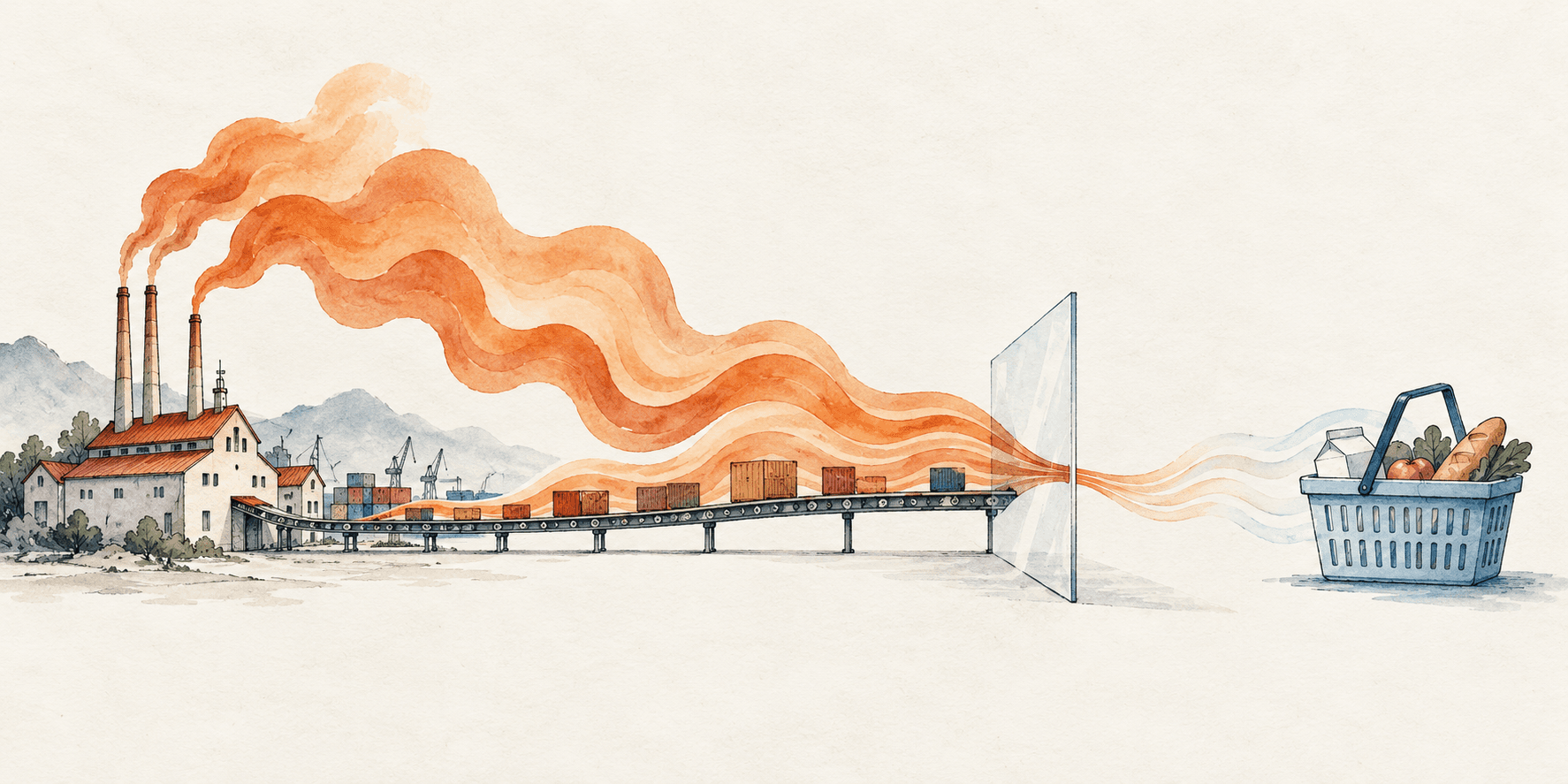
China’s August data improved at the headline level, but the risk for global markets lies in the composition of growth. Producer prices rose 3.8% year on year in August, while the official manufacturing PMI climbed to 49.8 from 49.2 in July — better, but still below the 50 expansion threshold.1112
That leaves investors focused on the coming week’s August industrial production, retail sales, investment and house-price releases. The key question is whether China’s growth mix is broadening, or whether it remains dependent on a narrower set of export- and technology-linked engines.10
The starting point is not reassuring. July industrial output slowed to 4.5% year on year, even as export delivery value by large industrial firms rose 10.4%.13 Retail sales increased just 0.6% in July, with autos down 17.0%, furniture down 8.8% and building and decoration materials down 14.2%.14 That demand pattern is consistent with continued pressure from housing and household balance sheets.
The market issue: quality of growth, not just growth
For global equity and commodities readers, China’s near-term risk is less about whether Beijing can report positive growth than whether that growth is becoming too concentrated. The stronger parts of the economy are clustered around manufacturing upgrades, electronics, energy infrastructure and strategic technology. The weaker parts remain consumer goods, property-linked spending, construction and private-sector confidence.
That distinction matters for Europe and the UK. A China recovery led by households and property would lift a broad import basket: luxury goods, autos, chemicals, industrial metals, building materials, travel and financial services.
A recovery driven mainly by AI-adjacent hardware, state infrastructure and export delivery value is more uneven. It supports selected capital-goods, semiconductor-equipment, power-grid, copper and high-end component exposures, but leaves consumer-facing and property-sensitive European earnings more vulnerable.
July’s industrial detail already showed that split. High-technology manufacturing rose 16.9% year on year; computer, communications and other electronic equipment output rose 19.1%; integrated-circuit output rose 20.7%; and industrial-robot output rose 30.2%.13 Those figures point to a real industrial cycle, but not necessarily to a broad domestic-demand cycle.
AI-linked momentum is doing more work
The AI angle is increasingly central to China’s macro read-through. Xinhua’s latest service-consumption coverage highlights Beijing’s effort to push consumption toward digital, experiential and AI-enabled formats, from smart retail to immersive services.1 That may help at the margin, but it is not yet evidence of a durable rebound in household income.
At the same time, AI has become a geopolitical and supply-chain risk. South China Morning Post reporting says AI is shadowing preparations for high-level US-China talks, while separate reporting points to Chinese AI firms’ caution around US contacts because of sanctions concerns.23
For markets, that means the sectors cushioning China’s slowdown — AI hardware, chips, servers, data-center equipment and adjacent exports — are also exposed to policy shocks.
The August PPI data underline the same narrowness. The headline producer-price rebound was concentrated in means of production, up 5.0% year on year, while consumer-goods producer prices fell 0.5%.11 Nonferrous metals and cables purchasing prices jumped 19.8%, fuel and power rose 9.8%, and computer, communications and other electronic equipment producer prices rose 5.3%.11
That is supportive for upstream commodities and selected industrial exporters. But it also squeezes margins if final demand stays soft.
Energy adds another complication. A reported shutdown of a Saudi pipeline that bypasses the Strait of Hormuz after attacks is a reminder that energy-price shocks can feed quickly into China’s producer prices and global margin assumptions.4 Higher input prices are easier for markets to absorb when end-demand is accelerating; they are more problematic when household demand is barely growing.
Property and private investment remain the drag
Beijing is leaning again on targeted investment channels. Xinhua, via Global Times, reported that China’s top economic planner is inviting private investment into 36 infrastructure and energy projects, signaling that policymakers are trying to revive fixed-asset activity and private capital participation.5
Other state-linked reports point to energy-storage and regional-integration projects, including a large salt-cavern compressed-air energy-storage project in East China and the Beijing-Xiong’an Express Line trial operation.78
These projects can stabilize activity, especially in energy, transport and advanced infrastructure. But they are not a like-for-like substitute for property-driven demand. July retail data showed building and decoration materials still contracting sharply, while furniture spending also fell.14
For commodities, that keeps the split intact: copper, power equipment and grid-linked demand may fare better than steel, cement and property construction inputs.
China’s advanced-technology push is also broader than AI. Global Times reported that China ranks second in global space-infrastructure construction, reinforcing the policy tilt toward strategic capacity and high-tech industrial ecosystems.9 That may sustain long-cycle capital spending, but it does not answer the household-demand question that matters for European consumer names.
What to watch next
The coming August activity data should be read less as a single growth score and more as a breadth test. Industrial production needs to show whether July’s export-linked strength persisted beyond electronics and high-tech manufacturing. Retail sales need to show whether service formats and online consumption are offsetting weak discretionary goods. Fixed-asset investment and house prices need to show whether state projects are merely cushioning the property drag or beginning to stabilize the broader cycle.10
The market signal is straightforward. If August confirms strong industrial output but soft retail, weak property indicators and narrow investment leadership, China-sensitive assets may continue to trade on dispersion rather than reflation.
That would favor selective exposure to AI supply chains, power infrastructure and nonferrous metals, while leaving European luxury, autos, chemicals, UK-listed miners and property-linked cyclicals exposed to a recovery that is visible in factories but not yet convincing in households.






Comments