PepsiCo earnings face pricing-power test after Constellation’s mixed signal
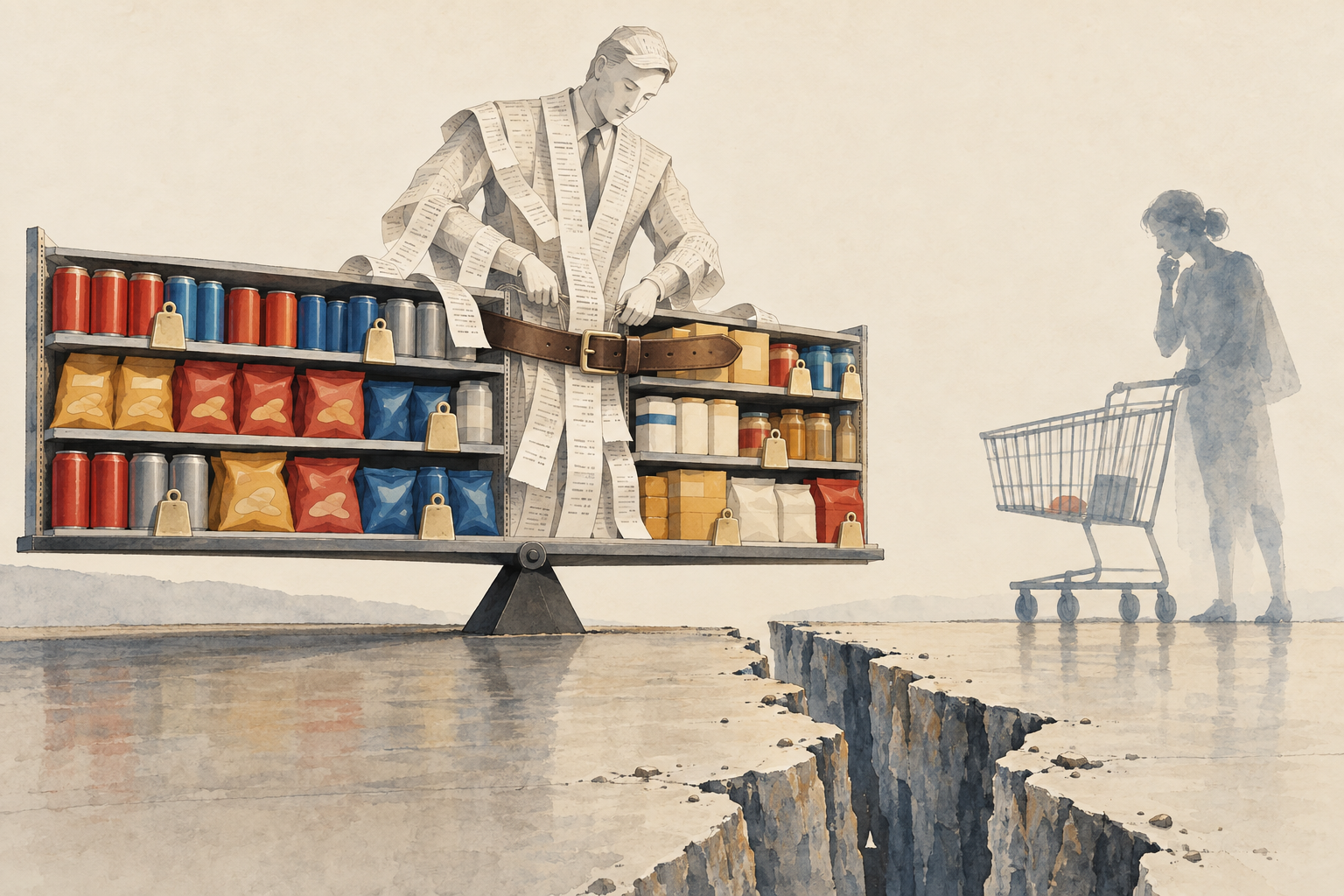
Pricing power
A company’s ability to raise prices without losing enough volume to damage sales or margins.
Depletions
In beverage alcohol, depletions measure product sold by distributors to retailers and are often viewed as closer to consumer demand than company shipments.
Affordability initiatives
Actions such as price cuts, coupons, value packs or package changes designed to keep budget-conscious shoppers buying.
Operating margin
Operating income as a percentage of sales; it shows how much profit a company keeps from core operations before interest and taxes.
Constellation Brands / SEC filing
government
Constellation Brands, Inc. Q2 FY 2027 Form 10-Q
Reuters via Investing.com
news
PepsiCo running out of time to meet Elliott-inspired targets as GLP-1 threat intensifies
TipRanks
news
PepsiCo Q3 Earnings Preview: Can North America Weakness Finally Turn Around?
PepsiCo test
Analysts expect PepsiCo’s Q3 revenue to rise about 4.3% to $24.96 billion, but EPS growth is expected to be nearly flat.
Beer divergence
Constellation’s beer net sales rose 5% in fiscal Q2, while beer depletions fell 0.6%, pointing to a gap between shipments and consumer takeaway.
Margin pressure
Staples companies are using affordability moves, coupons, mix changes and selective pricing to protect volumes, which may limit margin expansion.
PepsiCo’s Oct. 8 third-quarter report is shaping up as a referendum on the consumer-staples trade. Pricing power remains visible, but the margin benefit is increasingly being capped by weak volumes, affordability initiatives and the cost of defending share.
Constellation Brands offered the latest evidence. Its fiscal second-quarter beer net sales rose 5% to $2.47 billion, helped by 5.5% shipment growth and selective pricing. But beer depletions — a closer proxy for consumer takeaway — fell 0.6%.1
That divergence matters for global equities investors because staples are becoming a cleaner read-through on household strain than broad retail sales. Retail data can be distorted by channel mix, credit, promotions and big-ticket cycles. Staples volumes, pricing and gross margin show more directly whether households are still absorbing higher prices for repeat purchases — snacks, beverages and beer — or whether brands are having to trade margin for affordability.
The near-term answer is mixed. Constellation showed profit resilience, with consolidated gross profit margin edging up to 52.9% from 52.8% and beer comparable operating income still above $960 million in the quarter.1 Yet the company also said the quarter’s beer sales increase was driven by distributor inventory rebuilding, while management continued to point to macroeconomic pressure on consumers.1
PepsiCo now has to prove that its North American snacks and beverages can show a more durable version of the same story: enough pricing and productivity to support earnings, without further volume erosion.
Consensus already expects modest top-line growth from PepsiCo. Analysts cited by Reuters expect third-quarter revenue to rise 4.3% to $24.96 billion, with adjusted earnings per share up only 0.21% to about $2.29.2 TipRanks’ preview put expected EPS at $2.30, barely above $2.29 a year earlier, and said investors are focused on North America after flat food volumes and beverage margin pressure in the prior quarter.3
That setup makes the quality of sales more important than the sales figure itself. For a staples company with PepsiCo’s scale, a 4% revenue gain would normally imply defensive strength. But if growth comes mostly from price rather than units, and if price cuts or pack-size changes are needed to stabilize demand, investors may view it as evidence that pricing power has peaked.
Reuters reported that PepsiCo had cut prices by as much as 15% on products including Lay’s and Doritos in February, while first-half core operating margin slipped 15 basis points to 16.3% of revenue despite productivity efforts.2 That is the core tension for the sector: affordability can protect traffic and brand relevance, but it also risks turning pricing power from a margin engine into a volume-support tool.
Constellation’s results are not a simple negative read-through. Beer net sales increased by $128.6 million from a year earlier, and the company attributed $12.8 million of the gain to favorable pricing in select markets.1 Management also sounded more confident on the call, saying the business had beaten expectations, reiterating fiscal 2027 comparable EPS guidance of $11.20 to $11.90 and indicating that continued positive September trends could put results toward the high end of the range.6
But the composition of growth was less clean. The company said $130.2 million of the beer sales increase came from shipment volume growth as distributors rebuilt inventory days on hand, while unfavorable mix reduced sales by $14.4 million.1 Shipments rose faster than end-consumer depletions, meaning part of the reported strength reflected channel normalization rather than pure household demand.
On the call, management pushed back against the idea that the quarter was only an inventory story. Chief Financial Officer Garth Hankinson said Constellation still would have come in above expectations without the level of shipment support, while Chief Executive Nick Fink said September showed non-timing-related acceleration.6
Even so, the company’s own data point to a cautious interpretation: beer can still carry price, but investors are likely to discount sales growth that depends heavily on inventory rebuilds rather than consumer pull.
The most important sector signal may be that staples companies are no longer simply raising prices across portfolios. They are becoming more surgical: selective price increases, smaller or different packs, coupons, distributor incentives and marketing aimed at keeping shoppers in the franchise.
Constellation’s management described a long-term beer pricing algorithm of roughly 1% to 2%, but said it was being selective given the macro backdrop and the impact on consumers.6 The company also said Q2 pricing net of mix was roughly flat because mix headwinds, distributor incentives, couponing and prior light-beer repositioning offset underlying price actions.6
PepsiCo faces a similar balancing act. Reuters said investors want proof of beverage pricing power and evidence that North American snack volumes and margins have stopped sliding.2 That bar is harder to clear because PepsiCo is exposed both to pressured grocery budgets and to changing health preferences, including investor concern that GLP-1 weight-loss drugs could weigh on demand for salty snacks and sugary drinks.2
The key read-through from PepsiCo will not be whether it beats EPS by a few cents. It will be whether management can show that North American food volumes are stabilizing without giving back too much price.
A healthier print would combine steady or improving volume trends, positive but not excessive pricing, and margin expansion from productivity rather than one-off cost relief.
A weaker print would look different: revenue growth supported by price, but volumes still negative; affordability programs gaining traction but compressing margins; and management leaning more heavily on future cost savings or portfolio reformulation to defend guidance. That would reinforce the message from Constellation’s quarter: profit pools remain resilient, but the consumer is forcing companies to spend, discount or mix-shift to protect them.
For global equities, the implication is that staples still deserve a defensive premium, but not an indiscriminate one. Companies with true brand elasticity, clean volume growth and room for productivity can still compound earnings. Those relying on price alone may find that affordability, promotions and channel incentives are beginning to cap margins just as investors are asking for clearer proof of pricing power.








Comments