Sterling’s $1.32 Slide Puts UK Rates Pricing on Trial
Rate differential
The gap between interest rates or expected policy rates in two economies; wider U.S.-UK differentials can support the dollar against sterling.
Market-implied probability
An estimate derived from traded instruments, such as futures, showing how likely investors think a policy move is.
Hawkish pricing
Market pricing that assumes a central bank will keep policy tight or raise interest rates further.
GBP/USD
The exchange rate showing how many U.S. dollars one British pound buys.
MarketScreener / Reuters
news
Dollar firms as US-Iran tensions lift oil, hawkish Fed bets build
Business Recorder / Reuters
news
Sterling treads water at 3-month low against dollar, euro
The Straits Times / Reuters
news
Stocks cautious in Asia as oil gains, yields rise
Sterling low
The pound is hovering near three-month lows around $1.32 against the dollar.
Oil shock
Oil near or above $106 is reinforcing inflation concerns and supporting hawkish Fed pricing.
BoE risk
Markets still price further Bank of England tightening, but that support could fade if UK data soften.
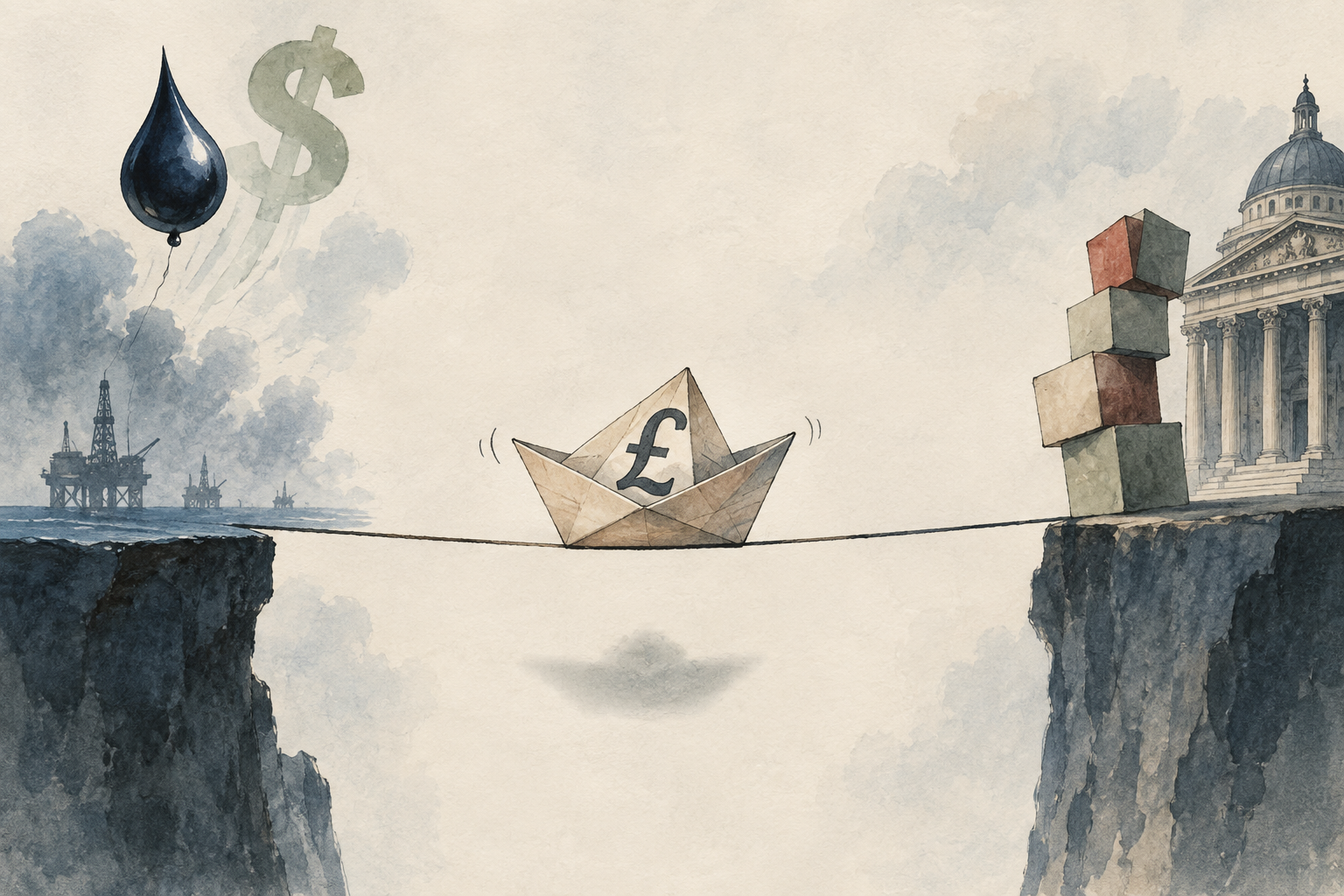
Sterling’s slide toward $1.32 is not just a dollar story. It is also a test of how much Bank of England tightening the UK economy can credibly absorb.
The pound traded near three-month lows around $1.32 against the dollar as rising oil prices, U.S.-Iran tensions and firmer U.S. yields strengthened the greenback. Reuters reported sterling around $1.3232, while oil above $106 helped fuel inflation concerns and lifted the market-implied probability of an October Federal Reserve hike to about 65%.1 A separate market wrap put sterling just above three-month lows near $1.3228, with Brent around $106 and Treasury yields rising on renewed Fed tightening expectations.4
For FX and rates investors, the sharper question is whether UK rate pricing has become a liability. Markets still imply further BoE tightening, but Reuters noted that investors may be pricing in more hikes than economists expect the central bank to deliver.2 That leaves the pound exposed if incoming UK inflation, wages or activity data fail to justify the tightening embedded in the curve.
The immediate pressure on GBP/USD is coming from the dollar side. Higher oil prices threaten to slow U.S. disinflation, while stronger U.S. data and rising yields have pushed investors back toward a more hawkish Fed path. One rates-market account cited the U.S. 10-year yield near 5.2%, with oil adding to inflation risks and odds of an October Fed hike around two-thirds.9
That mix is conventionally dollar-positive. Higher U.S. real and nominal yields raise the hurdle for other currencies, especially when global risk appetite is cautious. Sterling can weaken even if UK rate expectations remain elevated because the U.S. side of the rate differential is moving in the dollar’s favor.
The more sterling-specific risk is that the market’s BoE path assumes a resilience the UK economy may not show.
If UK data remain firm — especially services inflation, wage growth and consumption — the BoE can validate market pricing and limit sterling downside. But if growth softens while inflation progress resumes, the market may have to remove some expected tightening. That would narrow sterling’s yield support just as the dollar benefits from oil-driven inflation hedging and renewed Fed hike bets.
This is the widening gap now visible in GBP pricing. Traders are still assigning value to prospective BoE tightening, while macro investors are questioning whether the UK economy can withstand it. Reuters’ framing that markets may be overpricing BoE hikes relative to economists’ expectations is therefore central to the pound’s vulnerability.2
The next decisive move in sterling is likely to come from data rather than rhetoric. A hot UK inflation or wage print would support the case for additional BoE action and could stabilize the pound, particularly if U.S. yields stop rising. By contrast, weaker activity or softer price data would make the current UK rates profile look too hawkish.
That asymmetry matters because sterling is already trading near a technical and sentiment low. When a currency is near three-month lows, the market does not need a full dovish pivot to extend the move. It only needs enough evidence to question whether priced hikes are deliverable.
Sterling’s weakness reflects more than broad dollar strength. The pound is being squeezed between a dollar supported by oil, yields and Fed repricing, and a domestic rates market that may be asking too much of the UK economy. Unless UK data continue to justify additional BoE tightening, the $1.32 area may prove less a floor than a stress test.







Comments