China imposes steep provisional deposits on Japanese dichlorosilane imports as Tokyo protests
Anti-dumping measure
A trade remedy used when a government finds that imported goods are being sold below normal value and harming domestic producers.
Provisional cash deposit
A temporary border payment imposed while an anti-dumping investigation continues; final duties may later be confirmed, changed or removed.
Dichlorosilane
A silicon-containing chemical used in semiconductor and advanced materials production, often abbreviated as DCS.
Taiwan contingency
A potential crisis or conflict involving Taiwan; statements about such scenarios are highly sensitive in China-Japan relations.
China Trade Remedy Information / Ministry of Commerce of the People's Republic of China
government
商务部公告2026年第37号 公布对原产于日本的进口二氯二氢硅反倾销调查的初步裁定
China Trade Remedy Information / Ministry of Commerce of the People's Republic of China
government
商务部新闻发言人就对原产于日本的进口二氯二氢硅反倾销调查初裁答记者问
General Administration of Customs of China / MOFCOM Overseas Comprehensive Service Platform
government
海关总署公告2026年第133号(关于二氯二氢硅商品编号申报要求的公告)
Steep deposits
China set provisional cash deposits of 80.8% to 99.2% on Japanese dichlorosilane imports from September 8.
Chip supply chain
Dichlorosilane is used in semiconductor-related manufacturing, making the trade case commercially sensitive.
Diplomatic strain
Japan urged China to withdraw the measures as Taiwan-related tensions and export controls continue to weigh on relations.
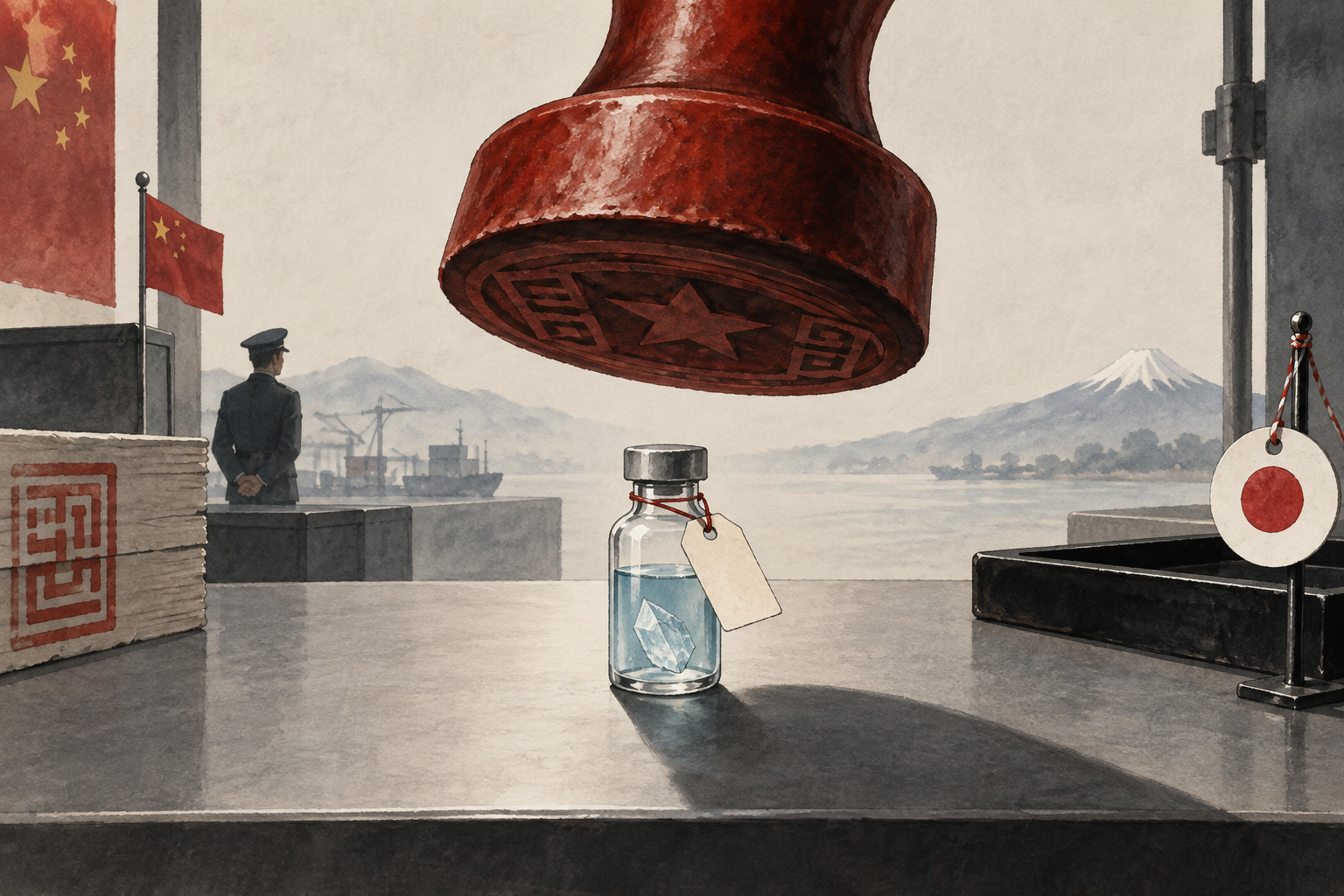
China began imposing provisional anti-dumping measures on Japanese dichlorosilane imports on September 8, requiring importers to pay cash deposits of 80.8% to 99.2%. The move follows a preliminary Ministry of Commerce finding that the chemical was being dumped into the Chinese market and injuring domestic producers.1
Japan immediately challenged the decision, urging Beijing to withdraw the measures and warning that they could disrupt companies that rely on the material, a specialty chemical used in semiconductor-related supply chains.5 The dispute is moving through formal trade-remedy and customs channels, but it comes as bilateral relations remain strained after Prime Minister Sanae Takaichi’s remarks about a Taiwan contingency and earlier Chinese export controls targeting Japan.59
Under China’s preliminary ruling, imports from Denal Silane Co. face an 80.8% deposit rate. Shin-Etsu Chemical Co. and all other Japanese companies face a 99.2% rate.1 The measures are provisional, meaning they apply while the investigation continues and before any final anti-dumping determination is issued.2
Beijing framed the action as technical enforcement, not a political sanction. The Ministry of Commerce said the investigation was conducted under Chinese law and World Trade Organization rules, and that the preliminary finding identified dumping margins of 80.8% to 99.2%.2 State media also presented the case as a restrained trade-remedy measure responding to alleged market injury.4
Japan’s government said it would assess the impact on domestic firms and pressed China to reverse course. Chief Cabinet Secretary Minoru Kihara and industry minister Ryosei Akazawa expressed concern about business disruption, according to Jiji Press, and criticized what Tokyo sees as Japan-specific trade restrictions by China.6
The Associated Press reported that Japan protested the measures and said China should withdraw them. It also noted that the decision affects a key chipmaking material and comes amid heightened political friction between Asia’s two largest economies.5
The case gives both governments a formal channel for escalation beyond diplomatic statements. China is using anti-dumping law, deposit requirements and customs classification rules. Japan is responding through official protest and impact assessment. For Asia-Pacific policy watchers, the dispute shows how trade procedures can become part of a wider strategic contest, even when governments describe them in legal and technical terms.
China’s customs authorities issued a related implementation notice requiring import declarations for dichlorosilane under tariff line 28539090 to use commodity code 28539090.61 from September 8.3 The customs step helps apply the cash-deposit requirement at the border.
JETRO, Japan’s government-affiliated trade body, said the investigated product falls under HS code 28539090 and noted a comment window in the Chinese proceeding. It also cited import data showing Japanese dichlorosilane accounted for about 60% of the investigated product’s China market share in the first half of 2025, underscoring the case’s commercial importance.7
Dichlorosilane, also known as DCS, is used in semiconductor manufacturing processes, including the production of silicon-based materials. That makes the case more sensitive than a routine chemical trade dispute because it touches supply chains already affected by U.S.-China technology competition and Japan’s role in semiconductor equipment and materials markets.8
China’s anti-dumping system allows provisional measures when investigators make an initial finding of dumping and injury before a final ruling. Beijing’s position is that the Japanese imports were sold at unfairly low prices and harmed domestic industry.12
Tokyo’s reaction reflects both commercial concern and the broader deterioration in ties. Relations have been strained since Takaichi’s Taiwan-contingency remarks, which Beijing viewed as crossing a sensitive political line, and after China tightened export controls affecting Japan.59
The result is a dispute operating on two tracks. On paper, the dichlorosilane case is an anti-dumping investigation with defined rates, product codes and procedural deadlines. In the wider diplomatic setting, it adds another point of friction between governments already divided over Taiwan, technology supply chains and the boundaries of economic coercion.
For now, importers bringing Japanese dichlorosilane into China face steep deposits at the border while the investigation continues. A final Chinese determination will decide whether the provisional rates are confirmed, modified or withdrawn. But the immediate political effect is already clear: Beijing and Tokyo are contesting each other through regulatory instruments while their security dispute remains unresolved.






Comments