China sends Han Zheng to UN as Xi-Trump summit dominates diplomatic agenda
UN General Assembly general debate
The annual gathering where world leaders and senior officials deliver national statements on global issues and diplomatic priorities.
Global Development Initiative
A China-backed development framework launched by Xi Jinping that Beijing says supports the U.N. 2030 Sustainable Development Agenda.
1982 U.S.-China communique
One of the three joint communiques governing U.S.-China relations; Beijing often cites it in objections to U.S. arms sales to Taiwan.
AI hotline
A proposed emergency communication channel that could help Washington and Beijing manage serious artificial-intelligence incidents with national-security implications.
Ministry of Foreign Affairs of the People's Republic of China
government
Han Zheng to Attend the General Debate of the 81st Session of the United Nations General Assembly
Ministry of Foreign Affairs of the People's Republic of China
government
Foreign Ministry Spokesperson Guo Jiakun’s Regular Press Conference on September 22, 2026
Xinhua / China’s Diplomacy in the New Era
news
GDI has yielded fruitful outcomes over past five years: spokesperson
Untracked bias
Bias and factuality ratings from Media Bias Fact Check. Outlets without a rating are marked “Untracked.”
UNGA visit
Vice President Han Zheng will attend the UN General Assembly general debate in New York from September 24 to 26.
GDI anniversary
Han will join a high-level dialogue marking five years of China’s Global Development Initiative at U.N. headquarters.
Parallel summit
Xi Jinping’s Washington talks with Donald Trump are expected to focus on Taiwan, trade, technology, Iran and AI risk management.
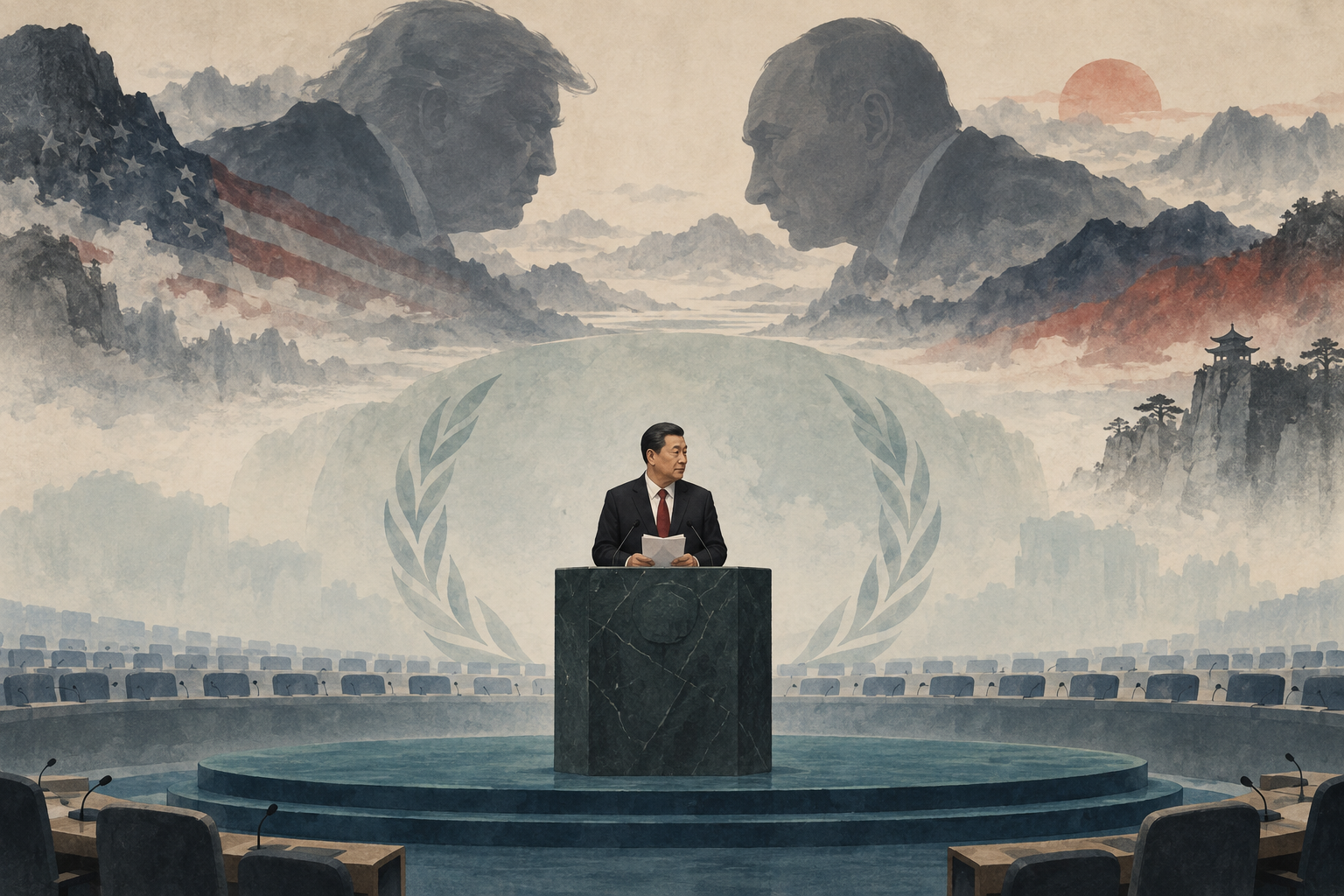
China will send Vice President Han Zheng to New York for the United Nations General Assembly general debate from September 24 to 26, the Foreign Ministry said, putting Beijing’s multilateral agenda on display as President Xi Jinping’s Washington summit with President Donald Trump dominates China’s diplomacy this week.1
Han will attend the 81st UNGA general debate, meet the U.N. secretary-general, the president of the General Assembly session and leaders of other countries, and join a high-level dialogue marking the fifth anniversary of China’s Global Development Initiative, according to the ministry.1
Beijing framed Han’s trip as an effort to defend the U.N.-centered system, press for reform of global governance and promote what it calls “true multilateralism.” Foreign Ministry spokesperson Guo Jiakun said the United Nations remains the “core platform for global governance” and that Han would outline China’s positions on the international landscape, major regional issues and the work of the U.N.2
The trip comes as China focuses on a separate, higher-stakes bilateral track in Washington. Xi is visiting the United States for talks with Trump expected to cover trade, technology, Iran, Taiwan and artificial intelligence, with the White House preparing a highly choreographed state-visit program.47
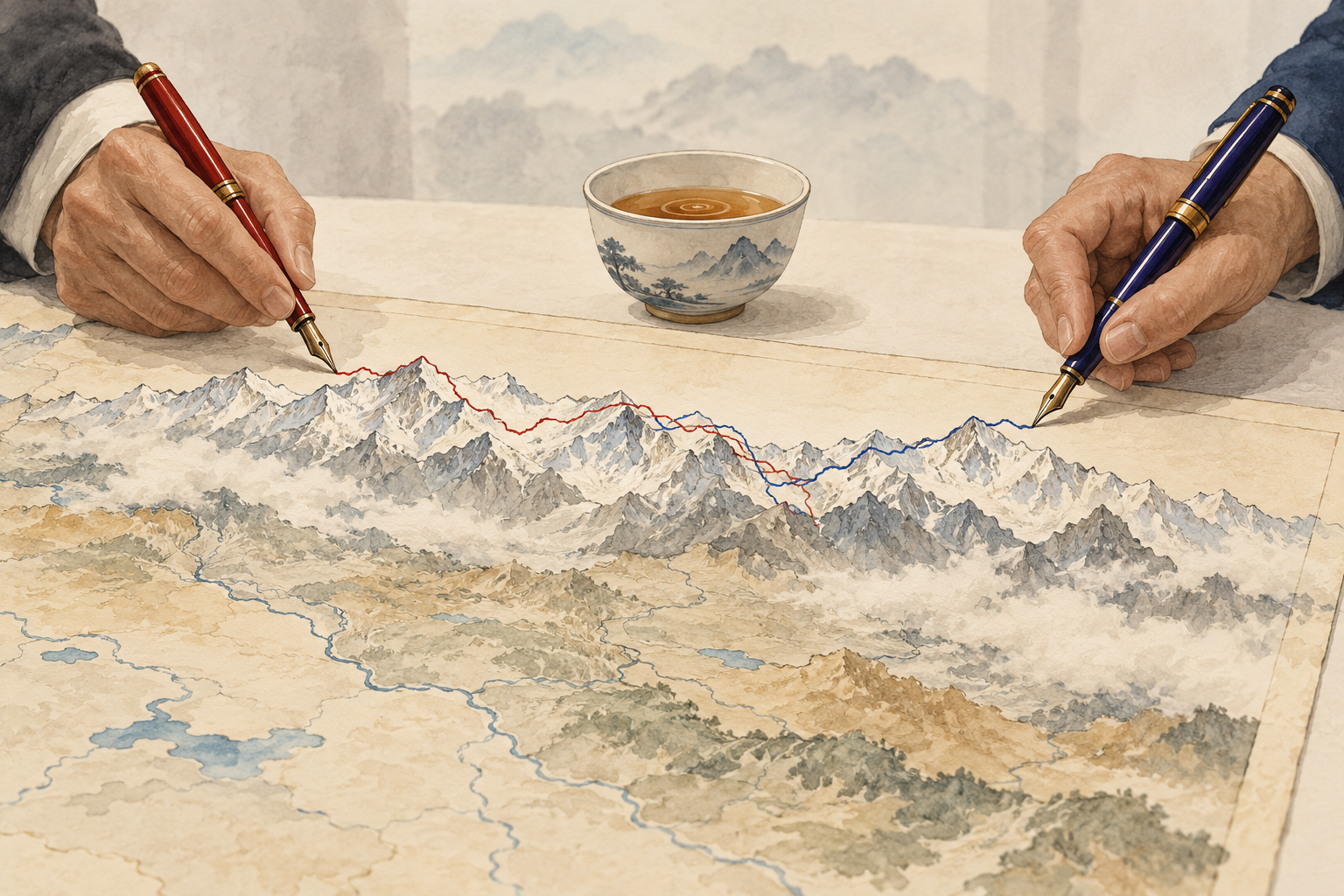
The split-screen diplomacy gives Beijing two contrasting platforms. At the U.N., Han is expected to present China as a defender of multilateral institutions and a voice for developing countries. In Washington, Xi is engaged in direct management of the world’s most consequential bilateral relationship, where disputes over tariffs, semiconductor controls, Taiwan arms sales and strategic technology risks remain unresolved.45
The Foreign Ministry’s September 22 briefing linked Han’s UNGA role to a broader Chinese argument that the current international order is under strain. Guo said global conditions were volatile and that countries should use the General Assembly to build consensus and coordinate multilateral action.2
That emphasis also lets Beijing contrast its U.N. rhetoric with what it often criticizes as unilateral pressure from Washington. In the same briefing, Guo rejected U.S. sanctions policy toward Iran as lacking a U.N. Security Council mandate, underscoring China’s preference for framing legitimacy through U.N. institutions.2
Han’s schedule includes the September 25 high-level dialogue on the fifth anniversary of the Global Development Initiative, a Xi-backed framework that Beijing presents as a contribution to the U.N. 2030 Agenda for Sustainable Development.3
Chinese state media reported that Beijing says the initiative has mobilized more than $23 billion and delivered more than 2,000 cooperation projects over five years. It also said projects under the Global Development and South-South Cooperation Fund have reached more than 70 countries and benefited more than 40 million people.3
Those figures are central to China’s pitch at the U.N.: that its development initiatives are practical mechanisms for the Global South, not alternatives to the U.N. system. Beijing says the GDI dialogue will review achievements, share development opportunities and support implementation of the 2030 Agenda.3
The Xi-Trump summit, by contrast, is focused less on multilateral process than on preventing rivalry from spiraling across hard-security and strategic-technology issues.
Reuters reported that Xi is expected to press Trump to halt Taiwan arms sales under Beijing’s interpretation of the 1982 U.S.-China communique, while Washington remains bound by U.S. law to provide Taiwan with defensive capabilities.5 Taiwan is likely to remain one of the most sensitive items on the agenda, alongside trade and technology controls.
Artificial intelligence has also emerged as a possible area for crisis-management mechanisms. Axios reported that Washington and Beijing are weighing an emergency communication channel for major AI-related incidents, while CBS News reported that AI, semiconductor access and tariff arrangements are all expected to figure in the talks.67
The optics of the visit have sharpened the contrast. Trump planned an unusually elaborate welcome for Xi, including a tarmac greeting at Joint Base Andrews and a formal White House schedule, according to Reuters and CBS News.47 But analysts cited by CBS cautioned that the summit may produce limited policy breakthroughs despite the ceremonial setting.7
For Beijing, the dual approach serves different audiences. Han’s presence at the U.N. speaks to developing countries, U.N. member states and institutions where China seeks greater influence over governance debates. Xi’s Washington meetings address immediate strategic risk with the United States.
Together, the two tracks show how China is trying to manage a difficult diplomatic week: projecting stability and institutional leadership in New York while negotiating directly with Washington over the most contentious issues in U.S.-China relations.



Comments