China uses Manchuria anniversary to press Japan on security debate
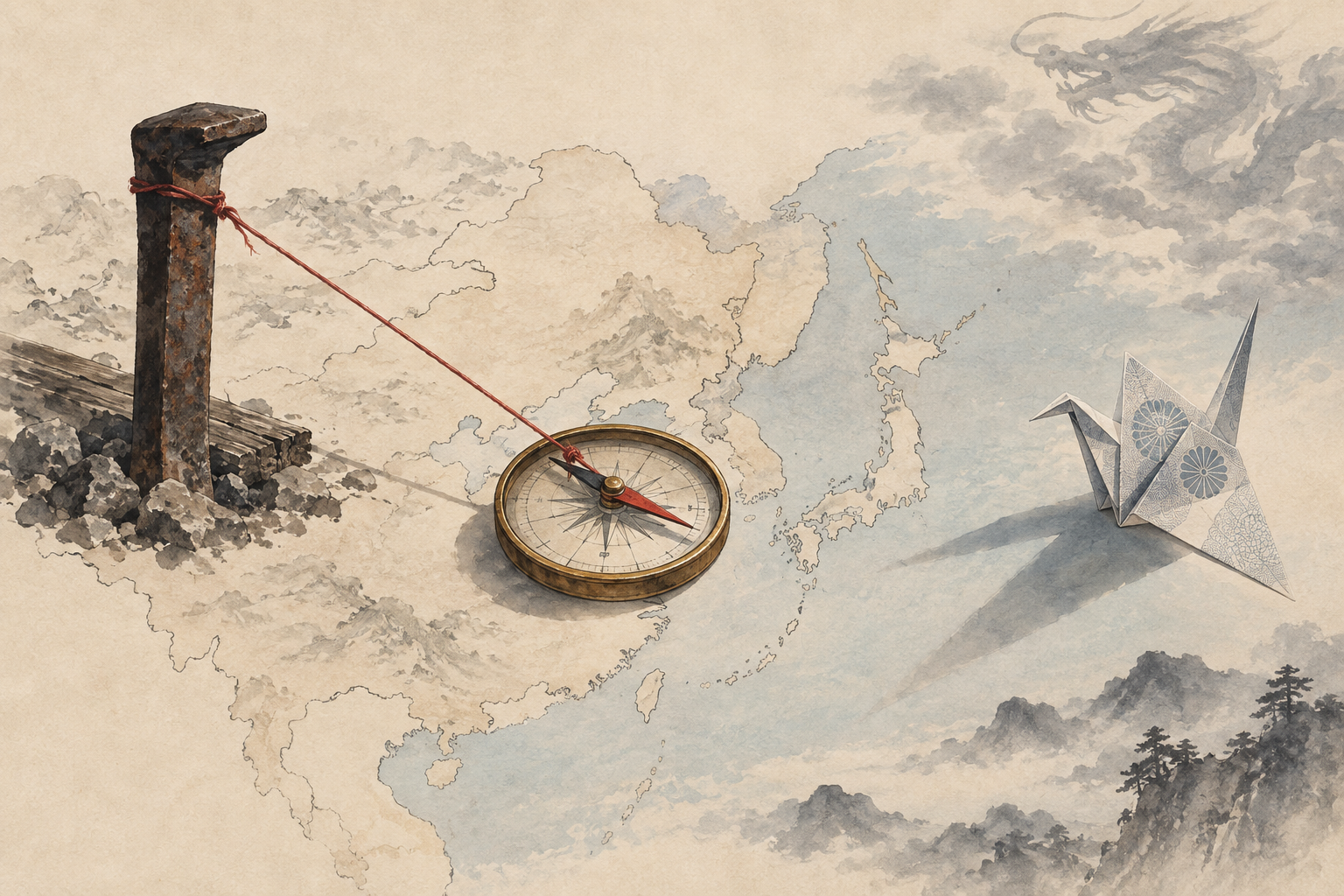
September 18 Incident
Also known as the Mukden Incident, it refers to the 1931 event that preceded Japan’s seizure of Manchuria and is commemorated in China as the start of Japan’s aggression in Northeast China.
Three strategic documents
Japan’s core national-security planning documents, whose revision can shape defense capabilities, spending priorities and alliance coordination.
Postwar order
The political and legal settlement after World War II, including limits and norms around Japan’s military role that remain central to regional diplomacy.
Historical denialism
In this context, China’s term for efforts it says downplay or justify Japan’s wartime aggression and weaken recognition of war responsibility.
Permanent Mission of the People's Republic of China to UNESCAP / Ministry of Foreign Affairs of China
government
Foreign Ministry Spokesperson Guo Jiakun’s Regular Press Conference on September 18, 2026
Japan Ministry of Defense
government
防衛大臣記者会見|令和8年9月18日(金)15:20~15:32
Reuters via Internazionale
news
Japan PM retains economy minister in cabinet reshuffle, vows to speed up spending plans
Untracked bias
Bias and factuality ratings from Media Bias Fact Check. Outlets without a rating are marked “Untracked.”
Anniversary warning
China used the 95th anniversary of the September 18 Incident to warn that Japanese militarism must not be revived.
Defense review
Japan is preparing year-end revisions to three strategic security documents under Prime Minister Sanae Takaichi.
Memory politics
Beijing linked historical denialism to present concerns over Japanese rearmament and postwar constraints.
China marked the 95th anniversary of Japan’s 1931 seizure of Manchuria with a pointed warning that Japanese militarism “must never be revived,” linking wartime memory to current concerns over Japan’s security debate under Prime Minister Sanae Takaichi.1
Foreign Ministry spokesperson Guo Jiakun said at a regular press conference on September 18 that “historical denialism” in Japan was becoming more prevalent. He accused Japanese textbooks and right-wing forces of downplaying aggression and trying to whitewash war crimes.1
Guo framed those trends not only as a dispute over history, but as a political problem with contemporary security implications. He said denialism could help Japan “escape” postwar constraints and rearm.1
The remarks were tied to the September 18 Incident, also known in China as the Mukden Incident. Beijing treats the episode as the opening act of Japan’s invasion of Northeast China and a foundational date in China’s wartime memory politics.1
Chinese state media amplified the same framing domestically, describing the anniversary as a reminder that Japan must not forget its militarist past and casting remembrance as a way to “guard peace” rather than perpetuate hatred.57
The statement shows how historical memory is again being used as an active diplomatic instrument in China-Japan relations. Beijing did not limit its criticism to commemorative language. It connected the anniversary to current Japanese debates over defense spending, strategic documents and military capabilities.
Guo’s remarks responded to a question that explicitly cited Japanese media and scholars who, according to the question, warned that the Takaichi administration’s security policies risked moving Japan toward a prewar path.1
The ministry’s answer did not name specific Japanese officials beyond the administration context embedded in the question. But it broadened the issue into a warning about textbooks, archives, the Tokyo Trials, the postwar order and remilitarization.1
That structure matters diplomatically. By tying current Japanese policy debates to the historical legitimacy of the post-1945 order, Beijing can present its security concerns not only as bilateral friction with Tokyo, but as a regional and international issue rooted in World War II settlement politics.1
Japan is in the middle of a defense-policy debate that gives Beijing’s historical messaging immediate relevance. Defense Minister Shinjiro Koizumi said on September 18 that Japan faces its most severe and complex postwar security environment and that the government must revise three strategic documents by the end of the year.2
Koizumi said the revisions concern not only Japan’s security but the wider region. He cited instructions from Takaichi to fundamentally strengthen defense capabilities, reinforce the defense production and technology base, deepen the U.S.-Japan alliance and expand bilateral and multilateral defense cooperation under a “Free and Open Indo-Pacific” framework.2
The minister also said Japan should discuss needed capabilities “concretely and realistically” and that no situation involving unilateral changes to the status quo by force could be treated with optimism.2
Asked about issues including nuclear-related debate and submarines, Koizumi said Japan should not exclude every option from discussion, while continuing to explain policy carefully to the public.2
Takaichi’s September 17 cabinet reshuffle reinforced continuity in this policy area. Reuters reported that key ministers, including Foreign Minister Toshimitsu Motegi and Defense Minister Koizumi, remained in place, while Japan faces the prospect of higher defense spending in a strategy review this year.3
The Associated Press similarly reported that Takaichi retained Koizumi and Motegi to ensure continuity in key policies and ties with Washington.4
Beijing’s statement does not stand apart from Japan’s strategic planning. It casts Japan’s debate over stronger defense capabilities through the lens of unresolved historical responsibility.
China’s position is that denial of wartime aggression undermines trust in Japan’s present intentions. Guo said denying aggression challenges the verdict of history and damages the postwar international order. He urged Japan to face and repent for its wartime past and earn trust from Asian neighbors through concrete action.1
A Chinese-language Xinhua report carried by China Daily used similar terms, saying denialism was spreading and describing it as politically motivated support for remilitarization.5
Chinese state media commentary published the same day broadened that argument. A China Daily opinion article by Kimihiko Baba argued that wartime Japanese media helped mobilize public support for aggression and that postwar Japan has retained limited recognition of suffering inflicted on Asia, particularly China.6
Another China Daily item framed the September 18 Incident as the beginning of Japan’s aggression in China and Asia, saying historical remembrance should warn the future.7
For Beijing, that public-facing memory campaign supports the foreign ministry’s diplomatic message: Japan’s contemporary defense normalization cannot be separated from how Japan handles wartime history.
For Tokyo, the official defense argument is different. Japanese officials frame capability-building as a response to a deteriorating regional security environment and a means to prevent war, not to revise history.2
The September 18 anniversary is a recurring point of tension. This year, it coincides with three developments that sharpen its diplomatic utility.
First, Japan is preparing a year-end revision of key security documents, creating a live policy process for Beijing to address.2 Second, Takaichi’s cabinet reshuffle preserved continuity in the foreign and defense portfolios, signaling that Tokyo’s current approach will likely remain the basis of near-term policy debate.34 Third, reporting on the reshuffle links Japan’s security planning to stronger capabilities, AI, drones, higher spending and a southern-islands buildup, all areas that China watches closely.4
The AP reported that Takaichi’s government is working to revise security and defense strategy documents by the end of the year to bolster capabilities against threats from China, North Korea and Russia. It also reported that Japan has raised defense spending to 2% of GDP while seeking more for 2027.4
The AP also noted that Japan is trying to manage tensions with China after Takaichi’s earlier comment about possible Japanese military involvement if China acted against Taiwan.4
In that context, China’s anniversary statement adds a historical frame to a strategic dispute. It does not prove either side’s intent. It does show that history politics remains a usable diplomatic vocabulary for Beijing when criticizing Japanese defense policy.
The immediate effect is likely to be another layer of friction around Tokyo’s defense-policy debate. Chinese officials can point to wartime memory and the postwar order when challenging Japan’s security changes. Japanese officials can point to current threats and alliance obligations when justifying revisions.
The result is a familiar but consequential pattern: security policy becomes harder to discuss as a purely contemporary issue. In China-Japan ties, the language of deterrence, rearmament and regional stability is repeatedly pulled back into unresolved arguments over 1931, wartime aggression, the Tokyo Trials and the meaning of the postwar order.
That is the diplomatic significance of Guo’s September 18 statement. Beijing is not only commemorating a historical anniversary. It is using that anniversary to define the terms on which Japan’s present military-policy debate will be judged in Chinese diplomacy.1








Comments