Chips Act 2.0 tests EU balance between industrial policy and competition rules

Chips Act 2.0
A proposed follow-up to the EU’s semiconductor strategy, intended to strengthen Europe’s chip supply chains, investment capacity and technological resilience.
Merger-control guidelines
Rules and analytical principles used by the European Commission to assess whether corporate mergers would harm competition in the EU market.
De minimis state aid
Small amounts of public support that governments can give to companies without full EU state-aid notification, because they are considered unlikely to distort competition significantly.
Economic security
An EU policy concept focused on reducing strategic dependencies, protecting critical technologies and managing risks from supply-chain or geopolitical disruption.
Council of the European Union
government
Media advisory - Competitiveness Council (Internal market and industry and research) of 24 September 2026
Council of the European Union
government
Competitiveness Council, 24 September 2026
Council of the European Union
government
Provisional agenda: Council of the European Union (Competitiveness), 24 September 2026
Untracked bias
Bias and factuality ratings from Media Bias Fact Check. Outlets without a rating are marked “Untracked.”
Chips focal point
Ministers are using the Chips Act 2.0 debate as the anchor for a broader discussion on industrial resilience and EU competitiveness policy.
Competition test
The same Council session covers merger-control guidelines and state-aid rules, linking semiconductor policy to the future balance between scale and market discipline.
Irish presidency
Ireland is trying to move several competitiveness files in parallel, including the Industrial Accelerator Act, EU Inc. and the European Competitiveness Fund.
EU industry ministers meet in Brussels on 24 September for a Competitiveness Council that puts the proposed European Chips Act 2.0 at the centre of a wider debate over how far the bloc should bend its competition instincts in pursuit of industrial resilience and economic security.1
The formal agenda pairs a policy debate on Chips Act 2.0 with exchanges on revised merger-control guidelines, de minimis state-aid rules and a working lunch on embedding economic security in competitiveness policy.2 The sequencing matters. Capitals are treating semiconductor policy not as a standalone supply-chain file, but as part of a broader argument over whether Europe’s competitiveness framework should give more room to scale, strategic capacity and public intervention.
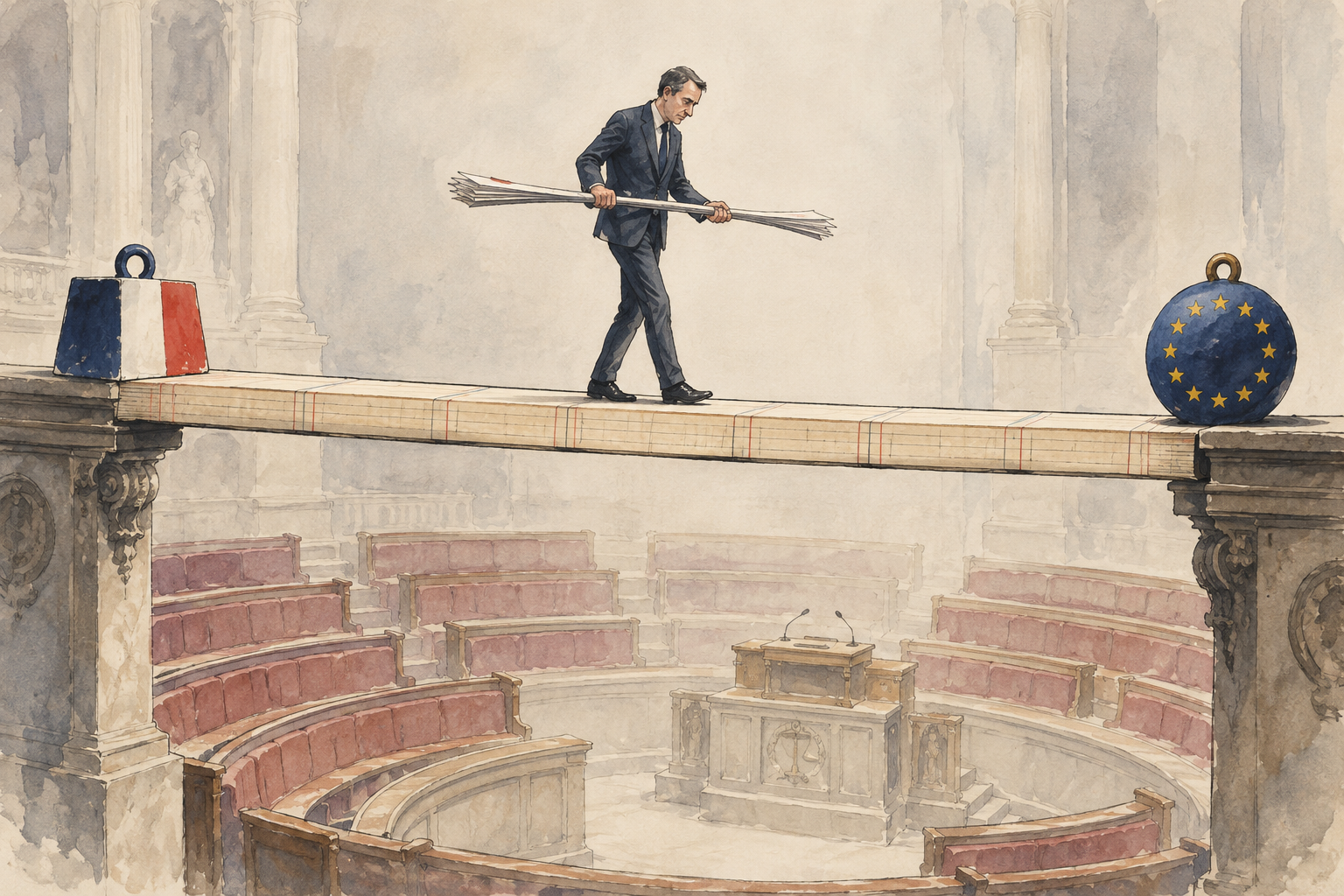
Irish enterprise minister Peter Burke, chairing the meeting under Ireland’s Council presidency, is trying to advance several files in parallel, including the Industrial Accelerator Act, EU Inc. and the European Competitiveness Fund.4 That makes the Council less a single-issue debate than a snapshot of the EU’s unresolved competitiveness bargain: how to support strategic industries without hollowing out single-market discipline or weakening the competition rules that smaller and fiscally constrained member states rely on.
The Council’s official programme places the Chips Act 2.0 debate alongside discussions on merger control and state aid, underlining how semiconductor resilience has become a gateway issue for wider industrial policy.3 The first Chips Act was designed to strengthen Europe’s semiconductor ecosystem after pandemic-era shortages and geopolitical shocks. Capitals now see the second iteration as a test of whether the EU will move from resilience rhetoric to a more interventionist model.
For large member states with deeper fiscal capacity and major industrial bases, the central question is whether EU policy can help European firms reach scale in markets dominated by US and Asian champions. For smaller member states, the same conversation raises familiar concerns: that looser intervention, more permissive consolidation or strategic state support could concentrate benefits in countries already best placed to subsidise and host large projects.
Cyprus’s intervention at the Council arrivals captured that tension. Energy Minister George Papanastasiou argued that European companies need room to “invest, innovate, and grow,” while also stressing the importance of trusted partners and merger rules that take account of smaller member states’ market realities.6 That position reflects a broader small-state balancing act: support for stronger EU industrial capacity, but caution over reforms that could privilege large domestic markets or established industrial clusters.
The presence of Commission executive vice-president Teresa Ribera for an exchange on merger-control guidelines gives the meeting a second institutional focal point.2 The question is not simply whether EU merger policy should become more permissive. It is whether competition authorities should weigh scale, innovation capacity and geopolitical resilience more explicitly when reviewing consolidation in strategic sectors.
That debate has been building for years, but Chips Act 2.0 gives it a sharper political vehicle. If Europe wants more resilient semiconductor, clean-tech or digital supply chains, some capitals argue, companies may need more room to combine, raise capital and compete globally. Others warn that weakening merger discipline could reduce market contestability inside the EU, raise barriers for new entrants and leave smaller member states dependent on industrial champions headquartered elsewhere.
The Council agenda also includes de minimis state-aid rules and the General Block Exemption Regulation, linking merger policy to the other side of the competitiveness equation: how much public support governments can provide without distorting the single market.3 This is where the EU’s political geometry becomes most difficult. Industrial resilience often requires money; single-market discipline requires limits on how national treasuries deploy it.
The working lunch on economic security is expected to reinforce the connection between competitiveness and risk reduction.1 In Council terms, economic security has become the umbrella under which supply-chain dependencies, technology leakage, critical inputs and trusted partnerships are increasingly discussed together.
Italy’s permanent representation confirmed that Chips Act 2.0, merger-control guidelines, economic security and industrial-policy concerns around household appliances are all on the ministerial radar.5 The inclusion of household appliances alongside semiconductors shows how the debate is spreading beyond frontier technologies. Member states are asking how many industrial ecosystems should be treated as strategic, and what policy tools should follow.
Business groups are also trying to shape the discussion. Germany’s DIHK warned ahead of the meeting that Europe needs improved framework conditions, backing targeted dependency reduction while cautioning against excessive state steering and additional bureaucracy.7 That critique lands in the middle of the Council debate: industry wants resilience and faster permitting, but many firms are wary of instruments that add reporting burdens or create politically directed investment choices.
For the Irish presidency, the task is procedural as much as ideological. Burke has framed the Chips Act 2.0, merger-guidelines review, Industrial Accelerator Act, EU Inc., Competitiveness Fund and economic-security lunch as connected elements of a broader competitiveness push.4 Each file, however, carries a different distributional question.
Chips Act 2.0 raises questions about where strategic manufacturing capacity will be located. Merger-control reform raises questions about who benefits from scale. State-aid changes raise questions about whether richer member states gain more freedom than poorer ones. Economic-security policy raises questions about how to reduce dependencies without fragmenting global partnerships or overburdening firms.
That is why the 24 September Council is politically significant even if it produces no final legislative deal. It is a staging point for a broader recalibration: ministers are testing how far they can push a competitiveness agenda built around security of supply and industrial strength while preserving the legal and political architecture of the single market.
For Brussels policy watchers, the key signal will be whether Chips Act 2.0 remains a targeted semiconductor resilience instrument or becomes the template for a new competitiveness doctrine. The Council debate suggests the latter possibility is now firmly on the table.





Comments