EU capitals test early rewrite of migration pact ahead of October talks

Pact on Migration and Asylum
The EU’s framework for managing asylum, border procedures, responsibility-sharing and solidarity among member states.
Eurodac
An EU database used to store and compare biometric and migration-related data, including fingerprints, to help determine responsibility for asylum claims.
JHA Council
The Justice and Home Affairs Council, where EU interior and justice ministers discuss migration, security and legal cooperation.
Simplification package
A legislative or policy package presented as streamlining existing rules; in this context, it could also become a vehicle for substantive changes to asylum procedures.
Euractiv
news
EXCLUSIVE: EU capitals eye changes to migration pact
Euractiv
news
Migration Pact 2.0?
European Commission, Directorate-General for Migration and Home Affairs
government
EUAA mid-year review shows continued reduction in asylum applications across EU+ countries
Untracked bias
Bias and factuality ratings from Media Bias Fact Check. Outlets without a rating are marked “Untracked.”
Munich meeting
Ministers from about 18 countries are expected to discuss possible changes to the EU migration pact on September 26.
Mid-2027 package
Capitals are considering whether the Commission should prepare a simplification package covering asylum procedures, protection revocation, Eurodac and AI interpretation.
Council follow-up
EU Council documents show the pact’s first operational experiences are scheduled for discussion at the Asylum Working Party on October 5.
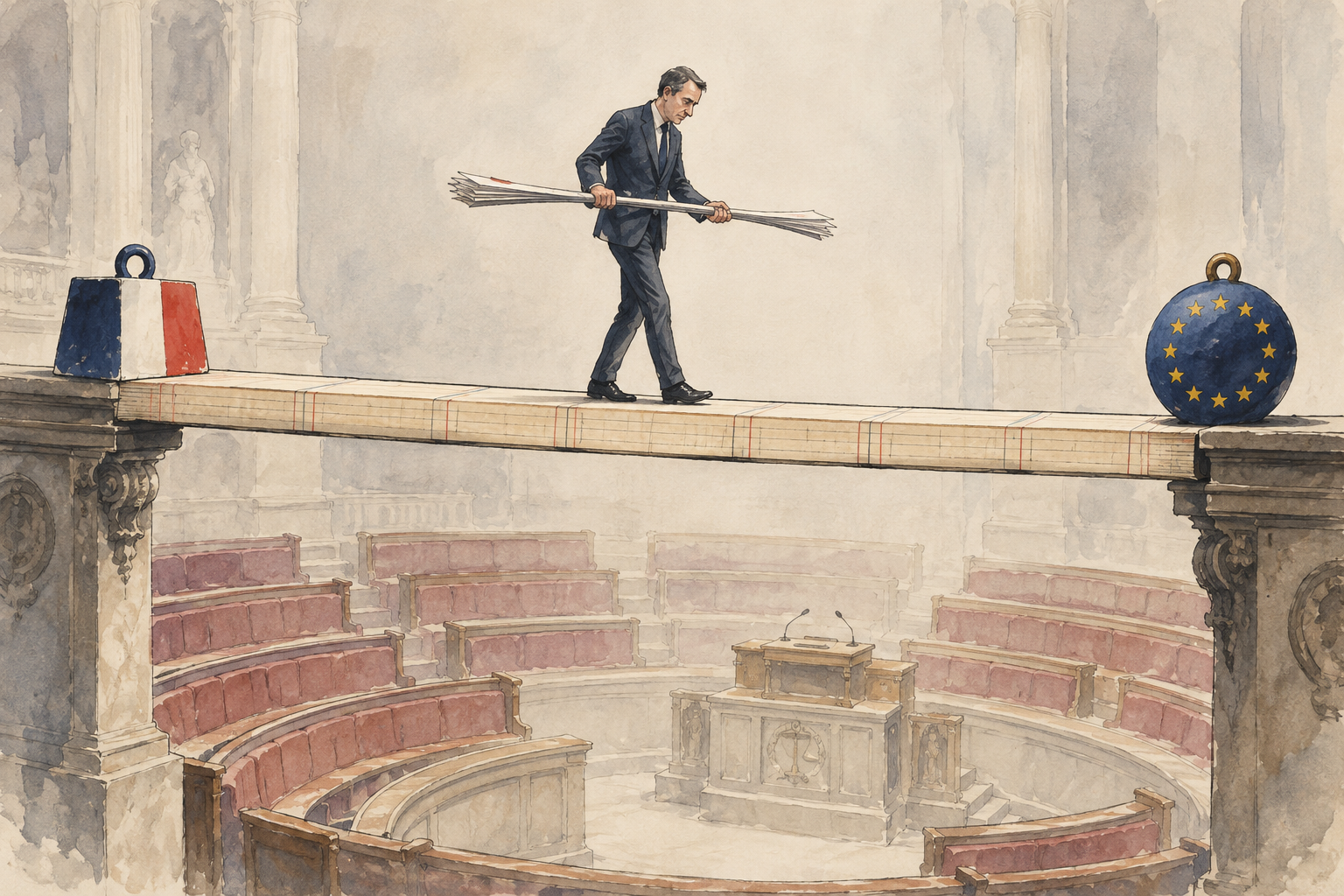
Ministers from about 18 countries are expected to meet in Munich on Saturday, September 26, to discuss whether the European Commission should prepare a mid-2027 package simplifying parts of the EU Pact on Migration and Asylum. The move could become the first major attempt to reopen the bloc’s newly implemented migration settlement.1
The planned talks, first reported by Euractiv, go beyond routine implementation concerns. They target politically sensitive parts of the pact, including asylum procedures, the revocation of protection status, the Eurodac fingerprint and data system, and the possible use of AI interpretation in asylum processing.1 Taken together, the agenda suggests several governments are seeking not only faster rollout, but also testing how far the pact can be tightened or rewritten.
The timing is significant. The Munich meeting comes days before EU home affairs ministers meet in Luxembourg and ahead of an October European Council discussion on migration. That gives national capitals a chance to shape the political frame before formal EU-level talks resume.2 Euractiv’s Rapporteur analysis described the Munich track as a possible “Migration Pact 2.0,” underlining the risk that implementation could quickly turn into renegotiation.2
The Pact on Migration and Asylum was designed to settle years of disagreement over responsibility-sharing, border procedures and solidarity between member states. Its implementation phase was expected to be technically difficult and politically contentious. But the Munich agenda indicates that some governments are already looking beyond operational fixes.
A mid-2027 Commission “simplification” package, if pursued, could provide a legislative vehicle for changes that member states failed to secure during the original pact negotiations. That makes the label important. Simplification can mean technical streamlining, but in migration policy it can also become a route to tougher eligibility rules, faster procedures and narrower protections.
The areas reportedly under discussion are central to the balance struck in the pact. Asylum procedures determine how quickly and under what safeguards claims are assessed. Revocation rules affect when protection can be withdrawn. Eurodac is a key database for tracking asylum applicants and irregular entries. AI interpretation could speed up interviews and procedures, but would raise questions about accuracy, accountability and procedural rights.1
The Munich talks also reflect a broader shift in the EU migration debate. The political centre of gravity in the Commission, Council and Parliament has moved toward more restrictive migration management, with governments increasingly focused on returns, border procedures and cooperation with countries outside the EU.
That trend is visible in the Commission’s own recent framing. On September 24, the Commission’s migration department highlighted a continued reduction in asylum applications across EU+ countries, citing EUAA mid-year findings and placing them in the context of the pact’s post-June 12, 2026 implementation environment and cooperation with partner countries.3 Lower arrivals would normally ease pressure on asylum systems. Instead, capitals are using the moment to press for tighter procedures rather than a pause in reform.
This creates a political paradox. The push to harden or simplify the pact is advancing as official EU messaging points to fewer asylum applications. For governments backing changes, that may strengthen the case for locking in tougher rules while pressure is lower. For critics, it may suggest the pact’s implementation phase is being used to reopen basic rights and safeguards before the new system has been fully tested.
The Munich meeting is not taking place in isolation. Council documents show that the EU’s working-level machinery is already preparing to review the pact’s early operation. A Council register entry published on September 24 lists a Presidency discussion paper titled “First experiences relating to the operation of the Pact on Migration and Asylum,” scheduled for the Asylum Working Party on October 5.4
The official Council meeting page for the October 5 Asylum Working Party also lists documents dated September 24, including the provisional agenda and the pact discussion paper. That confirms member states will examine the first operational experiences of the new system through formal Council channels shortly after the Munich gathering.5 A separate Council register entry for the meeting notice and provisional agenda further verifies the institutional track for that discussion.6
The substance of the Presidency paper is not public, so it is not possible to determine from the register alone whether it mirrors the Munich agenda. But the sequencing matters. An informal ministerial discussion among a large group of capitals, followed by a Council working-party review, then home affairs ministers and EU leaders’ talks, gives governments multiple opportunities to escalate proposed changes.
The Munich setting also matters. Euractiv’s German-language report identified the meeting as hosted in Germany and linked it to Interior Minister Alexander Dobrindt. That reinforces the sense that Berlin is helping convene a discussion on a possible pact overhaul, rather than merely participating in one.7
Germany has often been pivotal in EU migration compromises because of its size, asylum caseload and central role in Council negotiations. A German-hosted gathering of around 18 countries could therefore become a staging ground for a more coordinated push before the Luxembourg ministerial meeting and the October leaders’ summit.
That does not mean all participating countries will support the same changes. Some may seek narrower administrative fixes, while others may press for more restrictive reforms. But the breadth of participation suggests the debate is no longer confined to a small group of border states or hardline governments.
The immediate question is whether the Munich discussion produces a concrete request for the Commission to prepare a mid-2027 simplification package. If it does, the next question will be whether that package is framed as implementation support or as a first step toward reopening core elements of the pact.
For the Commission, the risk is institutional as well as political. Moving too quickly toward changes could validate the argument that the pact was incomplete or inadequate from the start. Resisting pressure from capitals, however, could expose the Commission to criticism from governments demanding faster, tougher migration tools.
For the European Parliament, the issue is whether any future simplification package would preserve the balance of the original compromise. A reopening of asylum procedures, protection revocation or Eurodac rules could quickly revive disputes over fundamental rights, data protection and access to fair procedures.
The Munich meeting therefore marks more than another migration-security push. It is an early test of whether the EU’s newly implemented migration pact will be treated as a settlement to be applied, or as a baseline for a more restrictive second round.





Comments