EU defence budget fight pits autonomy against allied access

European Competitiveness Fund
A proposed EU budget instrument for 2028-2034 intended to support strategic sectors such as defence, space, innovation and advanced industry.
European preference
A policy approach that conditions EU funding or procurement advantages on European production, components, ownership or design control.
SAFE
Security Action for Europe, a €150 billion EU instrument designed to support defence readiness and procurement, with eligibility rules favouring European content.
EDIP
The European Defence Industry Programme, a smaller EU defence-industrial programme whose eligibility rules are being treated as a precedent for future funding.
Untracked bias
Bias and factuality ratings from Media Bias Fact Check. Outlets without a rating are marked “Untracked.”
12-state pushback
Germany, Italy, the Netherlands, Sweden and eight other EU countries oppose France’s stricter European-preference approach for future EU defence programmes.
Budget test
The dispute feeds directly into negotiations on the EU’s 2028-2034 budget and the proposed European Competitiveness Fund.
Allied access
The central policy choice is whether EU defence money should prioritise EU-only autonomy or remain open to partners such as the UK, Canada and Ukraine.
Twelve EU governments are challenging France’s push to steer future EU-funded defence programmes more tightly toward European suppliers, opening a major fault line in talks over the 2028-2034 EU budget and the proposed European Competitiveness Fund.
The group — Germany, Austria, Denmark, Estonia, Finland, Italy, Latvia, the Netherlands, Portugal, Romania, Sweden and Slovenia — argues that future defence instruments should remain open to close non-EU security partners, including the UK, Canada and Ukraine, rather than follow France’s narrower preference model.1
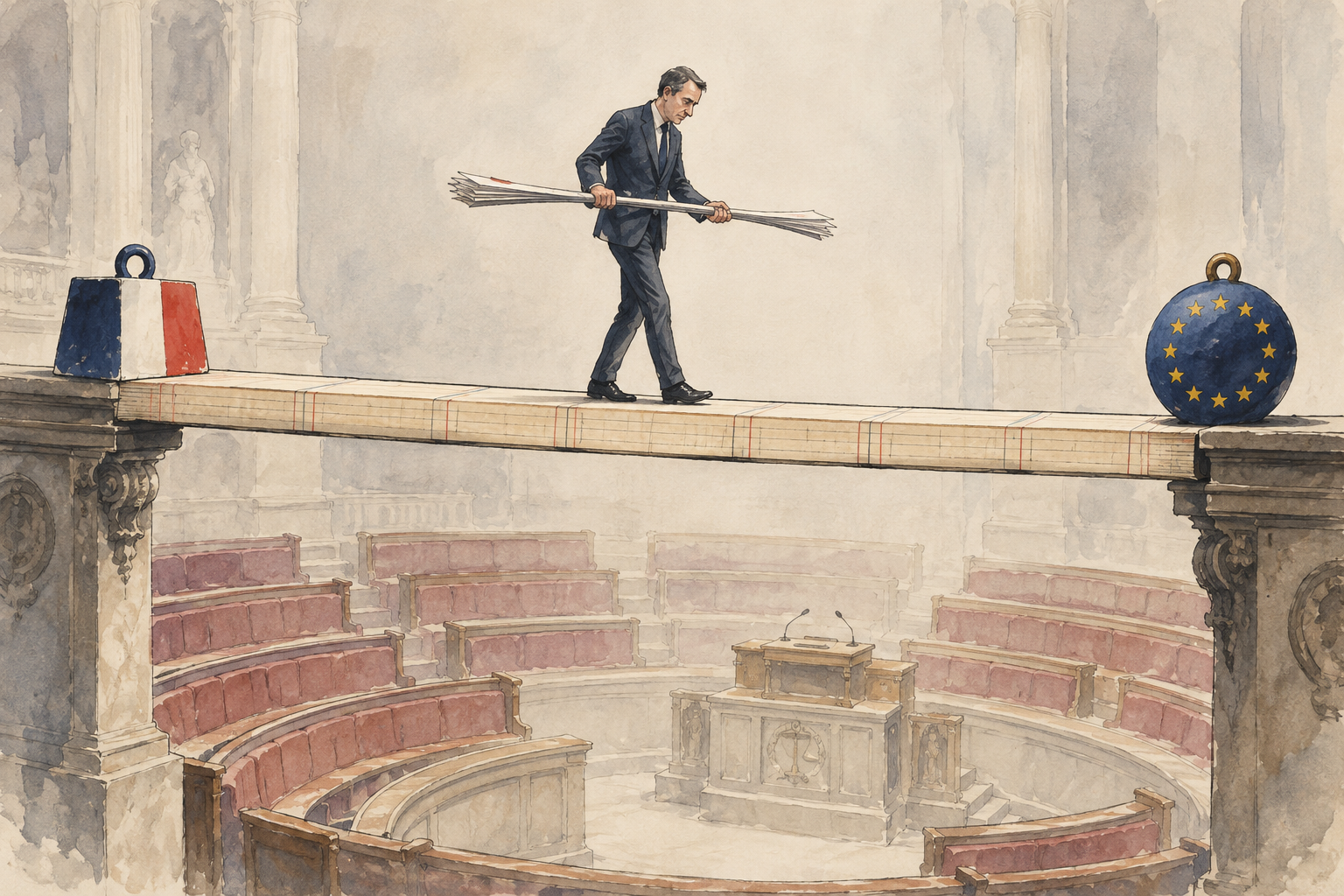
The dispute is an early test of what the next EU budget is meant to achieve in defence: reducing reliance on non-European suppliers by directing EU money into the bloc’s industrial base, or accelerating rearmament by linking EU programmes to a wider allied supply network. Euractiv’s Rapporteur framed the split as one of preference versus alliance, with the European Competitiveness Fund emerging as the main arena for that choice.2
The non-paper targets one of the most politically sensitive parts of the Commission’s proposed long-term budget: the European Competitiveness Fund, or ECF. The fund is designed to consolidate and scale up EU spending on strategic sectors, including defence, space and advanced technologies.
The Commission has proposed a nearly €2 trillion 2028-2034 budget, including more than €409 billion for the ECF and €130 billion for defence and space, though the final allocation remains subject to negotiation.3
For Paris, the ECF should reinforce the principle that EU funds build EU-controlled industrial capacity. France has pointed to the eligibility rules in SAFE and EDIP as precedents for the next generation of funding. Those rules include European-content thresholds and protections for design authority, intended to ensure that EU money supports European-controlled technology and production rather than subsidising outside suppliers.1
The 12 signatories do not reject the goal of strengthening Europe’s defence industrial base. They argue that industrial resilience should be built with trusted partners where that improves scale, interoperability, supply-chain security and speed.
The non-paper says openness to third-country participation would signal reliability to allies and partners outside the EU. It also says cooperation could make EU funding go further through larger budgets, economies of scale and innovation.3
The fight is sharpened by recent precedents. SAFE, the EU’s €150 billion Security Action for Europe instrument, and EDIP, the €1.5 billion European Defence Industry Programme, have already established a more restrictive model by requiring a high share of European components and protecting European design authority.3
France sees that architecture as a useful template for the ECF. Its position is that EU-level money should deliver a distinct EU-level industrial return, especially as member states separately increase national defence budgets and can use those funds with more flexibility.
In this view, the added value of the ECF is not simply more procurement capacity, but a stronger European technological and industrial base.3
The opposing camp reads the same precedent differently. For countries with close procurement, training and operational links to NATO allies, strict European preference risks excluding suppliers that are important to European readiness.
Defence Matters described the disagreement as both commercial and operational: Europe is trying to expand ammunition stocks, air defence, long-range fires and other capabilities faster than existing EU production can scale, and a narrow supplier base could constrain urgent procurement.4
The question of third-country access is not abstract. The UK remains one of Europe’s largest defence industrial and military actors despite being outside the EU. Canada is a NATO ally with growing interest in closer European industrial and security ties. Ukraine, though not an EU member, is central to Europe’s current defence posture and has a fast-evolving defence industry shaped by battlefield demand.1
The non-paper specifically supports automatic participation for EEA countries and Ukraine in the defence-industry section without requiring a separate association agreement.3 That position would make the ECF a mechanism for integrating close security partners into Europe’s defence industrial ecosystem, rather than using budget eligibility as a hard boundary between EU and non-EU suppliers.
That approach fits a broader German and northern-eastern European preference for coalition-based capability building. It also reflects concern that excluding the UK, Canada or Ukraine could undermine interoperability as European militaries try to standardise equipment, pool procurement and replenish stocks after years of support for Kyiv.1
The defence dispute mirrors a wider EU argument over what should count as European in industrial policy. Separate reporting on the ‘Made in Europe’ debate shows France pressing for a narrower definition, while Germany has favoured a broader approach that could include allies such as Canada, Norway and the UK.
Spain has floated a tiered compromise that would distinguish between EU members, EEA countries and other trusted partners with reciprocal procurement access or trade links.5
That broader debate matters for defence because the ECF is not just another spending line. It is expected to become one of the main instruments through which the EU links competitiveness, economic security and rearmament.
If its defence chapter uses restrictive eligibility rules, it would deepen the EU’s strategic-autonomy agenda. If it keeps wider access for allied suppliers, it would treat defence industrial policy as part of a broader security coalition.2
The 2028-2034 budget negotiations will determine whether the Commission’s proposed defence and competitiveness spending is matched by rules that prioritise EU-only production, European-controlled design authority, or flexible participation by trusted non-EU partners.
The final compromise could include differentiated access: automatic participation for EEA states and Ukraine, association routes for countries such as the UK and Canada, and stricter limits for suppliers without security or procurement reciprocity.
For EU policy readers, the key issue is not only who receives contracts. It is whether the EU defines strategic autonomy as insulation from dependence on non-EU actors, or as the capacity to lead a European defence ecosystem that includes close allies.
The 12-country pushback shows that many capitals want the second model on the table before the ECF rules harden into the next budget’s defence-industrial baseline.4
The outcome will shape more than the ECF. It will set the operating logic for EU defence finance after SAFE and EDIP: either a tighter industrial-policy instrument designed to repatriate capability, or a more open framework designed to mobilise allied production capacity for Europe’s security needs.





Comments