French left primary narrows to five as reformists test path to 2027

Primary
A selection process used by parties or political blocs to choose a candidate before the formal presidential election campaign.
Parrainages
Sponsorships or endorsements required from eligible supporters or officials for a candidate to qualify for a party-run contest.
Reformist left
A broad label for social-democratic and centre-left forces that seek progressive policy through parliamentary institutions and generally support EU engagement.
Unity pledge
A commitment by primary contenders to support the eventual winner, intended to prevent rival candidacies from splitting the same electorate.
Le Monde
news
Présidentielle 2027 : six candidats sur la ligne de départ de la primaire à gauche
Le Monde
news
Présidentielle 2027 : Philippe Brun, suspendu à titre conservatoire du PS, ne participera pas à la primaire à gauche
Le Parisien avec AFP
news
« J’ai les parrainages nécessaires » : Glucksmann, Royal, Faure… Six candidats vont s’affronter à la primaire de la gauche
Untracked bias
Bias and factuality ratings from Media Bias Fact Check. Outlets without a rating are marked “Untracked.”
Five candidates
The expected six-person primary narrowed to five after Philippe Brun was excluded following his provisional Socialist Party suspension.
18 October
The process is intended to designate a left-wing presidential candidate by 18 October.
EU stakes
The contest will test whether France’s pro-European centre left can rebuild before the 2027 presidential campaign intensifies.
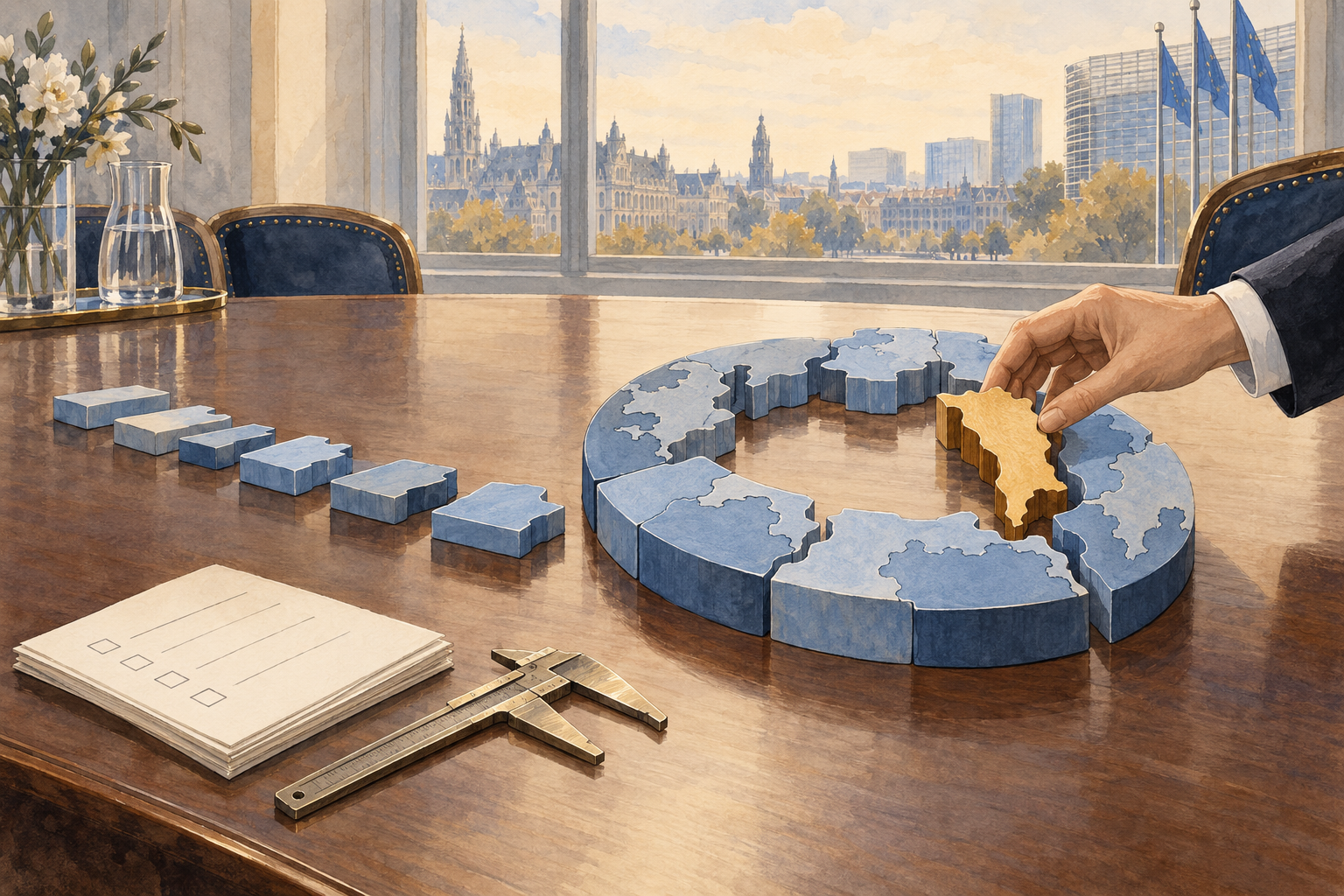
France’s planned social-democratic primary has narrowed from an expected six candidates to five, underscoring the challenge facing the reformist left as it tries to consolidate before the 2027 presidential election.
Le Monde initially reported that Philippe Brun, Olivier Faure, Raphaël Glucksmann, Jérôme Guedj, Emmanuel Maurel and Ségolène Royal were set to compete, pending validation by the organising committee on 16 September. The process is meant to designate a candidate by 18 October.1 But a follow-up decision excluded Brun after his provisional suspension from the Socialist Party, leaving Faure, Glucksmann, Guedj, Maurel and Royal in the validated field.2
The change matters beyond the mechanics of one primary. The contest is less a routine party selection than an early test of whether France’s pro-European centre left can rebuild a viable political pole before a presidential campaign likely to be shaped by pressure from the far right and the radical left.
If the primary produces a broadly accepted nominee, it could give social democrats a platform to argue for a governing left rooted in parliamentary politics, EU engagement and institutional continuity. If it becomes another arena for personal rivalries and procedural grievances, it risks reinforcing the fragmentation that has weakened the French left for much of the Macron era.
The timetable is tight. The primary is designed to settle on a candidate by 18 October, after a rapid sequence of candidacy declarations, sponsorship checks and planned campaign events.1 AFP-based reporting ahead of validation described a field in which several Socialist figures said they had secured the required sponsorships, while party leaders such as Glucksmann and Maurel were exempted from that threshold.3
That structure was meant to balance openness with organisational control. Instead, the final validation stage has already shown how vulnerable the process is to disputes over legitimacy, eligibility and party discipline.
For EU politics watchers, the race matters because France’s next president will help shape decisions on enlargement, fiscal rules, defence industrial policy, Ukraine, trade and climate regulation.
A credible centre-left French candidacy would not automatically dominate the national race. But it could influence the policy terms of the campaign and the alliances available after the first round. France remains one of the EU’s indispensable member states. A weakened or divided reformist left would leave more room for political forces that are more nationalist, more Eurosceptic or more confrontational toward Brussels.
Glucksmann’s presence gives the primary an explicitly pro-European dimension. His political brand has been built around European Parliament politics and a firm line on democracy, Ukraine and human rights. Faure, as Socialist Party leader, represents the party apparatus and its effort to remain central to the left after years of electoral decline.
Royal brings national name recognition and the memory of the Socialist Party’s last competitive presidential era. Guedj and Maurel embody different currents within and around the Socialist family, from social-democratic institutionalism to more sovereigntist or left-republican traditions.
The result is a field that could showcase pluralism, but also risks broadcasting unresolved divisions.
The organising committee’s decision changed the story on the day the field was expected to be confirmed. Le Monde reported that Brun would not take part after being provisionally suspended from the Socialist Party.2 La Dépêche du Midi also reported the validated five-candidate list and linked Brun’s exclusion to the party suspension announced by Patrick Menucci.4
The episode immediately complicated the primary’s claim to be a unifying instrument.
Before that decision, Brun had been among the Socialist figures saying they had the sponsorships needed to qualify, alongside other candidates seeking to demonstrate organisational strength before the commission’s final ruling.5 His removal highlights a central tension: a primary intended to confer democratic legitimacy must also be managed by party bodies with the power to determine eligibility.
That may be defensible on procedural grounds, but it gives critics an opening to argue that the process is too controlled from above.
Those criticisms were already present. AFP-based reporting described complaints that the primary was being organised in a closed or “bunker” fashion, even as it was being presented as a mechanism to choose a common candidate for the left.6
Such concerns matter because the winner will need more than a formal nomination. They will need defeated rivals, activists and adjacent parties to treat the outcome as binding enough to avoid parallel candidacies.
The premise of the primary is that candidates can compete, then rally behind the winner. Le Monde reported that the expected contenders were tied to a unity commitment as part of the process designed to designate a candidate by mid-October.1
In theory, that pledge is the contest’s greatest asset. It offers a route out of the multiplication of left-wing candidacies that has repeatedly diluted first-round strength in French presidential elections.
In practice, unity pledges are only as strong as the political incentives behind them. The primary does not cover every figure or current on the broader left. AFP-based reporting noted that François Ruffin, Matthieu Pigasse and François Hollande were outside the process, a reminder that even a successful vote would not necessarily settle the whole centre-left and left-wing landscape.3
If excluded or non-participating figures retain the option of running independently, the nominee could emerge with a title but not a monopoly on the reformist-left electorate.
The reformist left’s deeper problem is strategic. It must decide whether to define itself primarily against Jean-Luc Mélenchon’s radical-left camp, Emmanuel Macron’s centrist legacy or Marine Le Pen’s far-right bloc. Each choice implies a different coalition.
A candidate who leans too heavily into anti-Macron positioning may struggle to reassure pro-European moderates. One who emphasises institutional moderation may fail to mobilise voters seeking a sharper social break. One who prioritises unity at all costs may blur the ideological distinctions the primary is supposed to clarify.
A decisive victory by one candidate, followed by rapid endorsements from the others, would suggest that the primary can still function as a consolidation device. It would allow the winner to claim momentum before the wider 2027 field fully crystallises and could help the reformist left negotiate with environmentalists, regional elected officials and civil-society networks from a clearer position.
A narrow or contested result would have the opposite effect. It could leave the nominee trapped in internal bargaining and vulnerable to accusations of weak legitimacy. That would make it harder to compete for voters who are sceptical of both the far right and the radical left but unconvinced that the Socialist family can govern again.
The Brun episode is therefore an early warning. Even before the campaign has properly begun, the primary has had to manage a gap between its intended function — producing unity — and its immediate effect: exposing the procedural and personal fractures of the social-democratic camp.
The five remaining candidates now have roughly a month to show that the exercise can produce more than another inventory of divisions.
For France’s partners in the EU, the question is not whether this primary will determine the next president on its own. It almost certainly will not. The question is whether it can help restore a coherent pro-European centre-left actor in a political system increasingly organised around polarisation.
By 18 October, the French left will know not only who its nominee is, but whether its attempt at consolidation has begun to look credible.




Comments