Gaza building collapse kills 19 as truce leaves residents in unsafe housing
Post-ceasefire phase
The period after the formal truce in which large-scale fighting has eased, but deaths continue from strikes, damaged infrastructure, shortages and delayed recovery.
Rubble clearance
The process of removing debris from destroyed buildings, often requiring excavators and other heavy machinery to recover bodies and reduce collapse risks.
Civil defense
Local emergency responders who carry out rescue, firefighting and recovery work, including searching collapsed buildings and strike sites.
Double-tap strike
An alleged tactic in which a second strike follows an initial attack, potentially endangering rescuers and bystanders who arrive at the scene.
Associated Press
news
Building collapse in Gaza kills 19 as perilous conditions persist for Palestinians during truce
Reuters via MarketScreener
news
War-damaged Gaza building collapses killing 12 people seeking shelter inside
Reuters via StreetInsider
news
Israeli strikes in Gaza kill five people, medics say
Untracked bias
The Korea Times
War-damaged Gaza building collapses, killing 12 people seeking shelter inside
The Kathmandu Post
War-damaged Gaza building collapses killing 12 people seeking shelter inside
Bias and factuality ratings from Media Bias Fact Check. Outlets without a rating are marked “Untracked.”
Collapse toll
A damaged Gaza City building collapsed on September 16, killing 19 people and injuring 25.
Unsafe buildings
UNDP has identified about 400 Gaza buildings at risk of collapse, according to Reuters.
Strikes continue
Israeli strikes on September 15 killed at least five Palestinians, including two children and a Hamas commander, medics told Reuters.
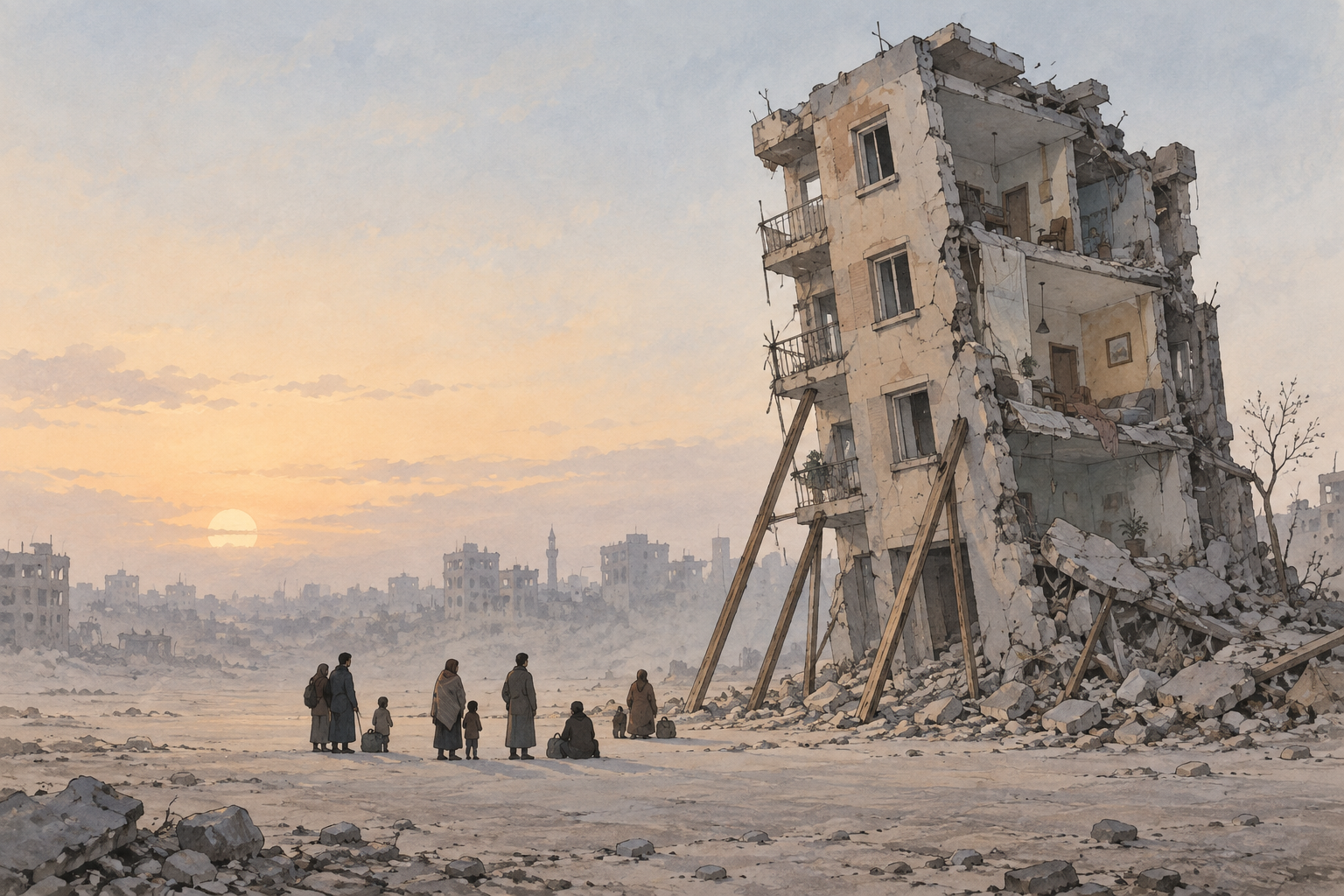
A damaged building in Gaza City collapsed on Wednesday, September 16, killing 19 people and injuring 25. It was one of the clearest signs yet that Gaza’s humanitarian crisis remains deadly even after the formal ceasefire that ended the war’s most intense phase.1
The building had already been weakened by the war, according to reports from Gaza, where displaced families continue to shelter in unsafe structures because reconstruction has barely begun and alternatives remain scarce.1 Reuters, citing Gaza civil defense and the U.N. Development Programme, had earlier reported at least 12 deaths in the same incident and said rescue efforts were hampered by a lack of heavy machinery needed to reach people trapped under concrete.2
The deaths point to a broader post-ceasefire danger. Gaza residents are still being killed by damaged infrastructure, unexploded or unstable war debris, intermittent Israeli strikes, shortages of rescue equipment and restrictions that aid agencies say are slowing debris removal and reconstruction.125
The ceasefire has reduced the scale of active urban warfare, but it has not brought physical security to many Palestinians in Gaza. The Associated Press reported that no major reconstruction work has taken place since the truce, leaving many residents dependent on aid and sheltering in buildings that may no longer be structurally sound.1
Reuters reported that the U.N. Development Programme has identified about 400 buildings in Gaza at risk of collapse. Civil defense teams say they lack the heavy machinery needed for safe search-and-rescue operations and rubble clearance.2 Palestinian officials and aid workers have blamed restrictions on equipment entry for leaving rescue teams unable to respond adequately after collapses and strikes.25
The danger is not limited to future collapses. Gaza authorities say bodies remain under rubble from earlier phases of the war, and rescue teams cannot reach some areas because of destruction, access limits and insufficient equipment.4 The U.N. human rights chief has also raised concerns about remains recovered from rubble and the lack of excavators and forensic tools, including DNA kits, needed to identify the dead and investigate possible crimes.5
The collapse came a day after Israeli strikes in Gaza killed at least five Palestinians, medics told Reuters. The dead included two children and Hamas commander Nael Abu Obeid.3 Hamas sources identified Abu Obeid as a commander, while the Israeli military said it had killed him and other Hamas operatives in Gaza.36
The Israel Defense Forces’ September 15 war log said Israeli forces struck targets in Gaza and identified Abu Obeid as commander of Hamas’s Rafah Brigade. It described the operation as part of continued action against Hamas personnel.6 Palestinian witnesses and medics described deadly strikes affecting civilians, including children.3
Anadolu Agency footage and reporting distributed through Reuters Connect described additional Israeli fire on September 15, including witness claims of a double-tap drone strike and reports of shelling. Reuters Connect noted the material was not independently verified by Reuters.7
The competing accounts reflect the fragile reality of the post-ceasefire phase. Israel says it continues to target Hamas fighters and threats, while Palestinians and humanitarian workers say continued force, combined with the wreckage of the war, is deepening civilian risk.367
Gaza health authorities said on September 15 that the overall death toll had risen to 73,789, with 174,798 people injured since the start of the war, according to WAFA.4 The same report said additional victims remain under rubble and that rescue teams cannot reach some areas.4
Those figures cannot be independently verified in full, but they are widely cited by international agencies and news organizations because Gaza’s health system remains the main local source for casualty counts. The post-ceasefire toll also continues to rise from strikes, shootings, rubble-related deaths and the inability to carry out full recovery operations.45
The September 16 collapse shows how the risks facing civilians have changed rather than ended. In parts of Gaza, the front line has given way to cracked apartment blocks, blocked streets, weak rescue capacity and displaced families with few safe places to go.12
Humanitarian agencies say Gaza’s next phase depends not only on food and medical aid, but also on machinery, engineering teams, shelter materials and forensic equipment. Without them, unstable buildings remain occupied, rubble remains uncleared and bodies remain unrecovered.25
The Gaza City collapse points to a wider challenge for the Israel-Hamas deal: A ceasefire can reduce bombardment, but it does not make destroyed neighborhoods habitable. For many Palestinians, the immediate threat is now a combination of damaged housing, limited aid access and periodic violence that continues to produce deaths even outside full-scale war.135






Comments