Hungary lifts veto on €6.6bn Ukraine aid, but EU still split on spending
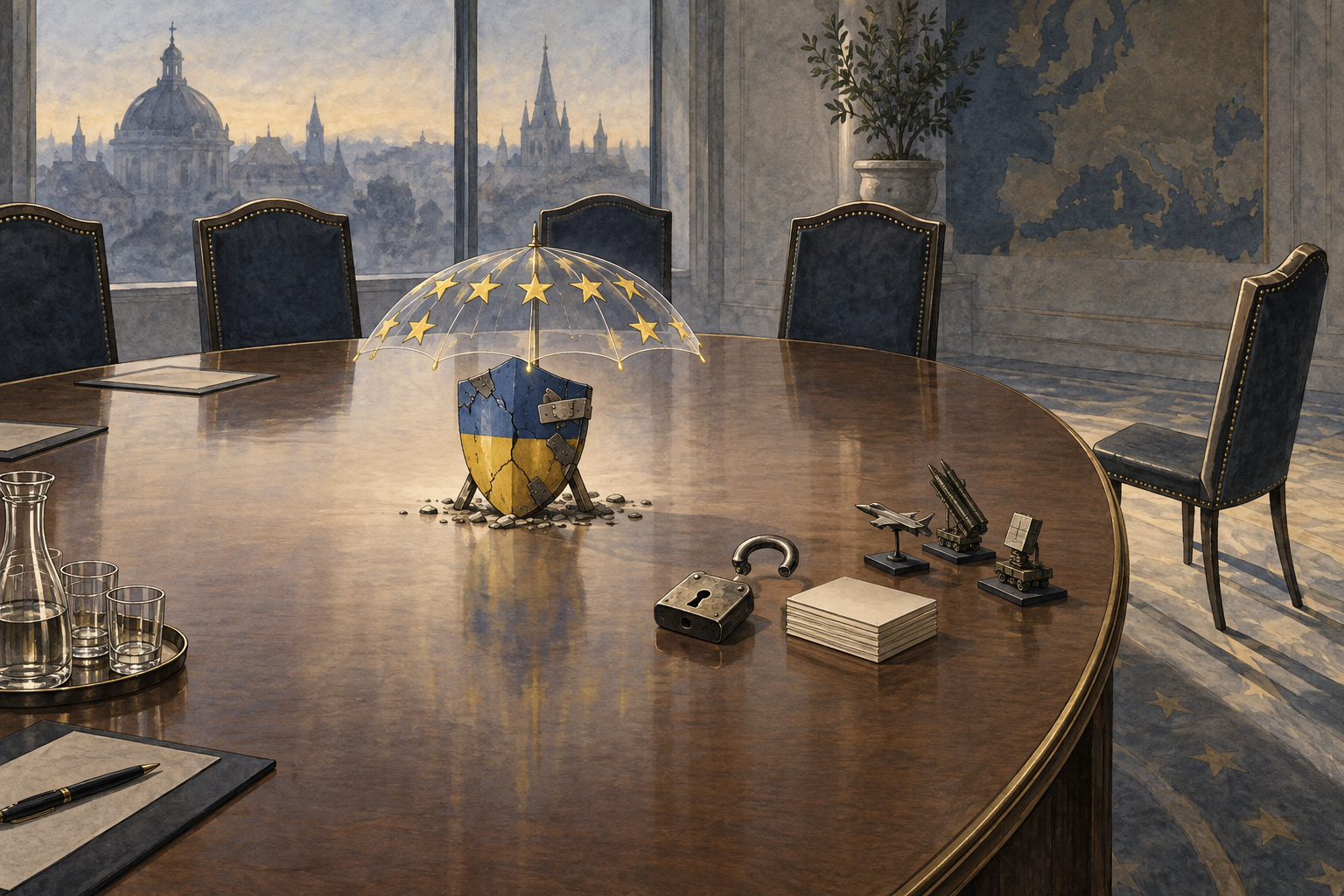
European Peace Facility
An EU off-budget instrument used in part to reimburse member states for military equipment and support provided to partners, including Ukraine.
EUMAM Ukraine
The EU Military Assistance Mission in support of Ukraine, which trains Ukrainian armed forces personnel.
Shadow fleet
A network of tankers and related operators used by Russia to move oil while avoiding or weakening the impact of sanctions and price-cap measures.
Patriot missiles
Interceptor missiles used by Patriot air-defence systems, which Ukraine has sought to defend against Russian missile and drone attacks.
Untracked bias
Euronews
EU countries agree to release long-stalled €6.6 billion in military aid for Ukraine
Interfax-Ukraine
EU agrees terms for EUR 6.6 bln Ukraine Peace Facility aid – foreign policy chief
European Pravda
EU countries agree conditions for allocating €6.6bn to Ukraine from Peace Facility
UNN
"Bad news for Russia" - EU agreed to allocate €6.6 billion to Ukraine for military support
Bias and factuality ratings from Media Bias Fact Check. Outlets without a rating are marked “Untracked.”
€6.6bn package
Hungary has reportedly lifted its veto on European Peace Facility-related support for Ukraine, but ministers still lack agreement on how to use the funds.
Air defence
EU foreign policy chief Kaja Kallas urged member states to address Ukraine’s urgent air-defence needs, including through Patriot missile sharing.
Wider agenda
The Brussels meeting also covered EUMAM Ukraine, defence-industrial cooperation, hybrid threats and action against Russia’s shadow fleet.
EU defence ministers meeting in Brussels on Monday faced a familiar question in a new form: whether Hungary’s reported decision to lift its veto on €6.6bn in European Peace Facility-related support for Ukraine would lead to a financing deal, or simply move the dispute to how the money is spent.
The 28 September Foreign Affairs Council in defence format put military support for Ukraine at the centre of the agenda, including air defence, the EU Military Assistance Mission in support of Ukraine, defence-industrial cooperation and action against Russia’s sanctions-busting shadow fleet.4 Agence Europe reported that Hungary had lifted its block on the €6.6bn package, but member states still had not agreed on how to use the funds.
That distinction matters for Kyiv and EU capitals. A lifted veto removes the most visible political obstacle, but it does not decide which member states are reimbursed, which capabilities take priority, or how quickly equipment can move. Those questions are likely to shape the next phase of talks.
EU foreign policy chief Kaja Kallas used her arrival at the meeting to stress the urgency of Ukraine’s air-defence needs, linking the issue to Europe’s wider defence-readiness agenda.1 Meeting-day reporting also listed air defence, hybrid threats and EU defence readiness among the issues ministers were expected to discuss.2
Air defence has become the clearest political test of whether EU support can move from pledges to deliverable capability. Kallas urged member states to share Patriot missiles with Ukraine, according to meeting-day reporting, sharpening the debate over whether support should be channelled into the systems and interceptors Kyiv says it needs most urgently.7
That push highlights the allocation problem behind the headline figure. Even if €6.6bn is no longer blocked in principle, ministers still must reconcile national preferences, existing bilateral commitments, reimbursement claims and Ukraine’s battlefield priorities. Air-defence systems are scarce, expensive and often central to national defence planning, making them harder to move than less sensitive equipment.
The meeting also came as EU ministers discussed Russia’s shadow fleet, the network of vessels used to evade sanctions and sustain oil revenues, according to Euronews coverage of the Brussels talks.3 That placed military aid within a broader effort to constrain Moscow’s war economy.
The agenda also covered EUMAM Ukraine, the EU mission that trains Ukrainian forces, and defence-industrial cooperation.4 Those items point to a broader financing debate: whether support should focus on immediate battlefield equipment, training infrastructure, industrial production, or reimbursement for past national deliveries.
The Netherlands signalled one concrete priority on the day of the meeting, pledging €10m for military training infrastructure in Ukraine, according to Caliber.Az reporting from Brussels.6 Though modest compared with the wider funding discussion, the pledge underscored that training capacity remains part of the EU’s Ukraine support architecture, not an add-on to weapons deliveries.
Several governments are also weighing Ukraine support against their own procurement and readiness pressures. Italy’s permanent representation said Defence Minister Guido Crosetto would attend the council, listing military support for Ukraine, hybrid threats, the Middle East and defence procurement among the agenda items.5 That mix shows how Ukraine financing is increasingly embedded in wider EU defence planning, rather than treated as a separate emergency file.
Hungary’s reported move removes one layer of blockage, but the practical test is whether ministers can turn that opening into a common position on reimbursements and capability priorities. The European Peace Facility has been a key mechanism for compensating member states that provide military equipment to Ukraine, but disputes over national shares, eligible costs and political conditions have repeatedly slowed decisions.
For Ukraine, the operational question is timing. Air-defence interceptors, training support and industrial cooperation have different delivery horizons: missiles can address immediate threats if available, training strengthens force generation over months, and industrial cooperation is meant to increase supply over the longer term.
For the EU, the political question is whether the end of a veto creates consensus or exposes the next set of divisions. Monday’s meeting suggested the answer will depend less on the package’s nominal size than on whether capitals can agree what it is for — and how quickly it can reach Ukraine.




Comments