India Keeps SCO Track Open in Pakistan Without Signaling Bilateral Thaw
Shanghai Cooperation Organisation
A Eurasian political, security and economic grouping led by China and Russia, with members including India, Pakistan, Iran and Central Asian states.
SCO Council of National Coordinators
A working-level SCO body that coordinates the organisation’s agenda and prepares meetings under the rotating chairmanship.
Operation Sindoor
The recent India-Pakistan crisis referenced in Indian reporting as the point after which official Indian delegation visits to Pakistan had stopped.
Multilateral vs. bilateral engagement
Multilateral engagement occurs within a wider forum involving several states; bilateral engagement refers to direct India-Pakistan diplomacy.
The Indian Express
news
Indian official attends SCO event in Pakistan: 5 broad takeaways
The Times of India
news
Govt backs SCO connectivity, trade agenda but PM’s Pak visit uncertain
India Today
news
Pakistan calls Indian SCO delegation's Islamabad visit a welcome step
Untracked bias
The Indian Express
In Islamabad, Indian official flags regional connectivity, transit & trade
Hindustan Times
India among countries attending SCO national coordinators' meeting in Pakistan
India Today
Why India has sent a senior diplomat to Pak for the first time since Op Sindoor
The Economic Times
India joins SCO meeting in Islamabad to prepare for 2027 leaders' summit
Oneindia
Will PM Modi Attend SCO Summit In Pakistan? India To Join Key Meeting Amid Strained Ties
Pakistan Today
Indian SCO envoy in Islamabad as Pakistan’s year-long chairmanship gets under way
IAAN Express
SCO Coordinators Meet in Islamabad: India Joins Pakistan-Hosted Summit Prep Talks
Bias and factuality ratings from Media Bias Fact Check. Outlets without a rating are marked “Untracked.”
SCO Track
India sent Alok Dimri to Islamabad for an SCO coordinators’ meeting while maintaining that participation was tied to multilateral obligations, not bilateral outreach.
No Thaw
Indian reporting says future high-level attendance in Pakistan, including any Modi visit, remains politically uncertain and linked to the broader security environment.
Connectivity Agenda
Pakistan’s SCO chairmanship is emphasizing connectivity, trade, transit, innovation and shared prosperity, themes India engaged with inside the forum.
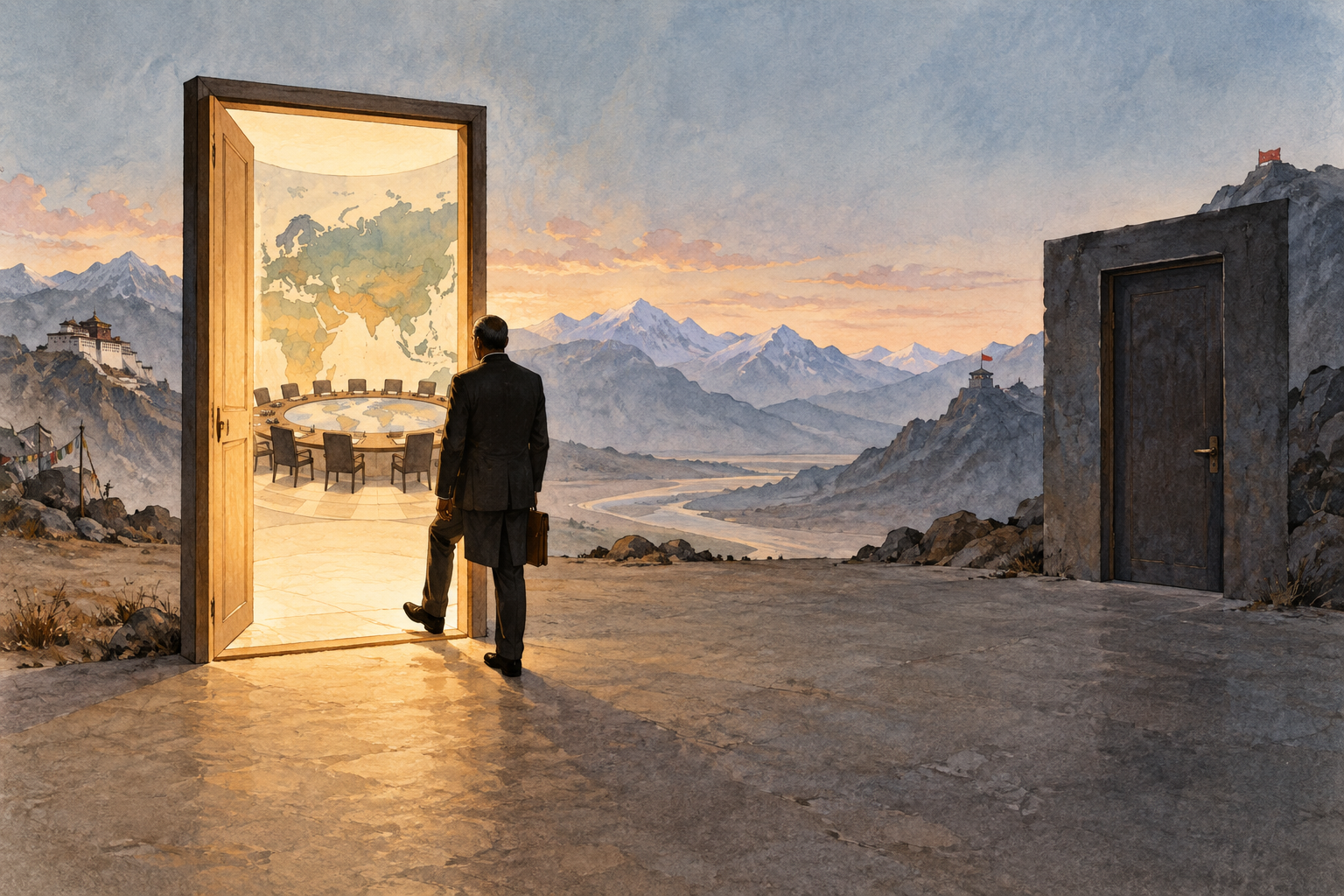
India’s dispatch of senior diplomat Alok Dimri to an SCO national coordinators’ meeting in Islamabad this week marks a limited but significant diplomatic move: New Delhi is keeping its Shanghai Cooperation Organisation track open while avoiding any signal that its bilateral freeze with Pakistan has eased.1
The visit, reported by Indian media as the first Indian official delegation trip to Pakistan since Operation Sindoor, was framed in New Delhi less as outreach to Islamabad than as compliance with India’s obligations in a China- and Russia-backed Eurasian forum.1 That distinction is central. India is showing it will participate in SCO processes even when Pakistan is the host, but it is not treating multilateral attendance as a reset in India-Pakistan relations.
The immediate implication is that future Pakistan-hosted SCO meetings will be judged by level, format and political risk. Bureaucratic and ministerial participation may remain possible where India sees strategic value. A prime ministerial visit, however, remains uncertain and will likely be decided closer to the 2027 SCO Council of Heads of State summit in Islamabad.2
Dimri, an additional secretary in India’s Ministry of External Affairs and India’s SCO national coordinator, attended the Council of National Coordinators meeting after Pakistan assumed the SCO’s rotating chairmanship following the Bishkek summit.1 The Indian Express reported that India saw attendance as an obligation of membership, even amid frozen bilateral ties with Pakistan.1
That framing allows New Delhi to draw a boundary between multilateral diplomacy and bilateral engagement. The SCO gives India access to a forum that includes China, Russia, Central Asian states, Iran, Belarus and Pakistan. It also provides a platform to monitor regional security, connectivity and Afghanistan-related discussions in a space where New Delhi does not want to be absent.2
The Times of India described the visit as evidence that the SCO has remained insulated from India-Pakistan tensions in a way that SAARC has not.2 That contrast matters for South Asia watchers. SAARC has long been constrained by India-Pakistan hostility, while the SCO’s broader Eurasian membership and Chinese-Russian weight make total disengagement costlier for New Delhi.
The visit has raised the question of whether Prime Minister Narendra Modi could travel to Pakistan for the SCO leaders’ summit in 2027. Indian reporting has been cautious: Modi has attended most in-person SCO leaders’ summits since India became a full member in 2017, but officials have indicated that past attendance does not guarantee a Pakistan visit.2
The political threshold is higher for a prime ministerial trip than for a national coordinator’s meeting. According to The Times of India, India will factor in Pakistan’s support for cross-border terrorism before making a final decision on representation, including for defence and foreign ministers’ meetings before the summit.2
The Indian Express similarly noted that Pakistan is expected to invite Modi for the summit, but that attendance would be a political decision rather than a procedural one.1 In practical terms, New Delhi is preserving optionality: it can continue working-level SCO participation while reserving judgment on whether higher-level attendance would create unacceptable domestic or diplomatic costs.
Islamabad has portrayed the Indian delegation’s presence as a welcome development. Pakistan’s Foreign Office spokesman Sajjad Haider Khan said the visit reflected shared regional goals around peace, development, connectivity, trade and transit, according to India Today.3
Pakistani coverage also emphasized the public optics. The Express Tribune reported that Dimri greeted Deputy Prime Minister and Foreign Minister Ishaq Dar with a handshake during the coordinators’ call on him, a cordial image that stood out against recent India-Pakistan exchanges at the United Nations General Assembly.4
But the same reporting underscored the limits of the moment. The engagement took place within a multilateral SCO setting, not a bilateral negotiation.4 That gives both sides room to benefit from the optics without changing their stated positions: Pakistan can present itself as a functioning SCO chair, while India can demonstrate institutional participation without conceding a political thaw.
The substantive agenda also helped keep the visit within a safer diplomatic frame. Pakistan has made connectivity, innovation and shared prosperity the theme of its SCO chairmanship, and Dar urged member states to turn broad commitments into practical cooperation.8
Dimri, according to Pakistani reporting, welcomed Pakistan’s chairmanship and identified trade, connectivity and development as areas where the SCO could advance regional cooperation.8 The Times of India reported that he said national coordinators had finalized an agenda focused on connectivity, trade and transit, with the programme culminating in the Islamabad summit.2
For India, that language is useful but sensitive. New Delhi supports regional connectivity in principle, especially where it expands links with Central Asia and preserves strategic room in Eurasia. But connectivity through Pakistan remains politically and security-constrained. By speaking within the SCO framework, India can endorse broad regional goals without reopening bilateral trade or transit questions on Pakistan’s preferred terms.
India’s SCO engagement is partly defensive. The organisation is not led by India’s closest partners; it is heavily shaped by China and Russia, and Pakistan’s chairmanship gives Islamabad a year-long convening role. Staying engaged allows India to monitor agendas, language, maps, territorial references and security framing in a forum where China and Pakistan can influence outcomes.1
It also supports India’s wider Eurasian balancing act. New Delhi continues to value ties with Russia, wants access to Central Asian diplomacy, and has been cautiously managing a difficult relationship with China. The SCO is one of the few forums where all of these tracks intersect.2
That does not make the SCO easy terrain for India. Pakistan’s role as host increases the political exposure of every Indian attendance decision. Still, non-participation would carry its own costs by leaving India outside discussions on regional security, trade and connectivity during a Pakistan-chaired cycle.
The next test will be the level of Indian representation at Pakistan-hosted SCO events before the 2027 summit. Dawn reported that Dar has already reviewed preparations for the SCO Council of Heads of State summit in Islamabad, while SCO national coordinators reaffirmed their commitment to continued engagement and practical cooperation.7
If India continues to send officials to technical and preparatory meetings, it will reinforce the pattern established by Dimri’s visit: SCO participation can continue even when bilateral ties remain frozen. If New Delhi sends ministers, that would be more politically notable but still not necessarily a bilateral opening. A Modi visit would be in a different category altogether.
For now, India’s message is calibrated. It is not boycotting Pakistan’s SCO chairmanship, but it is also not normalising ties with Islamabad. The SCO track remains open because New Delhi sees value in Eurasian engagement, not because the India-Pakistan dispute has softened.





Comments