India’s BRICS test: keeping an expanded bloc aligned as Iran war strains summit message

BRICS
A grouping originally formed by Brazil, Russia, India, China and South Africa that has expanded to include additional emerging economies and Middle East states.
Sherpas
Senior officials who negotiate summit language and prepare declarations before leaders meet.
New Delhi Declaration
The expected leaders’ statement from the summit, whose wording on West Asia will signal whether members have reached consensus.
Strait of Hormuz
A critical oil shipping chokepoint between Iran and the Gulf states; disruption there can affect global energy prices.
Press Information Bureau, Government of India
government
BRICS: Evolution, Cooperation and India's Leadership
Reuters via Internazionale
news
India hosts BRICS summit as Iran war tests bloc unity
The Indian Express
news
BRICS negotiators’ scramble in Delhi to bridge a rift
Delhi summit
India will host the 18th BRICS summit in New Delhi on September 12-13 under its 2026 presidency.
Iran split
The U.S.-led war on Iran and Iran-UAE tensions are the main obstacles to a consensus summit declaration.
Expanded bloc
India’s official account lists BRICS as an 11-member grouping spanning Asia, Africa, Latin America and the Middle East.
NEW DELHI — India will host BRICS leaders in New Delhi on September 12-13 with a challenge beyond summit choreography: keeping an enlarged, 11-member bloc aligned around a joint diplomatic message as the U.S.-led war on Iran divides members and gives China, Russia and Iran an opening to press for tougher language against Western action.12
The summit, held under India’s 2026 BRICS presidency, brings together a grouping that New Delhi officially lists as Brazil, China, Egypt, Ethiopia, India, Indonesia, Iran, Russia, Saudi Arabia, South Africa and the United Arab Emirates.1 Expansion has increased BRICS’ claimed weight as a Global South forum, but it has also brought in regional rivalries that now complicate the core task of any BRICS presidency: producing consensus.
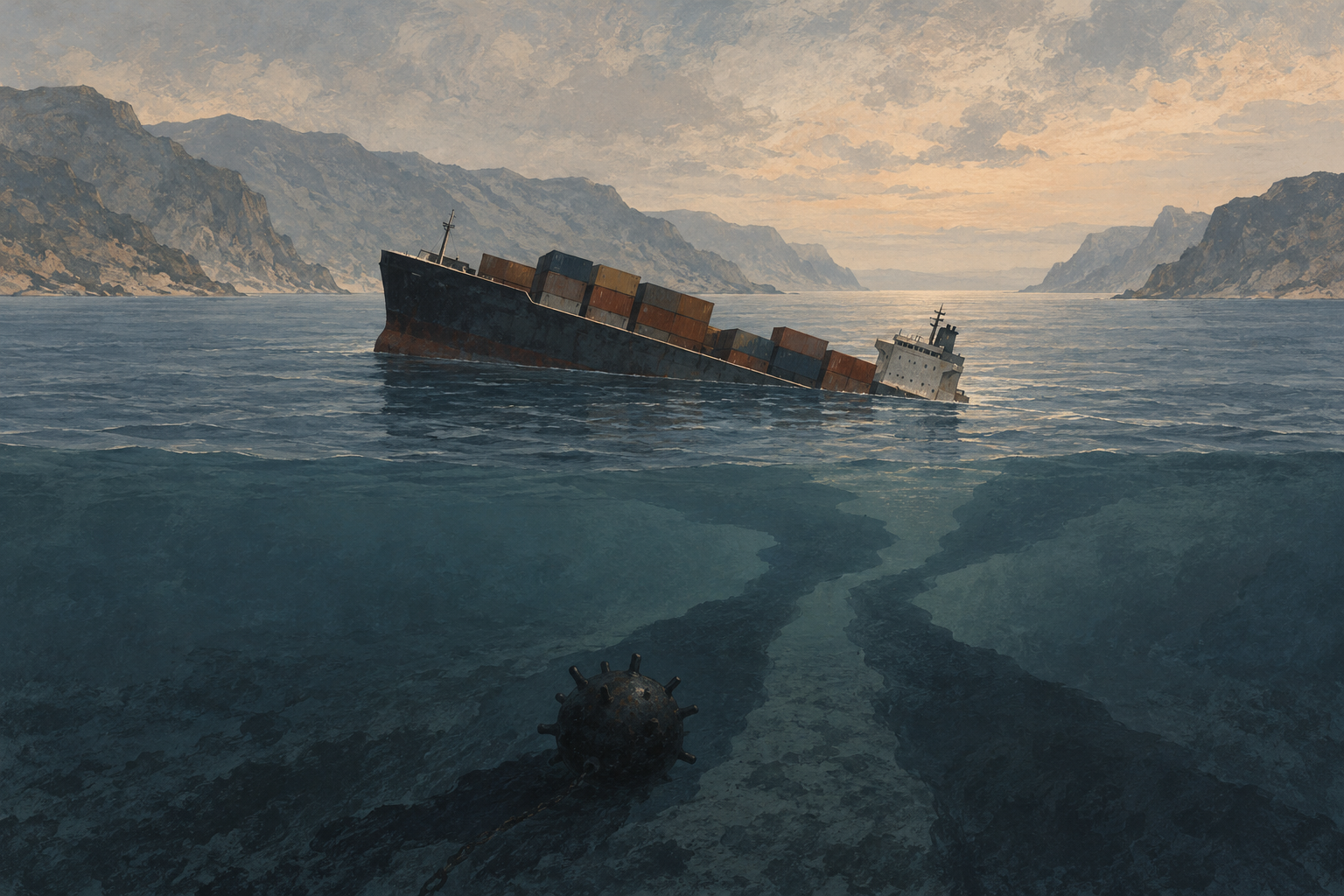
Reuters reported that the war on Iran has split the bloc, with Tehran and Abu Dhabi on opposing sides of the conflict. The report said U.S. and Israeli attacks on Iran began more than six months ago, and that the conflict has contributed to a near-shutdown of the Strait of Hormuz, pushing crude oil above $100 a barrel.2 The UAE, a BRICS member, suspended trade and financial transactions with Iran in August after being hit by Iranian missiles, according to the report.2
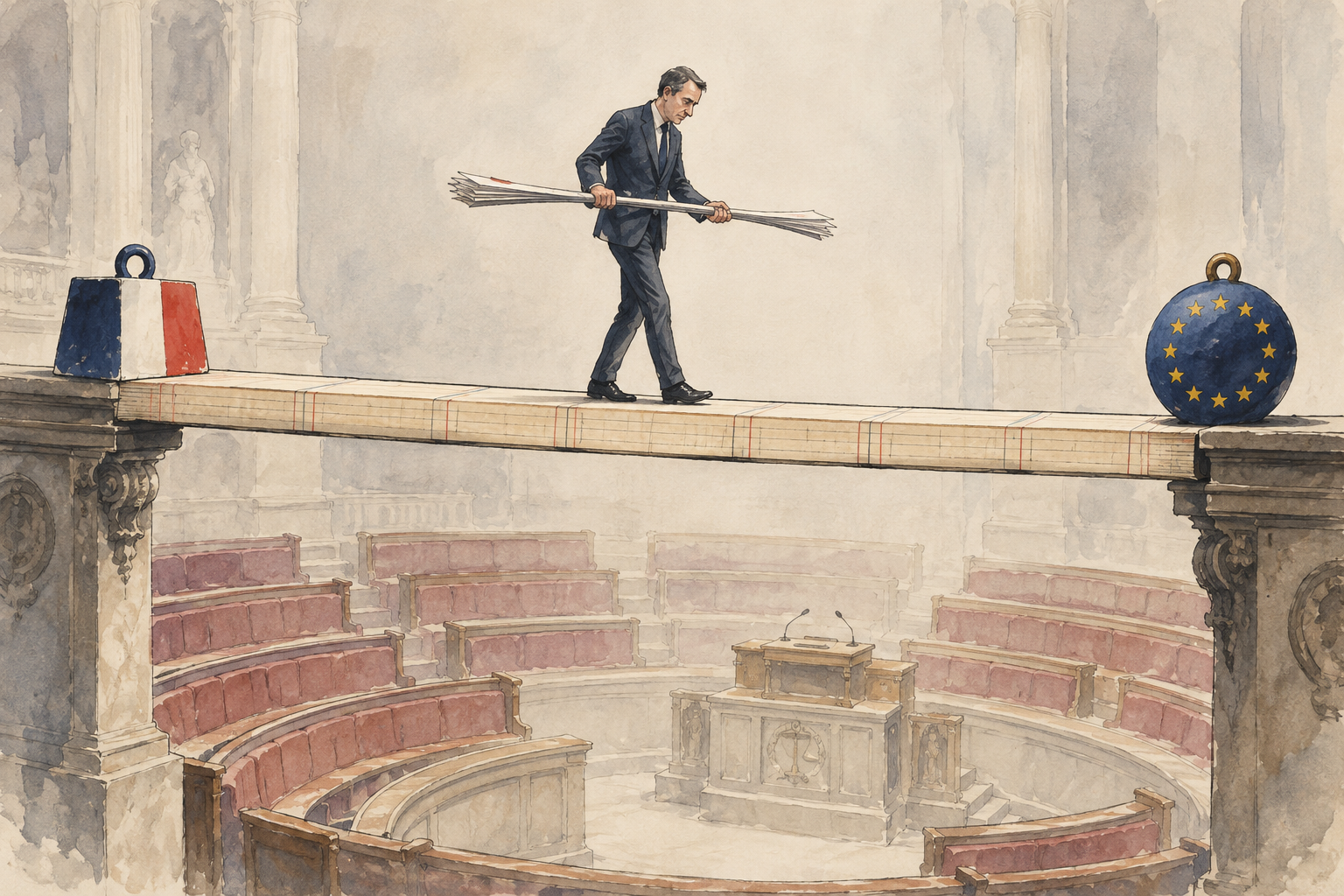
That makes the expected New Delhi Declaration the summit’s main diplomatic battleground. Indian and other BRICS negotiators have been trying to settle wording on West Asia that Iran can accept without alienating the UAE and other Gulf participants, Indian media reported.3 Failure to issue a unified leaders’ declaration would undercut India’s stated chairship theme — “Building for Resilience, Innovation, Cooperation and Sustainability” — and challenge New Delhi’s argument that BRICS can remain a constructive, consensus-based platform despite expansion.1
India’s presidency has framed BRICS as a vehicle for emerging economies to coordinate on global governance, development, finance, technology, trade and energy security.1 But this summit puts New Delhi in a narrower and more difficult role: mediator among members whose immediate security interests diverge sharply.
The Indian Express reported that BRICS sherpas in Delhi were working intensively to produce a joint declaration, with the main disagreement centered on wording over West Asia because Iran, the UAE and Saudi Arabia are expected around the summit table.3 The same report noted that when BRICS foreign ministers met in New Delhi in May, India issued a chair’s statement and outcome document rather than a full consensus statement, reflecting divisions over the conflict.3
Russia has publicly acknowledged the problem while expressing confidence in India’s diplomacy. Kremlin spokesperson Dmitry Peskov said differences between Iran and the UAE were complicating the drafting of summit documents, but praised diplomats working under the Indian presidency and said Moscow expected acceptable language to be found.6
For India, the risk is not only a weak declaration. It is also that a summit it is hosting could be pulled toward language shaped by Beijing, Moscow and Tehran — three capitals more willing to cast BRICS as a counterweight to Western power. Reuters reported that China, Russia and Iran are seeking stronger wording against Western action, while India must preserve enough balance to maintain consensus across Gulf, African, Asian and Latin American members.2
Chinese President Xi Jinping will attend the New Delhi summit at Prime Minister Narendra Modi’s invitation, China’s Foreign Ministry said, marking Xi’s first visit to India in seven years.57 His presence raises the summit’s geopolitical visibility and sharpens the question of agenda control.
India and China have sought to stabilize ties after years of strain following the Ladakh military standoff, and Modi is expected to meet Xi on the summit’s first day, Hindustan Times reported.7 Modi is also expected to hold meetings with Russian President Vladimir Putin and Iranian President Masoud Pezeshkian on the margins, linking India’s bilateral diplomacy directly to the summit’s broader effort to manage divisions over Ukraine, West Asia and global governance.7
For New Delhi, BRICS is useful when it amplifies India’s role as a bridge among developing economies, Gulf states, Russia, China and the West. It is more problematic if it appears to be moving into a China-led or explicitly anti-American alignment. The National reported that India wants BRICS to expand room for emerging economies while avoiding a frame that makes the grouping anti-American or overly dependent on China.4
That balance is especially sensitive because India has deep security and economic ties with the United States, major energy interests in the Gulf, longstanding defense relations with Russia, a difficult but important relationship with China, and a need to keep lines open with Iran. The summit therefore tests not just India’s BRICS management, but also its broader strategy of multi-alignment.
India’s official BRICS explainer says the bloc now represents nearly half the world’s population, about 40% of global GDP and 26% of global trade.1 Those figures strengthen the case for BRICS as a platform for the Global South, but the addition of new members has made internal consensus more complex.
Iran and the UAE are the most immediate fault line. Reuters cited experts saying the key test is whether BRICS can find language on the Middle East crisis that both Abu Dhabi and Tehran can accept.2 The same report noted that some new members, including Iran and the UAE as well as Egypt and Ethiopia, have their own disputes or tensions, complicating the bloc’s consensus model.2
Saudi Arabia adds another layer of ambiguity. India’s official explainer lists Saudi Arabia among the 11 BRICS countries, but Reuters reported that Riyadh’s role remains unclear because it has not accepted full membership while still participating through lower-level delegations. Saudi Foreign Minister Faisal bin Farhan Al Saud is expected at the Delhi meeting.12
The summit agenda also extends beyond West Asia. Moneycontrol reported that the New Delhi meeting is expected to cover global governance, trade, investment, technology, food and energy security, and conclude with a New Delhi Declaration.8 But the declaration’s language on the Iran war is likely to be read as the clearest measure of India’s convening capacity.
A joint statement would not necessarily shift battlefield realities or alter U.S., Israeli, Iranian or Gulf calculations. Its importance lies elsewhere: whether BRICS can still produce collective diplomatic language after expansion, and whether India can shape that language in a way that preserves its own foreign-policy flexibility.
New Delhi’s preferred outcome is likely a formulation strong enough to satisfy Iran, Russia and China that BRICS is resisting Western coercion, but broad enough for the UAE, Saudi Arabia and other members to avoid appearing aligned behind Tehran. That would allow India to claim the summit strengthened BRICS’ voice without surrendering the forum’s tone to the bloc’s most anti-Western members.
If India succeeds, the New Delhi summit will reinforce its argument that BRICS can expand without paralysis. If it fails, the meeting may show that the bloc’s new breadth has come at the cost of coherence — and that India’s role as convener is becoming harder just as BRICS’ geopolitical profile rises.



Comments