Japan moves to lock in alliance agenda before Trump-Xi talks
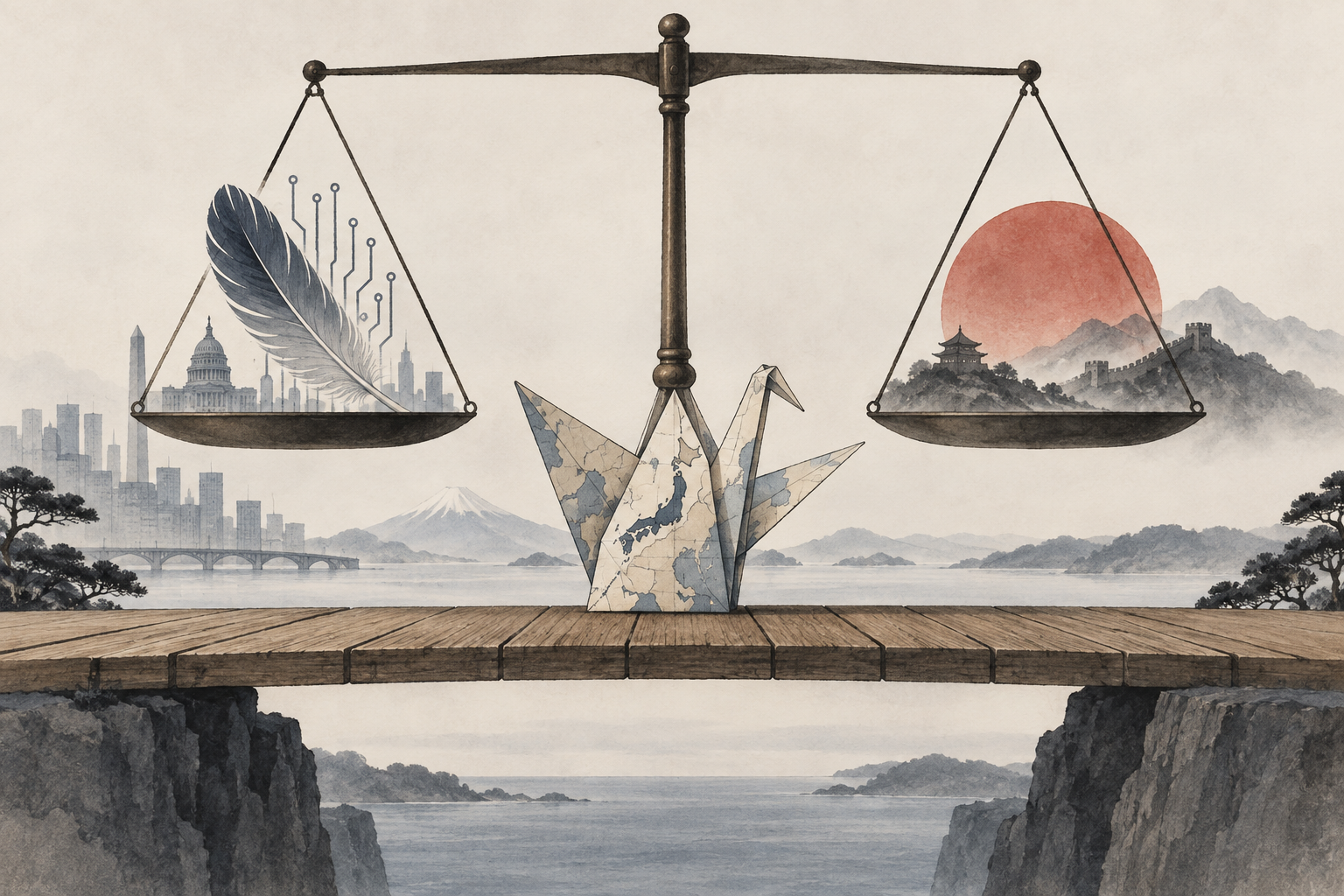
Economic security
A policy approach that treats supply chains, advanced technology, energy, data and industrial capacity as national-security concerns.
Critical minerals
Materials such as rare earths, lithium, cobalt and nickel that are essential for defense systems, batteries, semiconductors and clean-energy technologies.
Quad
A strategic grouping of Japan, the United States, Australia and India that coordinates on Indo-Pacific issues including maritime security, infrastructure and resilience.
Free and Open Indo-Pacific
Japan’s regional strategy emphasizing rule of law, freedom of navigation, connectivity, resilience and opposition to coercive changes to the status quo.
Ministry of Foreign Affairs of Japan
government
Japan-U.S. Summit Meeting
The White House
government
President Trump Participates in a Bilateral Meeting with the Prime Minister of Japan
Roll Call / Factba.se
news
Remarks: Donald Trump Holds a Bilateral Meeting with Sanae Takaichi of Japan - September 22, 2026
Untracked bias
Bias and factuality ratings from Media Bias Fact Check. Outlets without a rating are marked “Untracked.”
Summit timing
Japan said the Takaichi-Trump meeting discussed China with the upcoming U.S.-China summit explicitly in mind.
Tech security
Tokyo highlighted alliance cooperation on AI, semiconductors and critical minerals as part of economic security.
Indo-Pacific deterrence
The two leaders agreed to strengthen Japan-U.S. deterrence and response capabilities and reaffirmed the Quad.
Japan used Prime Minister Sanae Takaichi’s September 22 meeting with President Donald Trump in New York to lock in alliance coordination on China-related security and economic-security priorities before Trump’s upcoming talks with Chinese President Xi Jinping.
Tokyo’s official readout was unusually explicit about the timing. The Ministry of Foreign Affairs said Takaichi and Trump discussed China “bearing in mind” the forthcoming U.S.-China summit and agreed that Japan and the United States would coordinate closely on issues including economic security.1 The framing pointed to Tokyo’s central concern: that any U.S.-China effort to stabilize relations should not dilute allied planning on semiconductors, artificial intelligence, critical minerals or deterrence in the Indo-Pacific.
The meeting, held on the sidelines of the United Nations General Assembly, also tied technology policy directly to alliance strategy. Japan said the two leaders confirmed progress in economic-security cooperation “to win the technological race” and strengthen resilience in AI, semiconductors and critical minerals. They also agreed to further advance deterrence and response capabilities in the Japan-U.S. alliance.1
For Japan, the timing was the message. The Takaichi-Trump meeting came just before anticipated U.S.-China leader-level talks, as Washington and Beijing seek ways to manage friction over AI, trade, Taiwan and critical minerals.8 Japanese reporting after the meeting emphasized that Tokyo wanted to confirm close coordination with Washington ahead of Trump’s talks with Xi, particularly on China and economic security.5
That does not mean Japan opposes U.S.-China stabilization. A more predictable U.S.-China relationship can reduce crisis risk in Asia. But Tokyo’s diplomacy indicates it wants stabilization to occur within an allied framework, not above it. Japan’s priorities are to prevent surprise concessions, preserve export-control and supply-chain alignment, and maintain deterrence against coercive changes to the regional status quo.
The Japan Times framed the meeting as an effort to reinforce coordination and avoid surprises before Xi’s U.S. visit. That reflected a recurring Japanese concern about leader-level U.S.-China diplomacy: bilateral deals between Washington and Beijing can affect Japanese security even when Japan is not at the table.6 Pre-meeting analysis in the South China Morning Post similarly described Japan as seeking assurance that its security and economic interests would not be traded away in the Trump-Xi summit.7
The most important substantive signal was the merging of economic security with traditional deterrence. Tokyo’s readout did not treat AI, semiconductors and critical minerals as separate commercial matters. It placed them alongside China, North Korea, the Quad and Indo-Pacific security.1
That reflects a broader shift in Asia-Pacific strategy. Semiconductors are essential for advanced weapons, cloud computing, surveillance systems and AI development. Critical minerals underpin batteries, defense production and clean-energy supply chains. AI is now both an economic platform and a military-relevant technology. In this context, Japan wants to ensure that any U.S.-China discussion of technology competition does not weaken allied restrictions, investment screening, supply diversification or emergency planning.
The U.S.-China agenda reinforces the point. Reporting on the expected Trump-Xi talks has highlighted AI competition, trade frictions and China’s leverage over critical minerals as core sources of tension.8 Axios has also reported that Washington and Beijing were considering AI-risk communication mechanisms, including a possible hotline-style channel, underscoring that AI governance and strategic competition are now part of the same diplomatic track.9
For Tokyo, that creates both opportunity and risk. A U.S.-China AI channel could reduce the danger of misunderstanding. But if technology stabilization becomes a bilateral U.S.-China bargain, Japan could face pressure to adjust its own controls, supply-chain policies or industrial cooperation. Takaichi’s meeting with Trump was therefore a bid to define the allied position before the United States enters the room with China.
The meeting also reaffirmed the Japan-U.S. alliance as the foundation of peace and prosperity in the Indo-Pacific, with both leaders agreeing to strengthen deterrence and response capabilities.1 That language matters because Japan’s China policy is not only about trade or technology. It is also about military balance, maritime pressure, Taiwan contingency planning and the credibility of U.S. commitments.
In public remarks, Takaichi pointed to a severe Asian security environment and emphasized the need to demonstrate the strength of the U.S.-Japan alliance.4 The official U.S. video record of the bilateral meeting reinforced the optics of leader-level alignment at UNGA, even as Japan’s readouts provided the fuller policy agenda.3
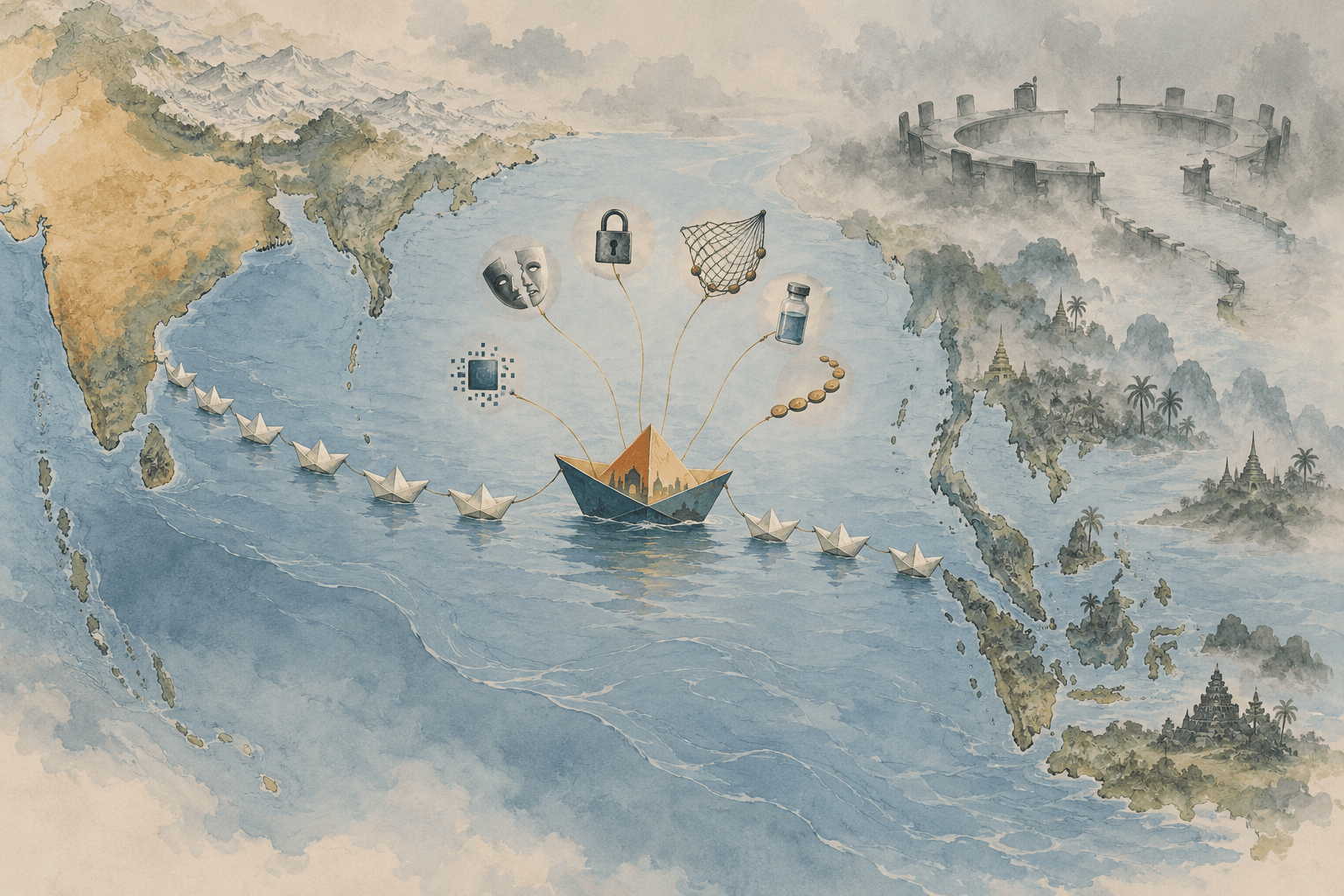
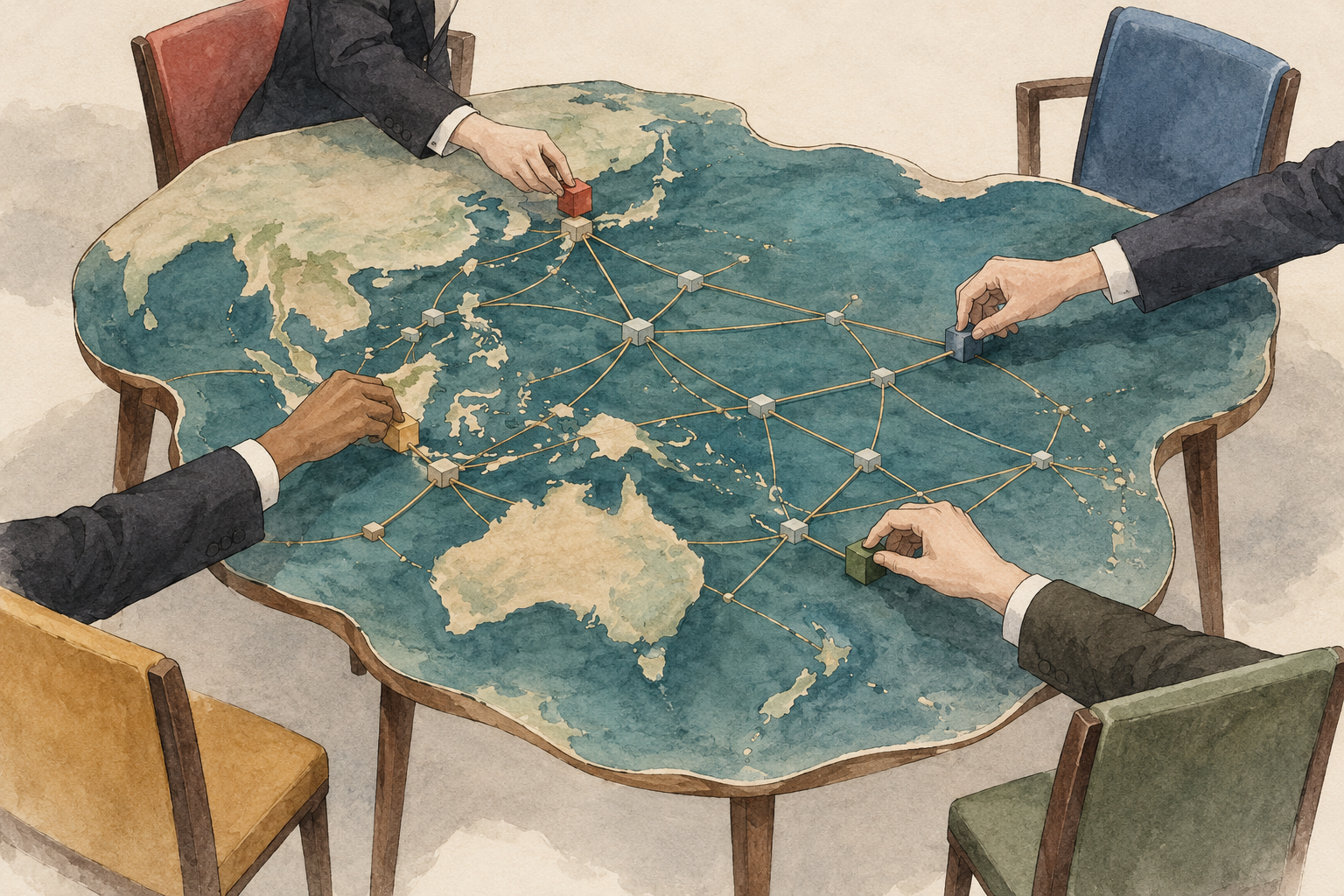
Tokyo also linked the bilateral alliance to wider minilateral diplomacy. Japan said Takaichi and Trump reaffirmed the importance of the Quad — Japan, the United States, Australia and India — and agreed to strongly promote a Free and Open Indo-Pacific.1 In practice, that signals Japan’s preference for layered deterrence: bilateral U.S.-Japan defense cooperation, trilateral alignment with South Korea where possible, and broader Quad coordination on maritime security, infrastructure, technology and resilience.
North Korea remained on the agenda. Japan said the two leaders reaffirmed the need to address Pyongyang’s nuclear and missile programs and the goal of complete denuclearization, while Trump expressed support for the immediate resolution of the abductions issue.1
The North Korea discussion also fits the wider allied-coordination theme. On the same UNGA diplomatic circuit, South Korea said its foreign minister discussed North Korea, advanced technologies and supply chains with U.S. and Japanese counterparts, including cooperation on semiconductors, AI, quantum technologies and economic security.10 That indicates the region’s core U.S. allies are trying to synchronize not only military deterrence but also technology and supply-chain policy.
This matters because North Korea’s missile advances, China’s military modernization and economic coercion concerns are increasingly treated as connected strategic challenges. A disruption in critical minerals, a semiconductor restriction or an AI governance dispute can now affect defense readiness and crisis stability as much as traditional military deployments.
Takaichi’s UNGA speech provided the broader policy architecture for the bilateral meeting. She described a world of escalating geopolitical competition, supply-chain disruption and pressure on the rules-based order, while calling for stronger resilience in energy and critical materials.11 She also warned against coercive attempts to change the status quo and argued that the security of the Indo-Pacific and Euro-Atlantic are inseparable.11
On technology, Takaichi used the UN platform to present AI as both an opportunity and a national-security challenge. She highlighted Japan’s role in the Hiroshima AI Process and said Japan would work with like-minded partners to build a safe, secure and trustworthy AI ecosystem.11
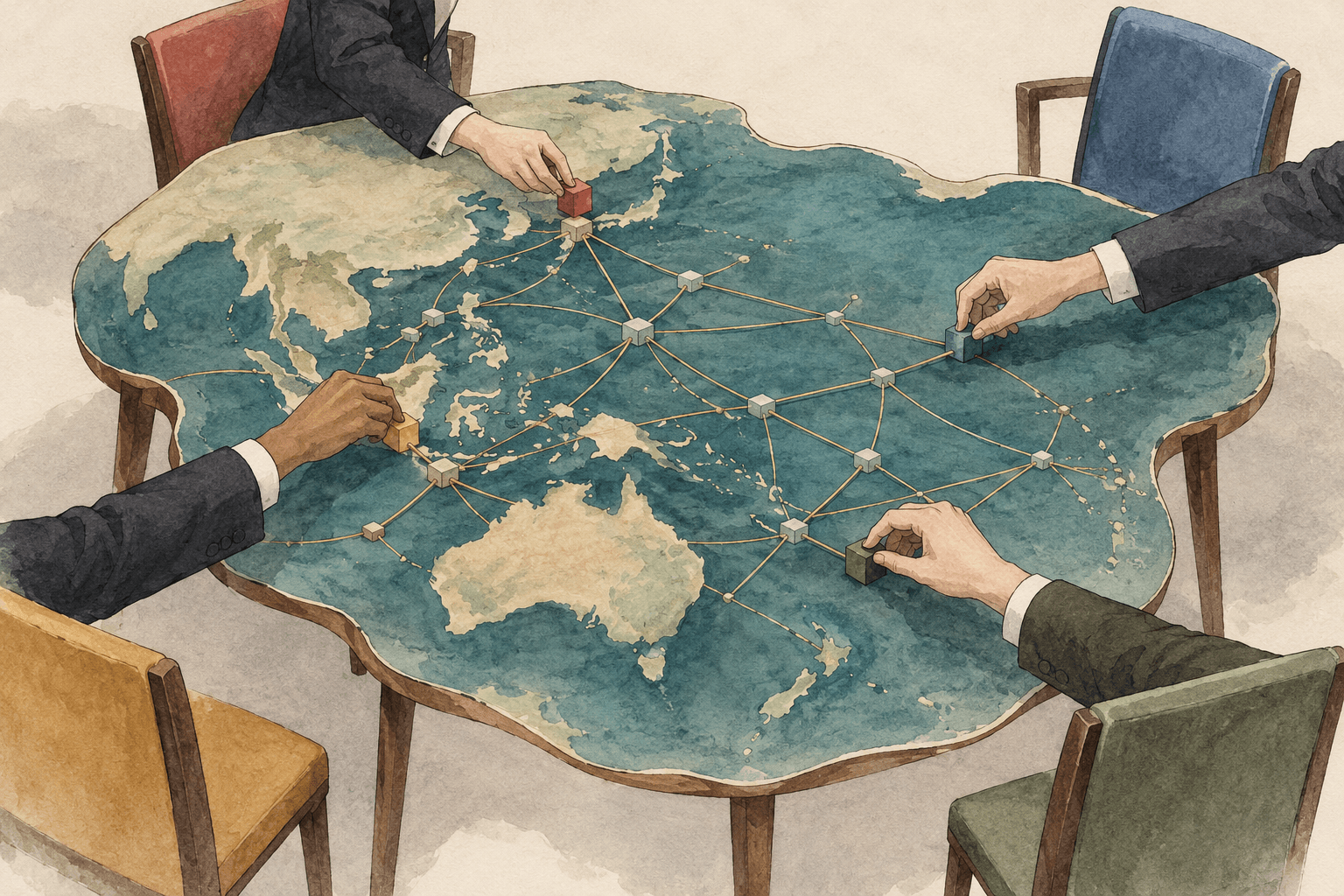
Together, the UNGA speech and the Trump meeting show a coherent Japanese approach. Tokyo is not separating diplomacy with China from supply-chain resilience, AI governance, North Korea policy or Indo-Pacific deterrence. It is trying to bind them into a single allied agenda before Washington tests whether it can stabilize ties with Beijing.
Japan’s strategic bet is that close U.S.-Japan coordination before the Trump-Xi summit will shape the boundaries of any U.S.-China understanding. Tokyo wants Washington to enter talks with Beijing with allied red lines already reinforced: no weakening of semiconductor and AI coordination, no softening on critical-mineral resilience, no ambiguity on deterrence, and no sidelining of Japan’s concerns over North Korea and regional coercion.
That is why the New York meeting matters beyond its 35-minute duration.1 It was not simply a bilateral courtesy call at UNGA. It was Japan’s attempt to ensure that U.S.-China stabilization, if it proceeds, is built on allied coordination rather than substituted for it.


Comments