Japan’s UN charter push turns into dispute with China
Enemy state clauses
References in the UN Charter to states that were enemies of Charter signatories during World War II, historically including Japan and Germany.
Charter amendment
A formal change to the UN Charter requiring broad General Assembly support and ratification by all five permanent Security Council members.
Postwar order
The political and legal settlement after World War II, including the UN system and constraints designed to prevent renewed aggression.
Defense normalization
A shorthand for Japan’s gradual expansion of security roles and capabilities beyond the strict limits associated with its early postwar posture.
China Military Online
news
The "Enemy State Clauses" cannot and will not be removed
The Japan Times
news
China pushes back against Takaichi’s call to remove ‘enemy state’ wartime label
China's Diplomacy in the New Era / Xinhua
government
China urges Japan to draw lessons from history, win trust through concrete actions: spokesperson
Untracked bias
The Japan Times
China pushes back against Takaichi’s call to remove ‘enemy state’ wartime label
The Independent
Why Japan wants to amend the UN Charter to remove references to ‘enemy states’
Bias and factuality ratings from Media Bias Fact Check. Outlets without a rating are marked “Untracked.”
UN flashpoint
Takaichi’s call to delete the UN Charter’s “enemy state” language has become a Japan-China political dispute, not just a legal reform proposal.
High hurdle
Removing the clauses would require Charter amendment and ratification by all five permanent Security Council members, including China and Russia.
Wider proxy
Beijing is using the issue to link Japan’s defense normalization to wartime history and the postwar regional order.
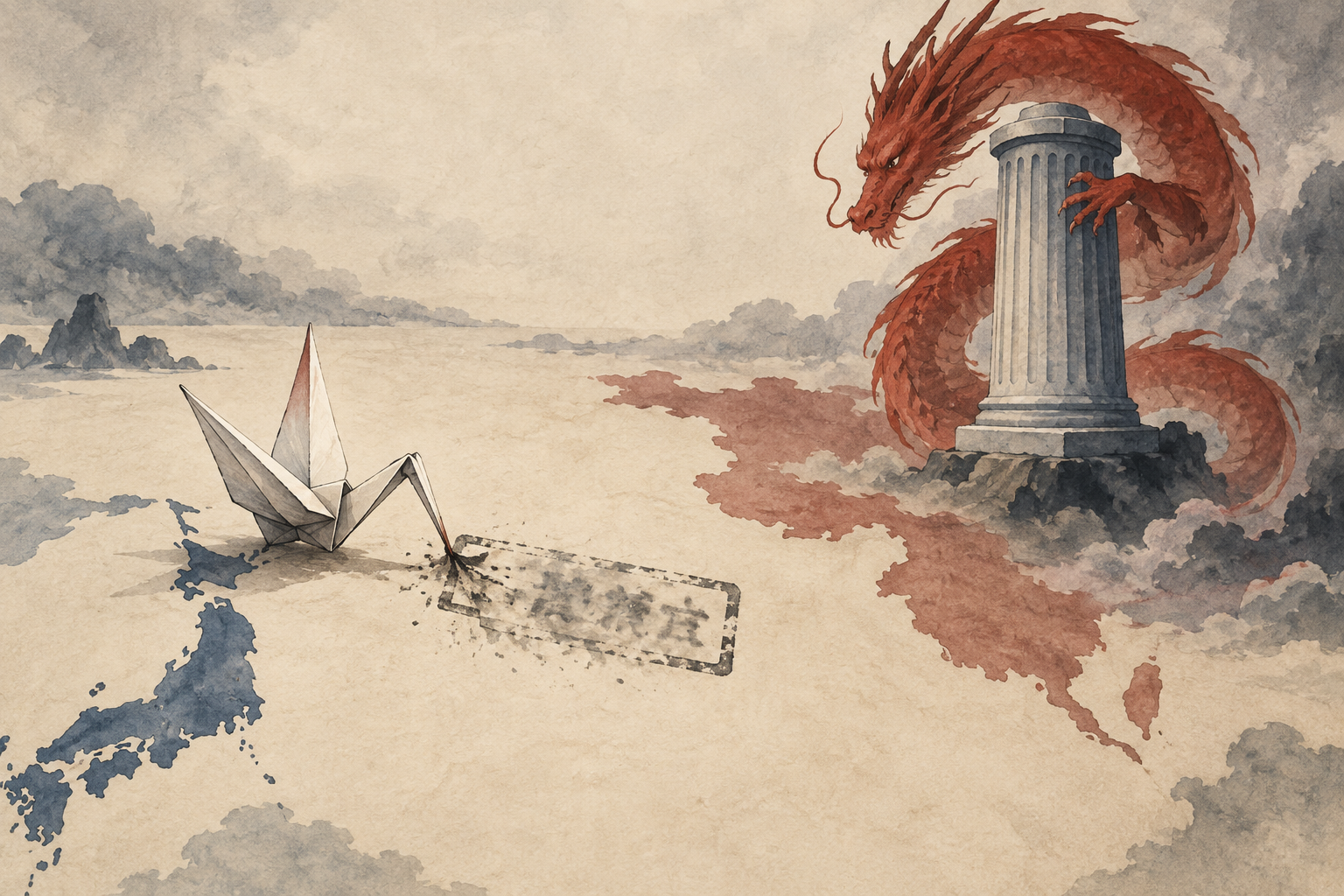
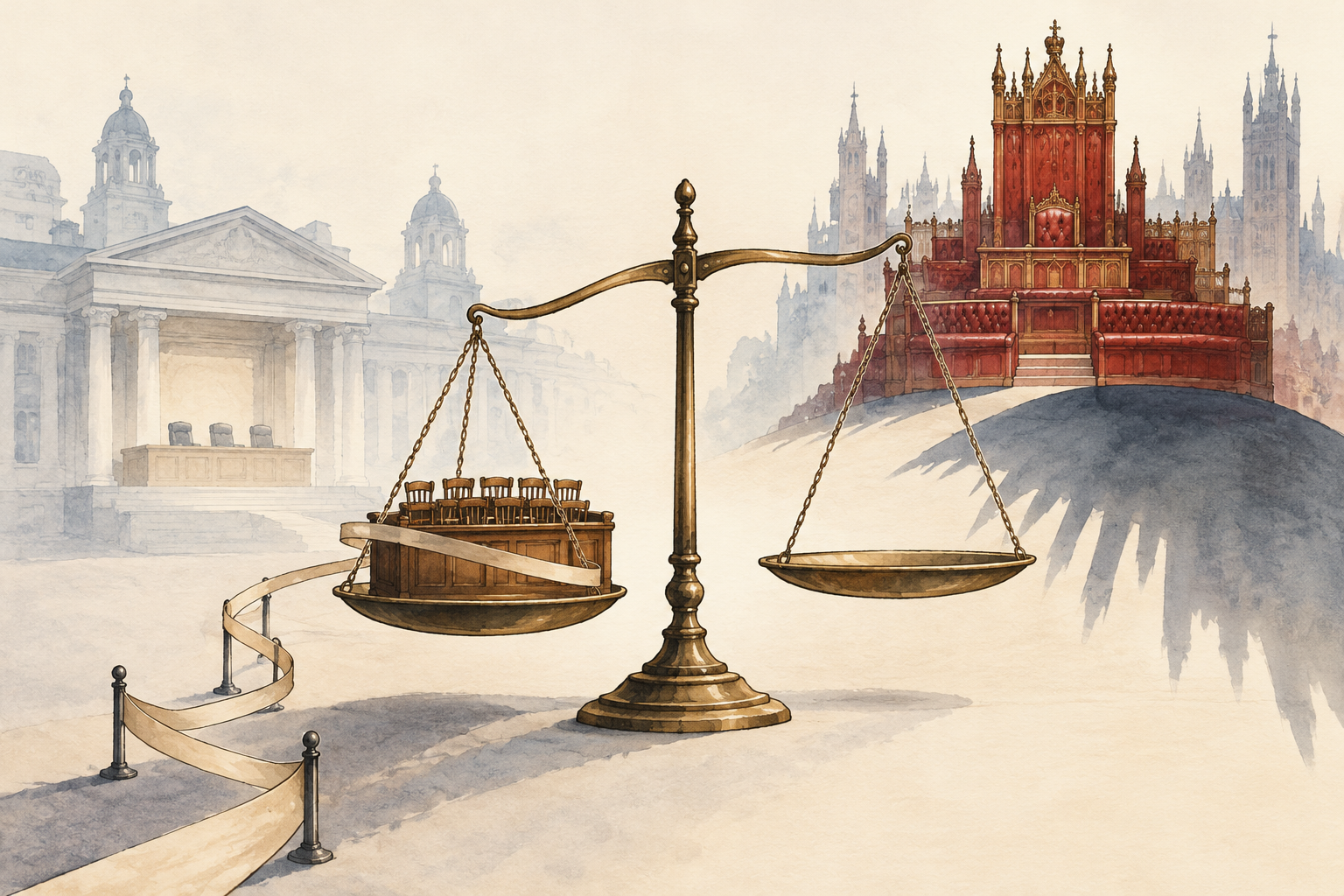
Prime Minister Sanae Takaichi’s demand that the United Nations remove the Charter’s “enemy state” clauses has turned a technical reform issue into a proxy fight over Japan’s security direction, wartime memory and regional trust.
Tokyo calls the clauses an obsolete legal stigma attached to defeated World War II powers. Beijing says they remain a safeguard against any revival of Japanese militarism and a reminder that Japan’s postwar legitimacy depends on how it handles history.23
The dispute matters because the clauses are unlikely to be removed quickly, even though many UN members have long treated them as outdated. Amending the UN Charter requires approval by two-thirds of the General Assembly and ratification by all five permanent Security Council members, including China and Russia. Both have recently used the language to pressure Japan over defense policy and territorial or Taiwan-related disputes.4
That makes Takaichi’s UN remarks less a near-term legal initiative than a political signal. For Japan, deletion would reinforce its claim to be a normal, peace-oriented UN member no longer defined by 1945. For China, resisting the move helps frame Japan’s expanding defense posture, closer U.S. coordination and harder line on Taiwan as a challenge to the Asian postwar settlement.610
In her September 22 UN General Assembly address, Takaichi tied the enemy-state issue to broader UN reform. She argued that the Charter, written after World War II, should be reviewed and that references to “enemy States” should be deleted, in line with a 2005 UN General Assembly resolution supporting their removal.6
Tokyo’s argument is straightforward: Japan joined the UN in 1956, has spent decades contributing to UN institutions, development, peacebuilding and international law, and should not remain textually marked as a wartime enemy in the organization’s founding document.
Japanese coverage sympathetic to Takaichi’s position has emphasized that China accepted the 2005 consensus on deletion but has more recently invoked the clauses in disputes with Tokyo.6
But the timing changed the meaning of the demand. Takaichi is associated with a more assertive national security posture, stronger Japan-U.S. coordination and a tougher public line on China. Her UN trip also coincided with high-level diplomacy with U.S. President Donald Trump ahead of his expected summit with Chinese President Xi Jinping, placing the clause dispute inside a broader U.S.-Japan-China triangle.10
The “enemy state” provisions appear in Articles 53, 77 and 107 of the UN Charter. They refer to states that were enemies of any Charter signatory during World War II, a category historically understood to include Japan, Germany and other Axis powers.4
Article 53 concerns enforcement action by regional arrangements. Article 77 refers to territories detached from enemy states under the postwar trusteeship system. Article 107 preserves certain actions taken as a result of World War II by governments responsible for those actions.
In practice, the clauses have long been considered dormant or obsolete. They remain in the Charter because formal amendment has never been completed.4
The legal hurdle is high. A Charter amendment must pass the General Assembly by a two-thirds vote and then be ratified by two-thirds of UN members, including all five permanent Security Council members: China, France, Russia, the United Kingdom and the United States. That gives Beijing and Moscow an effective veto over deletion, even if the General Assembly favors modernization.4
China’s Foreign Ministry rejected Takaichi’s framing. Spokesperson Guo Jiakun said the world judges Japan by actions rather than words, accused the current Japanese administration of denying aggression and pursuing remilitarization, and described the enemy-state clauses as an institutional safeguard for the postwar order.3
Chinese military-affiliated and state-media commentary sharpened the point. A China Military Online article argued that the clauses “cannot and will not be removed,” explicitly linking Takaichi’s UN demand to what it described as Japanese remilitarization and a challenge to the postwar international order.1 China Daily Hong Kong similarly portrayed the clauses as relevant because Beijing views Japan’s defense policy and historical memory as signs of renewed militarism.7
This is the heart of the dispute: Tokyo sees the clauses as an anachronistic stain; Beijing sees them as leverage in a wider argument over whether Japan has fully internalized the lessons of World War II.
The clauses have existed for eight decades, but they have become politically useful again because Japan’s defense policy is changing. Tokyo has raised defense spending, expanded counterstrike capabilities, deepened security cooperation with the United States and other partners, and increasingly describes China’s military activity as a central security challenge.410
China’s concern is not limited to the Charter text. Beijing has repeatedly criticized Japanese statements on Taiwan, especially suggestions that a Taiwan contingency could affect Japan’s own security.
In that context, invoking the enemy-state clauses allows China to put today’s security debate inside a historical frame. In Beijing’s telling, Japan is a defeated wartime aggressor whose military normalization must remain constrained by the postwar order.10
Japanese analysts have made the mirror-image point: by raising the issue at the UN, Takaichi deliberately touched a China-sensitive nerve and turned a technical amendment question into a statement about Japan’s status and sovereignty. Toyo Keizai argued that the speech crossed into an issue Beijing treats as highly sensitive, making the clauses a proxy for China’s concerns about Japan’s defense trajectory.9
There is little practical prospect of rapid deletion. Even if Tokyo can point to past General Assembly support, the Charter amendment process gives China and Russia blocking power.
Both have reasons to preserve the language as diplomatic leverage: China in relation to wartime history, Taiwan and Japan’s defense buildup; Russia in relation to Japan’s alignment with the West and its territorial dispute with Moscow over the islands Japan calls the Northern Territories.4
That legal reality makes the issue symbolically powerful but institutionally stuck. Japan can use the demand to argue that the UN must reflect present realities rather than 1945. China can use the same demand to argue that Japan is trying to dilute the historical foundations of the postwar settlement before earning regional trust.34
The immediate diplomatic risk is that a Charter reform demand becomes another irritant in already strained Japan-China relations. A Japanese wire report described the issue as a potential new flashpoint for the Takaichi government as it tries to stabilize ties with Beijing.8
For Tokyo, pushing the issue may satisfy domestic and diplomatic goals. It underscores Japan’s long-standing frustration with a label it considers obsolete, reinforces its campaign for broader UN reform and challenges China’s use of wartime language in contemporary security disputes.
For Beijing, opposing deletion helps preserve a historical narrative that constrains Japan’s regional role and supports China’s claim that Japanese defense normalization is not merely defensive.
The result is a dispute in which both sides are arguing about more than words in the UN Charter. Japan is seeking recognition that its postwar record should supersede a wartime category. China is insisting that Japan’s future security role cannot be separated from its past.
Until that trust gap narrows, the enemy-state clauses are likely to remain less a legal instrument than a recurring political weapon.


Comments