Japan Uses India-Backed UN Shipping Forum to Press Maritime Rules
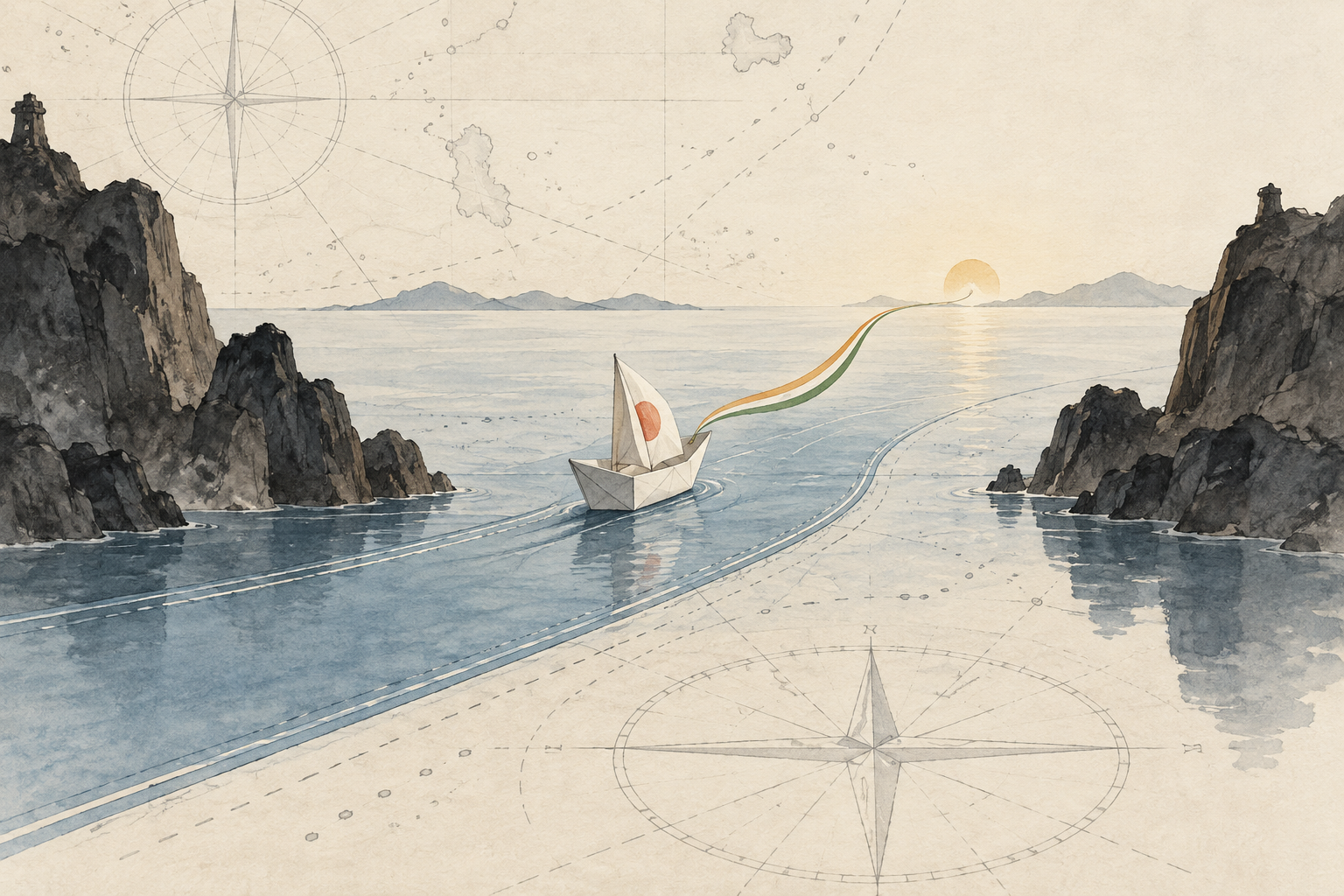
GoF on S4
The Group of Friends on Safety and Security of Shipping and Seafarers is an India- and Liberia-proposed UN platform focused on protecting merchant vessels and crews.
FOIP
Free and Open Indo-Pacific is Japan’s strategic concept emphasizing rule of law, open sea lanes, connectivity and freedom of navigation.
UNCLOS
The United Nations Convention on the Law of the Sea is the core international treaty governing maritime rights, navigation and state responsibilities at sea.
Bab el-Mandeb
A narrow strait between the Red Sea and the Gulf of Aden, it is a critical route for trade between Europe, the Middle East and Asia.
Ministry of Foreign Affairs of Japan
government
Inaugural Ministerial Meeting of “Group of Friends on Safety and Security of Shipping and Seafarers” (GoF on S4)
Seatrade Maritime News
news
India and Liberia launch coalition to protect ships and seafarers
PortNews
news
India foreign minister demands halt to merchant ship attacks from Gulf to Black Sea
Untracked bias
The Economic Times
At UNGA, India launches maritime safety group to protect ships and seafarers
The CSR Journal
India And Liberia Launch UN Shipping Safety Group Amid Attacks On Seafarers
Detroit Star
In New York, EAM Jaishankar spotlights India's concerns over attacks on seafarers
Bias and factuality ratings from Media Bias Fact Check. Outlets without a rating are marked “Untracked.”
New UN Forum
India and Liberia launched the Group of Friends on Safety and Security of Shipping and Seafarers at the UN in New York.
Japan’s FOIP Push
Japan used the inaugural meeting to restate freedom of navigation, UNCLOS and its Free and Open Indo-Pacific principles.
Sea-Lane Risks
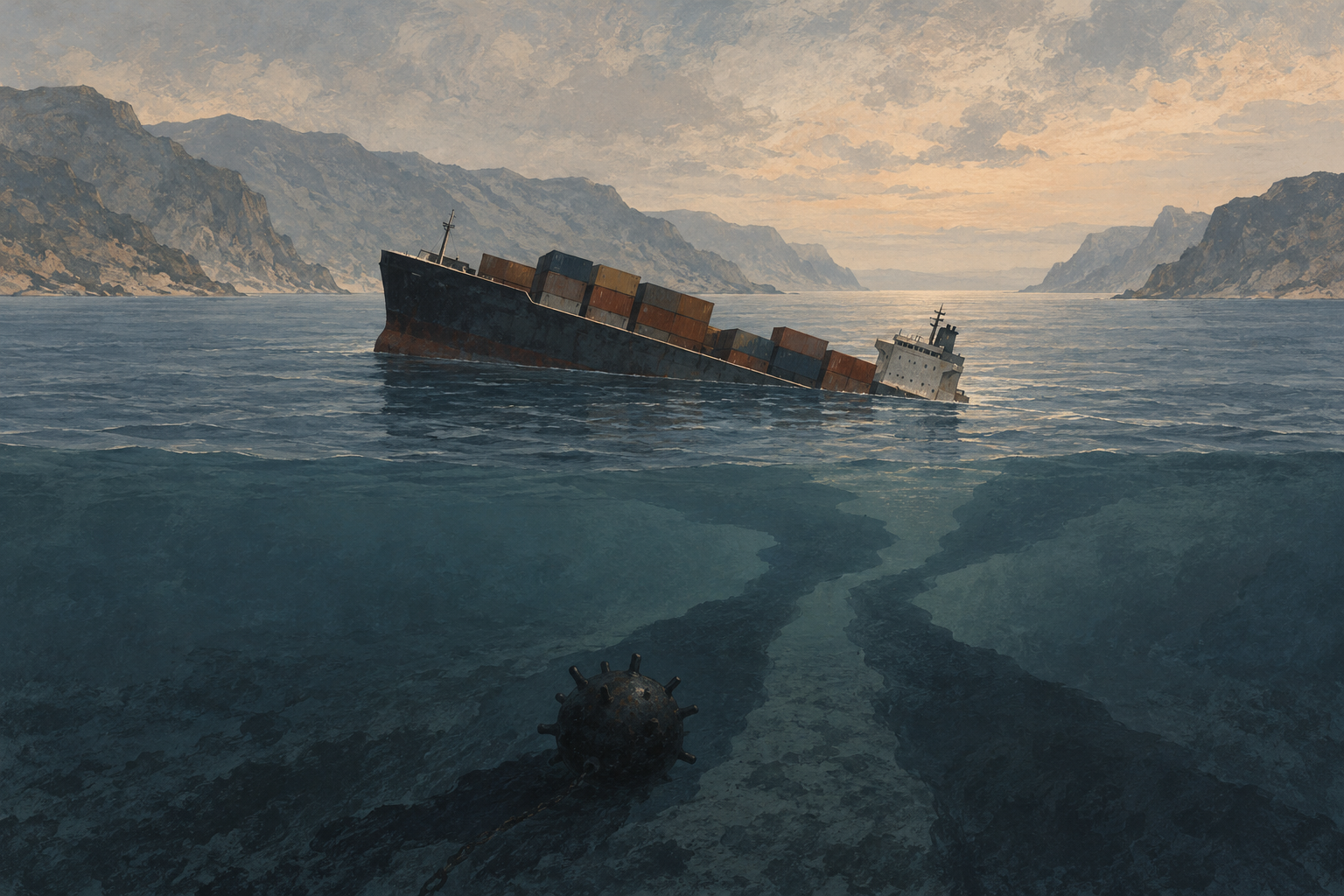
The forum focuses on threats to merchant shipping and crews across corridors including Hormuz, Bab el-Mandeb, the Red Sea and the Black Sea.
Japan has used a new India- and Liberia-backed United Nations forum on shipping and seafarer safety to restate its support for a rules-based maritime order, linking attacks on commercial vessels from the Middle East to the Black Sea with wider Indo-Pacific security principles.
Japan’s Ministry of Foreign Affairs said on September 28 that Ambassador Kaihara Kentaro, Japan’s ambassador in charge of UN affairs, joined the inaugural ministerial meeting of the Group of Friends on Safety and Security of Shipping and Seafarers, known as GoF on S4, in New York on September 25. Japan said Kaihara emphasized the rule of law, freedom of navigation and the United Nations Convention on the Law of the Sea as central to shipping security and to Tokyo’s updated Free and Open Indo-Pacific policy.1
The forum, proposed by India and Liberia, is emerging as a diplomatic venue where seafarer protection, maritime commerce and international law converge across Indo-Pacific and Middle East sea lanes. Japan framed crew and vessel safety not only as an operational shipping issue, but as part of the defense of an open maritime order in strategic chokepoints including the Strait of Hormuz and the Strait of Bab el-Mandeb.1
Tokyo said Kaihara told the meeting that maintaining a free and open maritime order based on the rule of law, with UNCLOS as its cornerstone, is one of the pillars of Japan’s updated Free and Open Indo-Pacific vision. He also cited Japan’s counter-piracy efforts and said restoring free and safe navigation through Hormuz and Bab el-Mandeb was urgent. He also underscored the importance of free navigation in the Black Sea for Ukraine’s grain exports.1
The emphasis extends Japan’s FOIP language beyond the Indo-Pacific. Hormuz is central to energy flows from the Gulf, Bab el-Mandeb connects the Red Sea to the Gulf of Aden, and the Black Sea has become a flashpoint for food and commercial shipping during the war in Ukraine. For Indo-Pacific security readers, Japan’s participation signals that Tokyo sees attacks on civilian shipping as part of the same rules-based-order challenge that shapes its regional maritime diplomacy.
Japan said participants discussed the role of international law, including UNCLOS, coordination with international organizations, especially the International Maritime Organization, and efforts to protect the rights and welfare of seafarers.1
India and Liberia launched the Group of Friends at UN headquarters in New York, with India’s External Affairs Minister S. Jaishankar and Liberia’s Foreign Minister Sara Beysolow Nyanti leading the initiative, according to maritime-sector reporting.2 The coalition is intended to protect commercial shipping and roughly two million merchant seafarers facing rising threats, physical attacks and geopolitical disruption.2
Reports said the inaugural meeting drew support from about 25 to 27 countries, including major ship-owning, flag and coastal states such as France, Germany, Japan and Russia.2 Onmanorama reported that India and Liberia will serve as co-chairs and that the platform is designed as an inclusive, voluntary and action-oriented group for exchanging views, sharing experience and strengthening practical cooperation.5
The Liberian Post said the initiative brings together more than 20 countries representing major shipping registries, ship-owning nations and leading sources of seafarers. It identified key risk corridors as the Red Sea, Gulf of Oman, Strait of Hormuz, Gulf of Aden and Black Sea.4
The India-Liberia pairing is symbolically important. India is one of the world’s largest suppliers of seafarers, while Liberia is a major flag state and operates one of the world’s largest shipping registries. That gives the group labor-supply and flag-state relevance as it seeks to elevate shipping safety at the UN and alongside maritime institutions.
Jaishankar used the launch and India’s UN General Assembly messaging to argue that attacks on merchant vessels and crews have become a matter for wider diplomatic action. PortNews reported that he called for attacks on merchant ships and seafarers from the Gulf to the Black Sea to stop after fatal incidents involving Indian crews.3
He cited attacks in the Gulf, the Red Sea and the Black Sea, and said Indian and other seafarers had been killed. PortNews reported that the International Maritime Organization had verified 80 attacks on merchant vessels in and around the Strait of Hormuz since February 28, with at least 22 seafarer deaths, as of September 16.3
Indian Defence News, citing ANI, reported that Jaishankar described the targeting of commercial vessels and crews in international waterways as unacceptable and said safety should not be compromised. The report said India joined Liberia and 23 other partners in the initiative to build global opinion and strengthen consultative frameworks on maritime security.6
Onmanorama reported that Jaishankar linked the issue to the scale of maritime trade, noting that more than 80 percent of global trade activity relies on oceans and that nearly two million seafarers operate the world’s merchant fleets.5
The new forum does not replace the IMO, the International Labour Organization or existing naval-security mechanisms. Instead, it is being presented as a voluntary diplomatic platform that can focus political attention on the safety of ships and crews while complementing existing institutions.2
A current-affairs explainer by Shankar IAS Parliament described UN “Group of Friends” mechanisms as informal and flexible associations of member states designed to build diplomatic consensus and direct multilateral advocacy toward a shared priority.7 It said the GoF on S4’s mandate includes elevating maritime human security and seafarer protection, coordinating responses to high-seas threats and supporting protocols for evacuation, medical treatment and repatriation of crews caught in combat zones.7
For India, the platform supports a broader diplomatic effort to connect maritime security with workforce protection, global trade continuity and the interests of the Global South. For Japan, it provides another multilateral setting to promote UNCLOS, freedom of navigation and FOIP principles beyond East Asia, extending them to the chokepoints that link the Indo-Pacific with the Middle East, Europe and global supply chains.
The result is a shipping-safety forum with strategic implications: a humanitarian and commercial agenda that also serves as a venue for rules-based maritime diplomacy across some of the world’s most contested sea lanes.




Comments