Modi uses Varanasi memorial to keep Abe-era India-Japan narrative alive
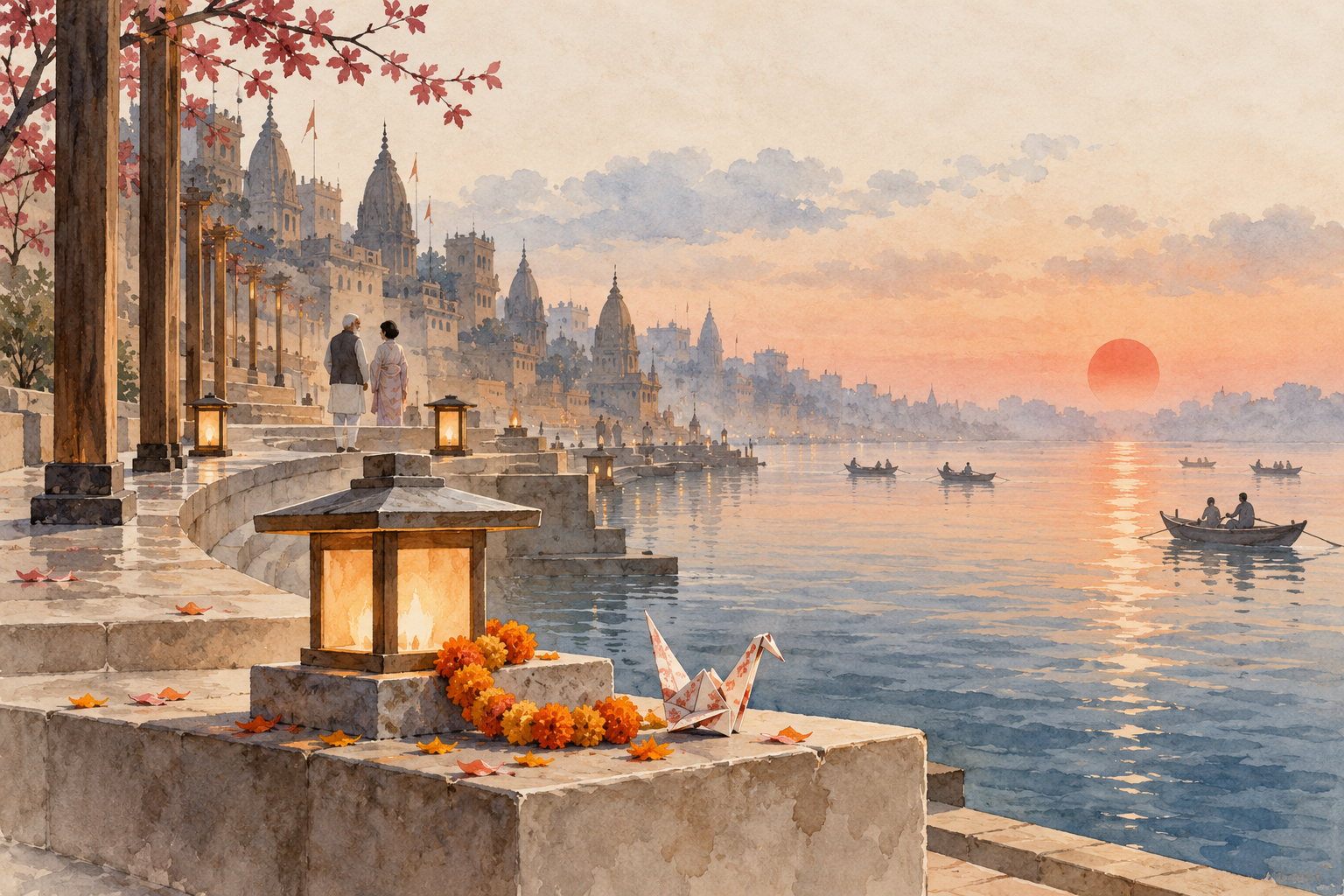
Abe Memorial Corridor
A newly inaugurated memorial space in Varanasi honoring former Japanese Prime Minister Shinzo Abe and his role in strengthening India-Japan relations.
Kashi-Kyoto model
A symbolic framework linking Varanasi, also known as Kashi, with Kyoto as part of India-Japan cooperation on culture, urban development and heritage.
Commemorative diplomacy
The use of memorials, anniversaries and symbolic tributes to reinforce political relationships and diplomatic narratives.
Indo-Pacific
A strategic term referring to the connected Indian and Pacific Ocean regions, where India and Japan have expanded cooperation amid concerns about regional balance and China’s influence.
Prime Minister's Office, Government of India
government
PM meets Mrs. Akie Abe, wife of late former Japanese Prime Minister Shinzo Abe
Akashvani News / News On AIR
news
Abe Memorial Corridor in Varanasi strengthens India-Japan friendship, says CM Yogi Adityanath
Nippon.com / Jiji Press
news
Corridor Named after Late Japan PM Abe Completed in India
Untracked bias
The Times of India
‘Friendship built on trust’: Yogi recalls Modi-Abe bond at memorial opening
NDTV
"Deeply Moved": Video Shows Akie Abe Getting Emotional At Shinzo Abe Memorial In Varanasi
India Today
Abe Memorial Corridor honouring Shinzo Abe, India-Japan ties opened in Varanasi
The New Indian Express
Akie Abe moved by Shinzo Abe memorial corridor inauguration in Varanasi
Open Magazine
“Deeply Moved”: Ex-Japan PM's Wife Gets Emotional At Shinzo Abe Memorial Corridor
Tehelka
From Rudraksh to Abe Memorial Corridor: How Kashi became a symbol of India-Japan ties
Nation Press
PM Modi hails Abe Memorial Corridor in Varanasi as fitting tribute to India-Japan ties
Bias and factuality ratings from Media Bias Fact Check. Outlets without a rating are marked “Untracked.”
Modi-Abe legacy
Modi met Akie Abe in New Delhi on October 8 and highlighted Shinzo Abe’s role in elevating India-Japan ties.
Varanasi tribute
The Abe Memorial Corridor was opened at the Japan-aided Rudraksh convention centre in Varanasi.
Regional strain
The tribute comes as Japan manages renewed tensions with China over Taiwan-related issues and rhetoric toward Tokyo’s leadership.
Prime Minister Narendra Modi met Akie Abe, widow of former Japanese Prime Minister Shinzo Abe, in New Delhi on October 8, using the occasion to highlight Abe’s role in strengthening India-Japan relations and to present the newly inaugurated Abe Memorial Corridor in Varanasi as a tribute to that legacy.1
The meeting came a day after the corridor opened at the Japan-aided Rudraksh International Cooperation and Convention Centre in Varanasi, Modi’s parliamentary constituency and a city central to the symbolism of the Modi-Abe relationship.23 For New Delhi, the memorial is more than an act of remembrance. It is commemorative diplomacy, keeping alive the Abe-era narrative of India and Japan as long-term strategic partners in the Indo-Pacific.
Abe, assassinated in 2022, remains closely associated in India with the expansion of bilateral ties across infrastructure, investment, technology, culture and security. Modi’s public emphasis on Abe’s contribution signals that India sees his legacy as a continuing diplomatic asset: not only as history, but as a framework for policy continuity with Tokyo.15
The choice of Varanasi gives the memorial particular weight. Abe visited the city with Modi in 2015 and joined him at the Ganga Aarti, an image often invoked in Indian accounts of the relationship.45 Akie Abe, attending the inauguration, became emotional as she recalled that visit and expressed gratitude to Modi and India, according to Indian media reports.4
Uttar Pradesh Chief Minister Yogi Adityanath described the corridor as a living symbol of India-Japan friendship and a tribute on behalf of India.2 State and national messaging around the inauguration linked the memorial to the wider Kashi-Kyoto theme, a reference to cooperation that has paired Varanasi’s urban and cultural redevelopment ambitions with Japanese expertise and symbolism.7
The setting also reinforces Modi’s political geography. By locating the tribute in Varanasi, New Delhi ties Abe’s memory to a city that has repeatedly served as a stage for Modi’s domestic and international messaging. The result is a diplomatic symbol that merges personal friendship, cultural identity and strategic partnership.
Abe’s imprint on India-Japan relations was unusually broad. He championed a closer strategic relationship with India, advanced the idea of a free and open Indo-Pacific, and helped make Japan a central partner in India’s infrastructure and development plans. Indian coverage of the corridor has emphasized those links, framing the memorial as a reminder that bilateral ties extend from cultural contact to investment and technology cooperation.56
The Rudraksh convention centre strengthens that message. Built with Japanese assistance, it offers a physical setting where Japan’s development role in India is visible. The new corridor adds a commemorative layer focused on Abe’s political legacy.3
For India-Japan watchers, the timing is notable. The tribute does not announce a new policy initiative, but it helps preserve the political story that made closer alignment easier: two democracies, linked by leaders with personal rapport, working together across infrastructure, culture and the Indo-Pacific. By foregrounding Abe, India is signaling that the partnership remains anchored in a strategic consensus that outlasts individual governments.
The memorial diplomacy also lands as Tokyo manages a more difficult regional environment. Japan-China ties have recently soured, with Tokyo objecting to Chinese rhetoric toward Japan’s prime minister and tensions tied to Taiwan adding pressure to the relationship.8
That context gives India’s commemoration of Abe added resonance. Abe was one of Japan’s most prominent advocates of a firmer regional posture and deeper cooperation with India. By honoring him now, New Delhi is not only remembering a former leader. It is also reaffirming a strategic vocabulary that remains useful as both countries navigate China’s influence and the future of the Indo-Pacific.
India has avoided framing the Varanasi corridor as an anti-China gesture. The official emphasis has been on friendship, gratitude and continuity.12 But the broader diplomatic message is clear: India values Japan as a long-term partner and sees the Abe period as a foundation for current and future cooperation.
Commemorative diplomacy often works by making continuity visible. In this case, the Abe Memorial Corridor connects a personal relationship, a sacred Indian city, Japanese-supported infrastructure and Indo-Pacific strategy in one public symbol.
That matters because India-Japan ties have often depended on both strategic convergence and political storytelling. The corridor helps sustain the idea that the relationship is not transactional or episodic, but rooted in shared memory and long-term purpose.
For Modi, the message is domestic and international at once. At home, the memorial showcases Varanasi as a site of global engagement and honors a foreign leader admired for strengthening ties with India. Abroad, it reassures Tokyo that India remains invested in the partnership’s Abe-era foundations, even as Japan’s current government faces a sharper regional landscape.
The corridor’s immediate function is commemorative. Its diplomatic function is to keep a strategic narrative alive.

Comments