Russia protests U.S. Typhon deployment in Japan as Moscow and Beijing pressure Tokyo
Typhon missile system
A U.S. Army ground-based launcher system capable of firing missiles such as Tomahawk cruise missiles and SM-6 missiles.
Kyushu
Japan’s southern main island, strategically important for defense planning near the East China Sea and the southwest island chain.
Kuril/Northern Territories dispute
A territorial dispute over Russian-controlled islands north of Japan that Tokyo calls the Northern Territories and Moscow calls the southern Kurils.
Orient Shield
A recurring Japan-U.S. military exercise; the 2026 edition involved Japanese, U.S. and Australian ground forces.
Associated Press
news
Russia lodges protest with Japan over US Typhoon missile deployment
Russian Ministry of Foreign Affairs
government
Russian Foreign Ministry Spokeswoman Maria Zakharova's statement on the note of protest issued to Japan on September 3
Anadolu Agency
news
Russia demands Japan withdraw US Typhon missile systems from island
Untracked bias
100% of tracked sources are High factuality
Bias and factuality ratings from Media Bias Fact Check. Outlets without a rating are marked “Untracked.”
Formal protest
Russia said it sent Japan a September 3 protest note over U.S. Typhon missile systems deployed on Kyushu.
China parallel
Moscow said China recently delivered a similar protest to Japan over Typhon and Tokyo’s defense posture.
No live fire
Orient Shield 26 included Typhon-related exchanges at Kanoya Air Base, but USNI reported there was no live firing.
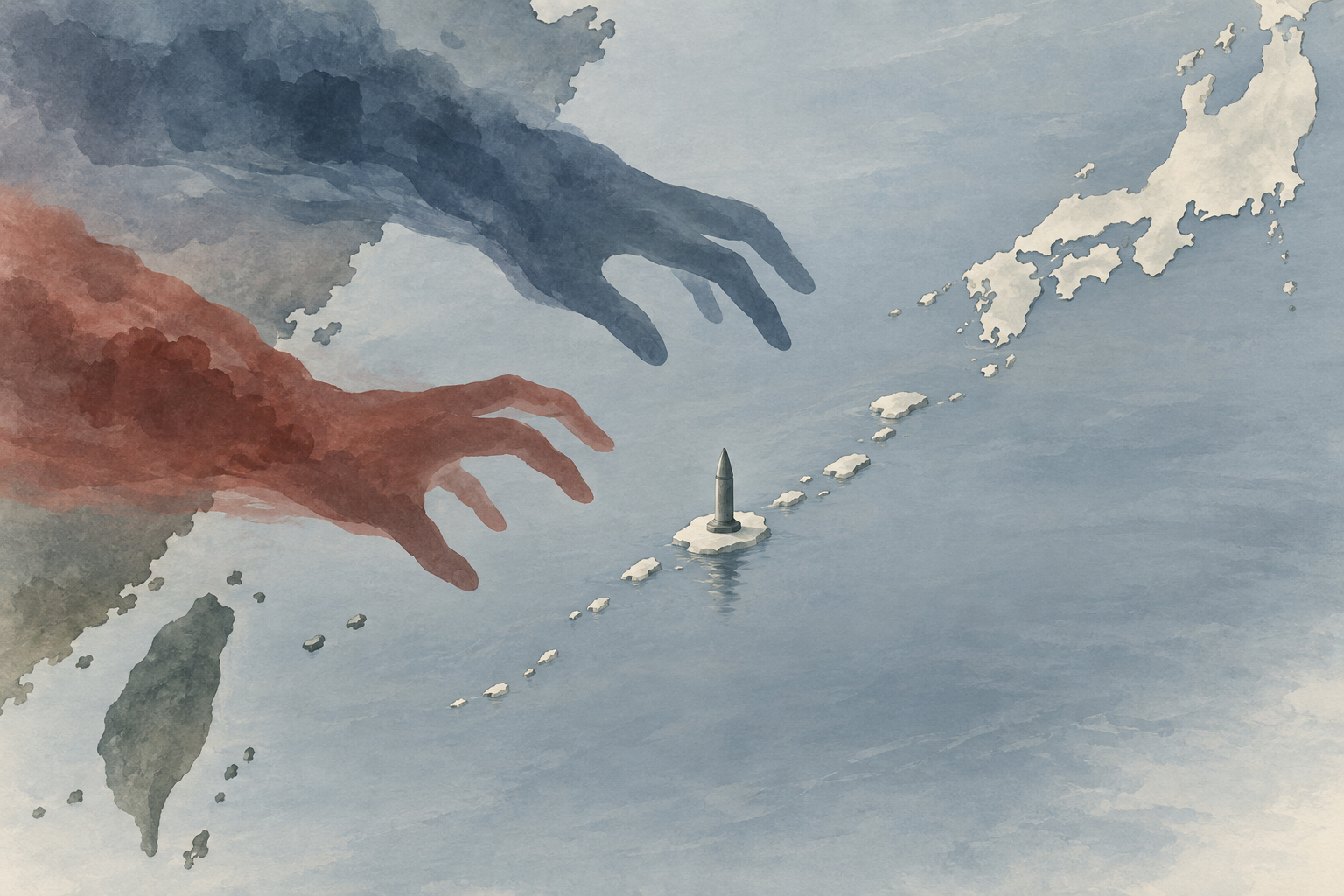
Russia has formally protested Japan’s hosting of U.S. Typhon medium-range missile systems on Kyushu, demanding that Tokyo remove the launchers and warning that their presence threatens Russian security, regional peace and stability.1 The move turns a Japan-U.S. deployment tied to joint exercises into a broader diplomatic flashpoint involving Russia, China and Tokyo’s push to strengthen defenses across its southwest island chain.
Moscow said it delivered the protest note on September 3 over the deployment of U.S. ground-based Typhon systems on Kyushu, the southern Japanese main island central to Tokyo’s defense planning near the East China Sea and the Nansei island arc.2 Russian Foreign Ministry spokesperson Maria Zakharova said Japan had proceeded despite repeated Russian warnings. She said Moscow demanded an end to such deployments regardless of their stated duration or placement method.3
The protest came as the U.S. Army, Japan Ground Self-Defense Force and Australian Army held Orient Shield 26. USNI News reported that the drills included Typhon-related exchanges at Japan Maritime Self-Defense Force Kanoya Air Base on Kyushu, with training confined to the base and no live firing.7
Russia’s objection was not limited to the weapon system. Moscow also tied the issue to the long-running dispute over the Russian-held southern Kuril Islands, which Japan calls the Northern Territories. AP reported that the missile protest followed a deterioration in ties after President Vladimir Putin’s August visit to the archipelago, which Japan also claims.1
Zakharova’s statement urged Japan to recognize the results of World War II, including what Moscow describes as the territorial consequences involving the southern Kurils, and to abandon what Russia calls a course of remilitarization.4 The island dispute has prevented Russia and Japan from signing a formal peace treaty ending World War II hostilities, giving the Typhon protest a historical and territorial dimension beyond the deployment itself.
For Moscow, the presence of U.S. intermediate-range-capable systems in Japan feeds a broader concern about American missile deployments in the Asia-Pacific. Russian outlets cited the Typhon system’s ability to launch Tomahawk cruise missiles and SM-6 missiles, making the platform relevant not only to Japan’s defense of its southwest approaches but also to Russian and Chinese threat perceptions.5
Japan’s public position centers on the temporary nature of the deployment. The Insider reported that Tokyo has said the Typhon deployment is not permanent and that the launchers are expected to leave Kanoya Air Base after the exercises, while remaining at a U.S. military facility elsewhere in Japan for storage.6
That distinction is unlikely to satisfy Moscow. Russia’s protest specifically rejected the deployment “regardless” of timing or method, according to accounts of Zakharova’s statement.3 In effect, Moscow is challenging not only a permanent basing decision, but also the use of Japanese territory for rotational or exercise-linked deployments of U.S. systems with medium-range strike potential.
The deployment also matters because Kyushu is central to Japan’s southwest defense architecture. From Japan’s perspective, the region is increasingly important because of its proximity to the East China Sea, Taiwan, the Ryukyu island chain and sea lanes linking the western Pacific to the South China Sea. For Russia and China, however, the appearance of U.S. land-based missile systems on Japanese territory reinforces concerns that Tokyo is becoming a forward node in U.S. regional strike planning.
Russia’s Foreign Ministry said China had recently sent a similar note to Japan, also objecting to Tokyo’s defense trajectory and the appearance of Typhon systems on Japanese islands.3 That claim places the deployment inside a wider pattern of coordinated or parallel pressure from Moscow and Beijing against Japan’s evolving security posture.
China has long criticized Japan’s defense buildup, particularly Tokyo’s acquisition of counterstrike capabilities and its closer integration with U.S. and allied forces. Russia’s protest adds a northern and historical layer to that pressure, tying the same deployment to the Kuril/Northern Territories dispute and to Moscow’s security concerns in the Russian Far East.
The result is a three-way diplomatic pressure point. Japan and the United States see exercises and rotational deployments as part of deterrence. Russia presents the Typhon presence as a threat to its security and a sign of Japanese remilitarization. China objects to the same trend as part of its broader opposition to expanded Japanese and U.S. military activity near its periphery.
Typhon is a ground-based U.S. Army missile system designed to fire missiles such as Tomahawk cruise missiles and SM-6 missiles. Russian and regional reporting emphasized that Tomahawks can reach beyond 1,000 kilometers, making the system strategically significant if deployed in Japan.5 Even when used for training or interoperability exercises, its presence signals the practical possibility of U.S. land-based strike options from allied territory.
That symbolism is central to the dispute. USNI’s account indicates there was no live firing at Kanoya during Orient Shield 26, but Moscow’s concern is not confined to the exercise itself.7 The diplomatic protest targets the precedent of bringing the system onto Japanese territory, especially in a region where Japan is expanding missile, air-defense and island-defense capabilities.
For Asia security watchers, the key issue is whether the deployment remains an episodic exercise feature or becomes part of a recurring U.S.-Japan pattern. If Typhon or similar systems rotate through Japanese bases more frequently, Russia and China are likely to treat each appearance as evidence of a more durable shift in the regional missile balance.
The dispute underscores how Japan’s southwest defense strategy can generate reactions well beyond its immediate geography. A launcher placed on Kyushu for an exercise is being viewed by Moscow through the lens of Russian Far East security and the Kuril dispute. Beijing views the same posture through the lens of U.S.-Japan military integration and East China Sea contingencies.
That convergence gives Russia and China a shared diplomatic line against Japan, even if their operational concerns differ. For Tokyo, the challenge is to preserve deterrence and alliance interoperability without allowing every exercise deployment to become a crisis trigger. For Moscow and Beijing, the Typhon protest offers a way to contest Japan’s missile posture early, before rotational deployments become normalized.





Comments