Senate AI talks show narrow bipartisan path as election-year clock tightens
Duty of care
A legal obligation requiring companies to take reasonable steps to prevent foreseeable harms from their products or services.
Catastrophic AI risk
A category of potential harm involving large-scale consequences, such as use of AI to help develop biological, nuclear or cyber threats.
Preemption
A legal mechanism in which federal law overrides or limits state laws on the same subject.
Frontier model
An AI model at or near the leading edge of technical capability, typically developed by major AI labs with substantial computing resources.
Reuters via Investing.com
news
US Senate negotiators consider requiring AI firms to mitigate known major risks
Nextgov/FCW
news
Lawmakers clash on safety testing language for in-development AI legislation, people familiar say
Semafor
news
Disagreements reemerge in bipartisan AI safety talks
Duty of care
Senate negotiators are weighing a federal duty of care for developers of the most advanced AI models.
Testing fight
Lawmakers remain divided over company-run safety tests versus mandatory federal or national-lab vetting.
Tight calendar
The House and Senate have limited pre-election session days to turn an AI safety draft into law.
WASHINGTON — Senate negotiators are weighing bipartisan legislation that would require developers of the most advanced artificial intelligence models to mitigate known catastrophic risks and create a federal court process for companies to challenge government attempts to block releases deemed unsafe, according to Reuters reporting published September 11.1
The talks involve Senate Majority Leader John Thune, R-S.D.; Senate Commerce Committee Chair Ted Cruz, R-Texas; and Sen. Amy Klobuchar, D-Minn. They mark one of the clearest openings yet for Congress to move from broad concern about frontier AI to a national safety framework.
But the effort remains fragile. Lawmakers are split over how strong federal safety standards should be, whether Washington should override state AI laws, and whether Congress has enough pre-election session time to act.123
The draft under discussion would create a federal “duty of care” for AI developers, applying to models with the most advanced capabilities. Companies would be expected to design products to prevent catastrophic risks, including scenarios in which AI systems could help bad actors develop nuclear or biological weapons, Reuters reported.1
Negotiators are also considering giving the federal government authority to block the release of certain AI models deemed unsafe, while allowing affected companies to challenge those decisions in federal court. The balance between executive authority and company due-process rights is still under negotiation.13
The emerging proposal is politically significant because it brings together Thune, the Senate’s top Republican; Cruz, a longtime skeptic of broad AI regulation who chairs the committee with jurisdiction over the Commerce Department; and Klobuchar, the senior Democrat most directly involved in the negotiations.1
Cruz has said he is working with Thune and Klobuchar on legislation focused on catastrophic public-safety risks involving biological or nuclear threats, while continuing to warn that heavy regulation could weaken the United States in its competition with China.15
That posture reflects the central Republican tension in the debate: a willingness to consider rules for the most extreme AI risks, paired with concern that regulation could slow U.S. innovation or advantage foreign competitors.
The Houston Chronicle reported that Cruz, who has previously favored a light-touch approach to AI oversight, is now under pressure to define safeguards after a wave of warnings from AI researchers.5
Klobuchar has pushed for government oversight of the most dangerous AI models, including a role for government experts in verifying and testing systems before release. Reuters and Nextgov/FCW both reported her emphasis on requiring developers to work with federal experts to ensure models are safe.12
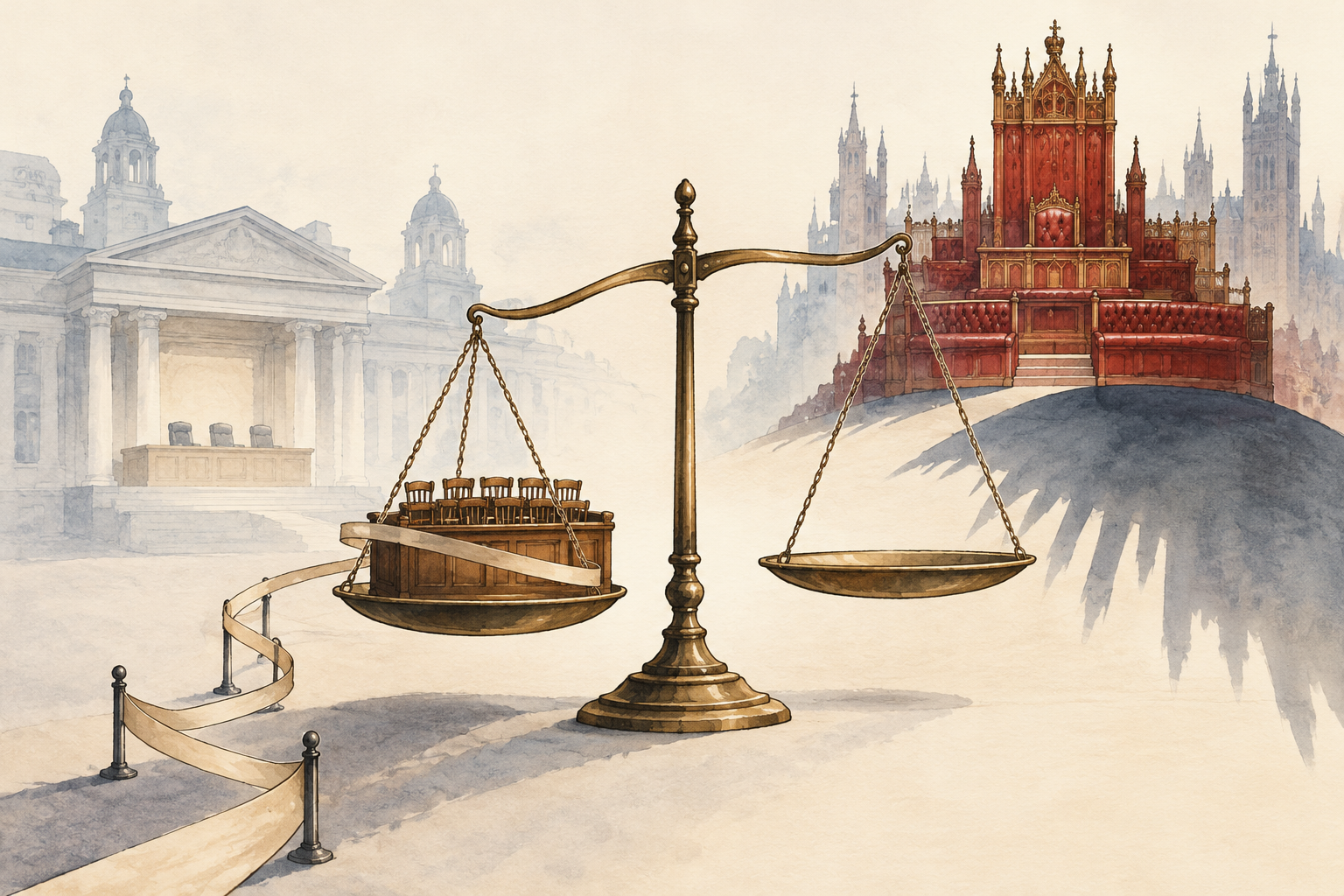
The sharpest policy split centers on whether testing should be conducted primarily by companies and reported to the government, or whether federal agencies and national security institutions should directly test and vet models before deployment.2
Sen. Maria Cantwell, D-Wash., the top Democrat on the Senate Commerce Committee, has pressed for stronger mandatory federal testing, including use of national labs and national security agencies, according to Nextgov/FCW.
People familiar with the negotiations told the outlet that Cantwell’s position clashes with a Cruz-Klobuchar-Thune draft that relies more heavily on company-run tests submitted to the Commerce secretary.2
Axios reported that the Thune-Klobuchar-Cruz proposal is expected to leave catastrophic-risk testing to companies, with results reported to the government.4 That approach could attract Republicans wary of a more expansive federal approval regime. But it risks losing Democrats and AI safety advocates who argue that frontier models require mandatory pre-deployment review by government or government-supervised experts.2
The difference is not merely procedural. A company-testing model would put the first layer of risk assessment inside the firms developing the systems. A federal-testing model would give Washington a more direct role in deciding whether the most powerful models can be released.
Another unresolved issue is preemption. Reuters reported that part of the measure would block states from enforcing their own laws governing certain risks posed by advanced AI models.1
Semafor reported that the draft still includes language preempting state-level AI safety laws, drawing concern from Cantwell and others who fear a weaker national standard could erase stronger state protections.3
The fight mirrors a broader Washington debate over whether AI regulation should be centralized in federal law or left partly to states that have already begun moving on disclosure, safety and incident-reporting requirements.
Supporters of preemption argue that AI companies need one national standard rather than a patchwork of state rules. Opponents counter that Congress should not prevent states from acting unless the federal standard is strong enough to replace them.34
The industry has generally favored a national framework, and Axios reported that OpenAI’s policy posture continues to point toward federal legislation as preferable to navigating separate state regimes.4
The Senate talks are unfolding after public warnings from current and former Anthropic-linked researchers intensified congressional attention on catastrophic AI risks.
Axios reported that lawmakers in both parties have called for urgent action after those warnings, while also noting that federal lawmakers remain at an early and unsettled stage in forming a response.7
House members have urged Speaker Mike Johnson, R-La., to keep the chamber in session until Congress advances bipartisan AI safeguards, according to Axios.
The House is scheduled for limited time in Washington before Election Day. Reuters reported that the House is set to be in session for only one week before the November 3 midterm elections, while the Senate is expected to be in Washington for three weeks.16
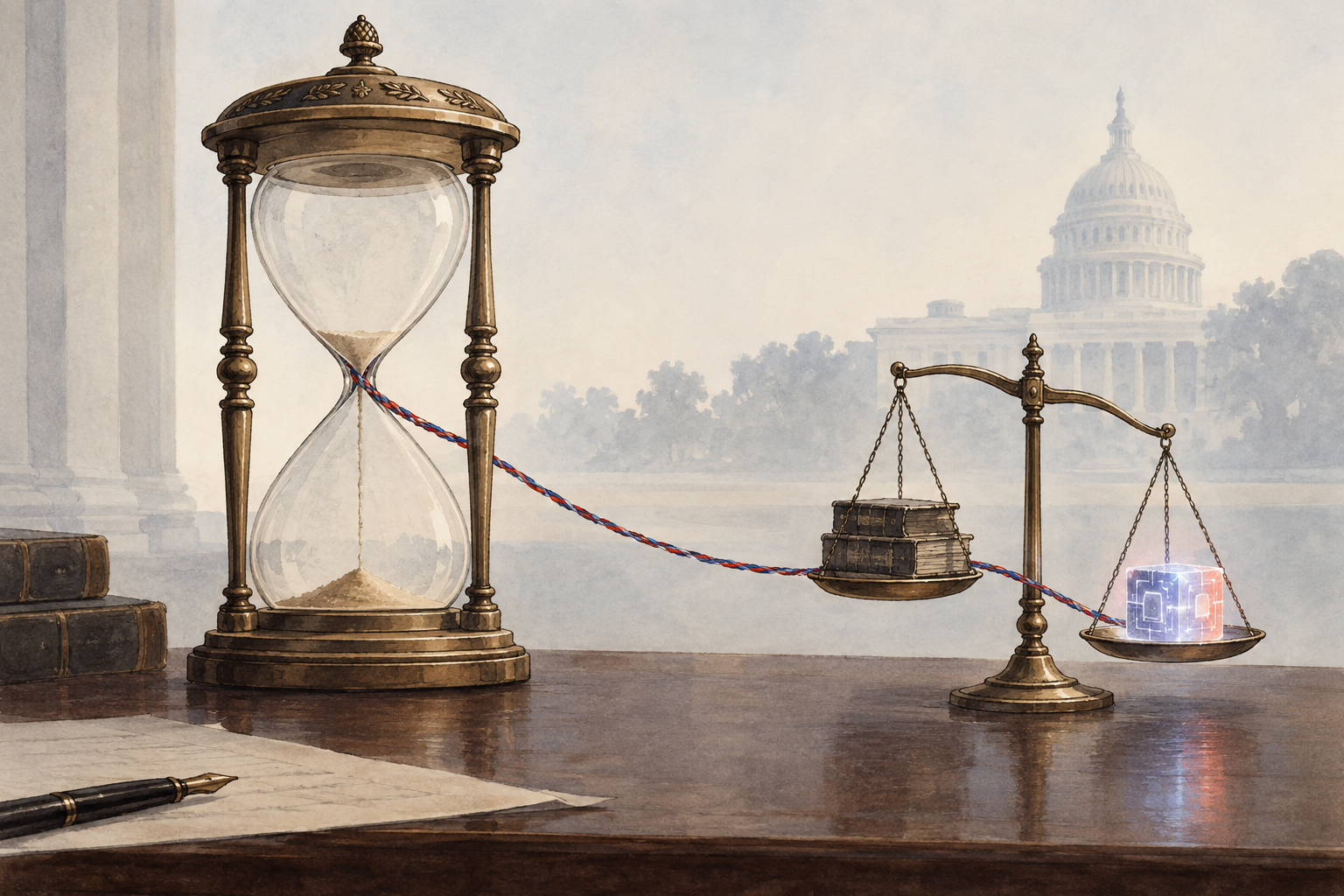
That calendar could be decisive. Even if Thune, Cruz and Klobuchar reach agreement, the bill would still need committee action, leadership backing, floor time and a path through the House before campaigns dominate the final weeks before the midterms.
Axios reported that Johnson has indicated interest in convening AI companies to discuss safety guardrails, possibly in the winter, but has not signaled a broad pre-election AI regulation push.46
House Republicans are expected to move a narrower data-center bill, while members pressing for AI safeguards have pointed to other proposals, including a “kill switch” bill and the FRONTIER Act.67
Industry voices are also shaping the debate. Axios reported September 12 that Anthropic CEO Dario Amodei called for slowing the pace of AI development, and that OpenAI CEO Sam Altman agreed the industry needs to pace frontier-model advances and increase safety steps.8
Anthropic policy chief Sarah Heck also backed a national law requiring frontier-model testing and giving the government power to block unsafe advanced models, Axios reported.8
That position aligns with the broad structure Senate negotiators are discussing. But the details — especially who tests models, what standard must be met, and when federal officials can intervene — remain contested.
For now, the Senate effort represents a narrow bipartisan opening rather than a finished legislative deal. The talks suggest that catastrophic-risk AI regulation has moved closer to the congressional mainstream. But the remaining disputes over federal power, liability, due process and state preemption could determine whether Congress passes a national framework this year or leaves the field to agencies, courts and state legislatures.




Comments