Trump’s Iran Pledge Sets Up Post-Midterm War Powers Fight
War Powers Resolution
A 1973 law intended to ensure Congress is informed when U.S. forces enter hostilities and to limit prolonged unauthorized military action.
Blockade
A military effort to restrict or control maritime movement, in this case aimed at squeezing Iran’s oil exports while protecting other tanker traffic.
Shadow fleet
A network of tankers and front companies used to move sanctioned oil while obscuring ownership, routes or cargo.
Strait of Hormuz
A narrow waterway between Iran and the Arabian Peninsula that is critical to global oil and gas shipments.
Associated Press
news
Trump says US will not resume military strikes on Iran before the midterm elections
Axios
news
Trump: U.S. won't attack Iran before midterms
U.S. Department of the Treasury
government
Operation Economic Outcast Neutralizes Iranian Regime’s Remaining Shadow Fleet Network
Untracked bias
100% of tracked sources are High factuality
CBS News
Iran War Updates: Trump promises not to resume strikes before midterm elections
The Gateway Pundit
President Trump Announces US Won’t Attack Iran Prior to Midterm Elections
South China Morning Post
Trump says US will not attack Iran before November’s midterm elections
ITV News
Trump says US will not resume military strikes on Iran before the Nov. 3 midterm elections
Local 10
Trump says US will not resume military strikes on Iran before the Nov. 3 midterm elections
Yahoo Finance
Trump’s pledge not to strike Iran before midterms fails to soothe oil markets
Bias and factuality ratings from Media Bias Fact Check. Outlets without a rating are marked “Untracked.”
Election pause
Trump said the U.S. will not resume strikes on Iran before the November 3 midterm elections.
Postured forces
A White House War Powers notice said U.S. forces remain positioned for further action if deemed necessary.
Oil pressure
The blockade and new sanctions keep pressure on Iranian oil exports even without immediate new strikes.
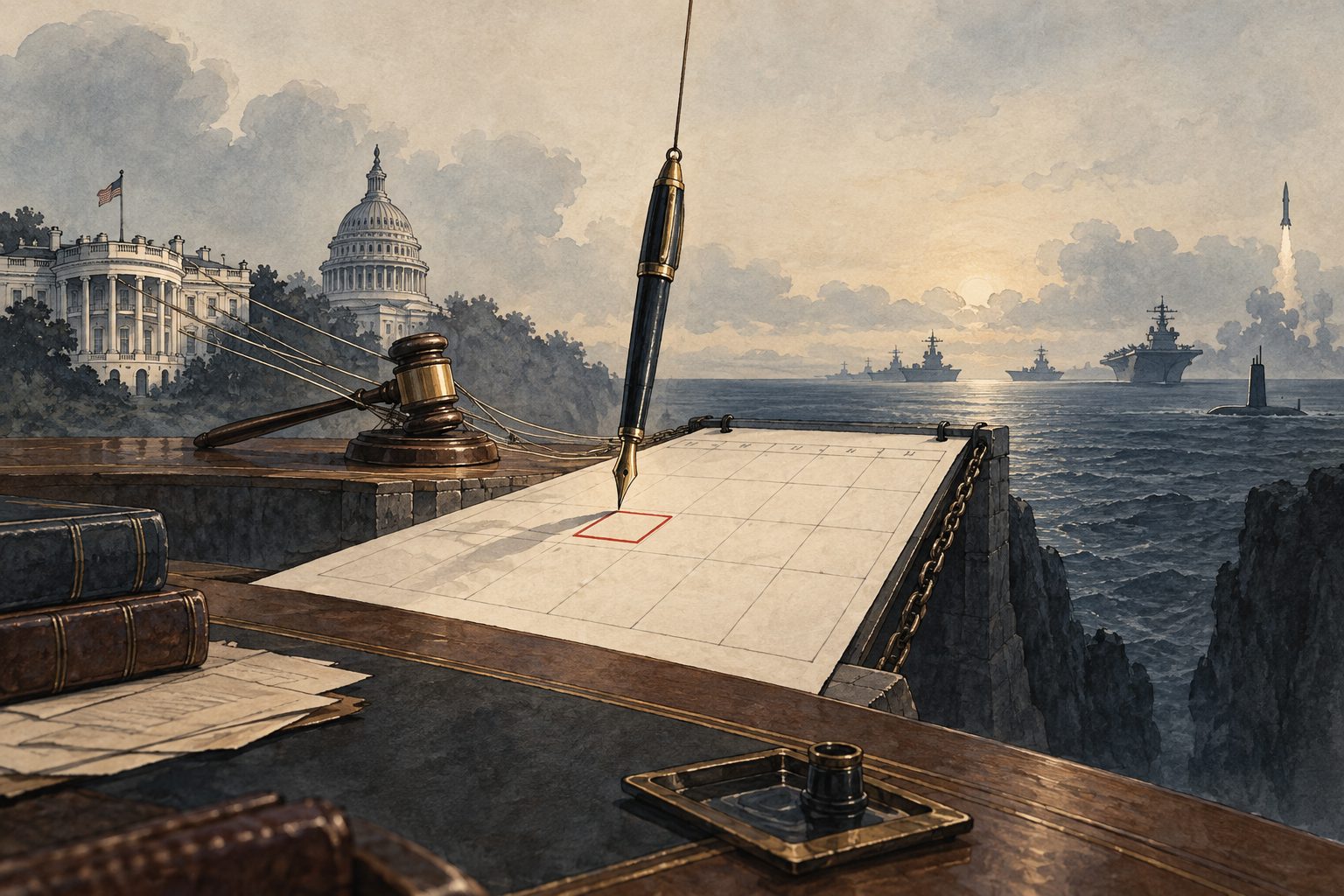
WASHINGTON — President Donald Trump’s public promise not to resume U.S. military strikes on Iran before the November 3 midterm elections gives Congress a near-term deadline for the next phase of the Iran war debate: whether to demand a vote, more oversight or formal limits before the administration acts again.
Trump said Thursday that the United States would not attack Iran before the midterms, while leaving open the possibility of post-election escalation and saying talks with Tehran were continuing.1 The statement did not end the military confrontation. It preserved the U.S. blockade, kept pressure on Iran’s oil exports and left the Pentagon positioned for renewed action after voters cast ballots.1
That distinction matters because the administration has already told Congress, in a formal War Powers notice, that U.S. forces remain positioned for further action “as necessary and appropriate” after strikes that began September 1.9 The notice, transmitted to House Speaker Mike Johnson and printed as House Document 119-193, said Trump ordered “defensive strikes” against targets in Iran and Iranian territorial waters. Those targets included unmanned surface vessels, minelaying capabilities, radars, air-defense systems, small boats, National Iranian Oil Company tankers and command-and-control capabilities.9
In practical terms, Trump has created a pause, not a settlement. The White House has ruled out new strikes through Election Day while maintaining the blockade and preserving the legal and military arguments it could use afterward. For lawmakers, that turns the next three and a half weeks into a question of timing: wait for the president’s next move, or try to force debate before the post-election window opens.
The clearest formal statement to Congress came in the September 3 War Powers notification. Trump said the September 1 strikes were a response to late-August attacks by Iran on U.S. forces and were carried out without U.S. ground troops.9
The notice said the strikes were “limited, measured, planned” and designed to minimize civilian casualties.9 It also framed the operation as defensive, saying the targets threatened U.S. forces, the U.S. homeland, regional allies and partners, and broader national security interests.9
But the notice made clear that the administration did not view the September 1 action as necessarily complete. It said U.S. forces “remain postured” for further military action to address attacks against the United States or its allies and to ensure Iran and aligned militia groups stop threatening U.S. interests.9
Trump did not cite a new congressional authorization. Instead, the notice said he acted under his constitutional authority as commander in chief and chief executive, while submitting the report to keep Congress informed under the War Powers Resolution.9
That leaves Congress in a familiar position: informed after the fact, but not asked to approve the conflict in advance.
Trump’s October 8 statement changes the political calendar more than the military architecture. According to the Associated Press, Trump had for weeks suggested that escalation after the midterms remained a viable option in the seven-month-old war, while also saying he was confident an “endgame” could come near the election.1
Axios reported that the Pentagon had instructed U.S. Central Command to complete preparations for possible major combat operations against Iran. Potential renewed strikes could include energy facilities, infrastructure and nuclear targets.3 Trump’s pledge gives voters and lawmakers a specific interval in which the administration says it will not strike, while leaving unresolved what happens after November 3.
The timing also brings campaign considerations into the debate. Axios reported that renewed combat before the vote could affect the midterms because oil prices might rise.3 CBS News reported that Brent crude rose after reports that Trump was weighing strikes before the midterms, then eased after his promise not to attack before Election Day.8
For Republicans, the pledge may reduce the immediate risk of a pre-election escalation dominating the final weeks of campaigning. For Democrats and war-powers skeptics, it creates a clear argument that Congress should not wait until after the election to assert its role.
Trump’s pledge was paired with a message that the blockade would remain in “full force and effect,” CBS News reported.8 AP also reported that Trump believes the United States is gaining leverage as the military helps oil tankers move through the Strait of Hormuz while a Navy blockade shuts down Iran’s own oil exports.1
The administration’s economic-pressure campaign moved in parallel Thursday. The Treasury Department announced sanctions targeting what it described as remnants of Iran’s “shadow fleet,” saying the network of aging tankers was used to move petroleum and petroleum products to foreign markets.6 CBS News reported that the action targeted 17 vessels tied to Iranian oil shipments.8
Treasury said the sanctions were part of “Operation Economic Outcast” and argued that the military blockade, dwindling Iranian oil shipments and expanding economic pressure were leaving Tehran with fewer options.6
That makes the current U.S. posture a hybrid of military pressure, maritime control, sanctions and diplomacy. It is less visible than airstrikes, but still part of an active conflict.
The immediate congressional question is whether lawmakers will seek a vote before any renewed strikes, demand classified briefings, press for casualty and cost assessments, or challenge the administration’s legal rationale.
The September notice gives lawmakers several points of entry. It identifies the targets, says no U.S. ground forces were involved, cites commander-in-chief authority and says U.S. forces remain ready for additional action.9 Each claim could become the subject of oversight, especially if Trump considers a broader campaign after the midterms.
The War Powers Resolution requires presidents to report to Congress when U.S. forces are introduced into hostilities or situations where hostilities are imminent. It is meant to keep Congress informed as military operations unfold. But the notice itself did not ask lawmakers to authorize a new or continuing war.9
That gap is likely to define the post-midterm debate. If Trump resumes strikes after November 3, the White House can argue that Congress was already notified of the conflict and of the military’s continuing posture. Critics can argue that an election-timed pause underscores the need for Congress to vote before the next escalation.
Trump said the United States was having “productive discussions” with Iran, according to AP.1 But AP also reported that negotiations had appeared stalled after Trump rejected an Iranian proposal tied to reopening the Strait of Hormuz, while Iran said it had received a U.S. counterproposal and expected to respond within days.1
CBS News separately reported that Iran’s foreign minister said Tehran was reviewing Washington’s response to what Iranian officials described as a seven-day plan and would respond “within a few days.”8
The result is a temporary holding pattern. The administration is signaling diplomacy, economic pressure and deterrence at the same time. Iran is weighing a response. Congress is watching a conflict that is not paused in law or posture, even if new U.S. strikes are publicly ruled out until Election Day.
Trump’s pledge may calm one immediate fear: that new U.S. strikes would come in the final stretch of voting. But it also makes the day after the election more consequential.
If there is no diplomatic breakthrough before November 3, the administration’s options appear largely unchanged: maintain the blockade, intensify sanctions, resume strikes, or pursue some combination of pressure and talks. Axios reported that U.S. preparations for possible major combat operations had already been underway before Trump’s statement.3
For Congress, the key question is whether to act before that window opens. Lawmakers can seek hearings, request intelligence and legal assessments, demand a vote on authorization, or attempt to restrict funds for expanded operations. Waiting until after renewed strikes would again put Congress in a reactive posture.
For voters, Trump’s promise places the Iran war directly into campaign messaging. Supporters can present the pledge as restraint paired with leverage. Opponents can argue that the president has merely delayed a decision until after ballots are cast.
Either way, the pledge has turned the Iran debate into a countdown. The administration has said what it will not do before November 3. It has not said what it will do after.








Comments