Trump’s Ohio data-center defense puts AI buildout to a midterm test

Data center
A large computing facility that stores and processes digital information; newer AI data centers require especially large amounts of electricity and cooling.
Large power user
A customer, such as a data center or factory, that consumes enough electricity to affect grid planning, utility costs and rate design.
Ratepayer fight
A dispute over whether households, businesses, utilities or large industrial users should pay for grid upgrades and new power capacity.
Inverted pyramid
A news-writing structure that puts the most important facts first, followed by context and supporting detail.
Associated Press
news
Trump defends data centers in Ohio as he rallies to boost Jon Husted in a tight Senate race
WOSU Public Media / WYSO
news
Trump speaks in Vandalia to rally Republicans in support of Husted
Associated Press
news
Amazon to invest $1B into data center communities amid backlash against data center rollouts
Untracked bias
100% of tracked sources are High factuality
ABC News
Trump rallies in Ohio to boost Jon Husted in a tight Senate race against Sherrod Brown
KSAT
Trump rallies in Ohio to boost Jon Husted in a tight Senate race against Sherrod Brown
ClickOrlando
Trump rallies in Ohio to boost Jon Husted in a tight Senate race against Sherrod Brown
SeattlePI
Trump rallies in Ohio to boost Jon Husted in a tight Senate race against Sherrod Brown
WBAL
Trump rallies in Ohio to boost Jon Husted in a tight Senate race against Sherrod Brown
KTWB Big Country 92.5
Trump heads to Ohio rally as Republicans defend Senate seat in close race
Devdiscourse
Trump tries to fire up Ohio voters as Republicans defend Senate seat in close race
Bias and factuality ratings from Media Bias Fact Check. Outlets without a rating are marked “Untracked.”
Ohio test
Trump defended AI data centers at a Vandalia rally for Sen. Jon Husted, who is in a tight race with Sherrod Brown.
Cost fight
Husted backed legislation aimed at charging large power users more, but Democrats blocked the effort in the GOP-controlled Senate.
Voter backlash
AP reported that about six in 10 Americans support limiting new data centers, including majorities in both parties.
President Donald Trump used a Saturday rally in Vandalia, Ohio, to defend the data centers powering artificial intelligence, turning a White House technology priority into a campaign argument for Republican Sen. Jon Husted in one of the Senate’s tightest races.1
The appearance underscored a growing political problem for Republicans in contested races. The administration is promoting rapid AI infrastructure development as an economic and national-security imperative, while voters in affected communities are increasingly focused on electricity prices, farmland, water use and who pays for new grid capacity.16
At the Ohio rally, Trump argued that data centers could bring major economic benefits. He also warned that the United States risked losing AI development to China if communities rejected them. But the Associated Press reported that the crowd’s response was more muted than it had been for other parts of Trump’s speech, a sign of how differently the issue can land locally.1
The Ohio stop showed how the administration’s AI agenda is moving from Washington policy rollout to midterm field test. Trump promoted his administration’s actions on data centers and praised Husted’s effort to advance legislation addressing large power users. In effect, he made the buildout part of the Republican closing argument on jobs, growth and competition with China.1
That message is colliding with local resistance. AP described data centers as a “toxic political issue” in races around the country, with bipartisan opposition driven by concerns about power costs, farmland and water supplies.1 A separate AP report on Amazon’s new community-investment pledge said data centers have become a hot political issue heading into the midterms as technology companies expand the infrastructure needed for AI and cloud computing.6
The scale explains why the fight is moving into campaign politics. Reuters, cited by Business Recorder, reported that cumulative global spending on data centers alone could top $30 trillion by 2050, according to a PwC projection.7 That level of investment makes data-center siting, power generation and grid costs hard to separate from economic policy, energy policy and congressional oversight.
Husted, appointed to the Senate seat vacated by now-Vice President JD Vance, is running to win it outright against former Democratic Sen. Sherrod Brown.1 Local public media reported that Trump appeared in Vandalia near Dayton to support Husted, who is in a tight race with Brown, as part of a series of rallies for Republican candidates before the midterms.2
For Husted, the issue is especially personal politically. Brown and allied groups have attacked him over his role as Ohio lieutenant governor in attracting data centers to the state, while national Republicans have identified the issue as a vulnerability.1
Husted’s answer has been to support data centers while shifting the debate toward responsibility and cost allocation. The GOP-controlled Senate tried to advance legislation sponsored by Husted that would have asked utility regulators to effectively charge large power users more while consumers are struggling with high energy costs. Nearly all Democrats blocked the measure.1
That positioning gives Republicans a two-part message: defend AI infrastructure as necessary for economic competitiveness, but argue that communities and household ratepayers should not be left with the full burden. Sen. Tim Scott, chair of the National Republican Senatorial Committee, framed Husted as supporting “responsible” data centers and said that if a community does not want them, Husted does not either.1
Brown’s campaign is taking the opposite route, making data centers a pocketbook issue rather than a technology race. Before Trump’s visit, Brown wrote that Husted had given tax breaks to Big Tech to draw data centers to Ohio and was now making Ohioans pay the bill.1
That attack fits a broader Democratic strategy in competitive Senate contests: connect Republican economic-development claims to household costs and local control. In Ohio, the data-center debate lands alongside voter concerns over energy costs, gas prices and layoffs at a nearby truck factory days before the rally.1
The politics are complicated because opposition to data centers is not cleanly partisan. AP reported that about six in 10 Americans support limiting the number of new data centers that can be built, including majorities of both Democrats and Republicans. Majorities also expressed strong concern about effects on electricity prices and water supplies in host communities.6
Technology companies are trying to answer the same political pressure. Amazon said it would invest more than $1 billion over five years in communities where it operates data centers, funding education, job training, water and energy preservation projects and other local priorities.6
Amazon’s cloud-computing chief also said the company would stop using nondisclosure agreements with government agencies on its projects and would hold open houses in communities where it operates, according to AP.6 The move amounts to a corporate recognition that secrecy and infrastructure costs have become political liabilities.
But the industry’s argument mirrors Trump’s: speed matters because AI has economic and national-security implications. Amazon warned that more than 100 data-center moratoriums were being considered around the country and argued that blocking the buildout could leave the United States behind in AI competition.6
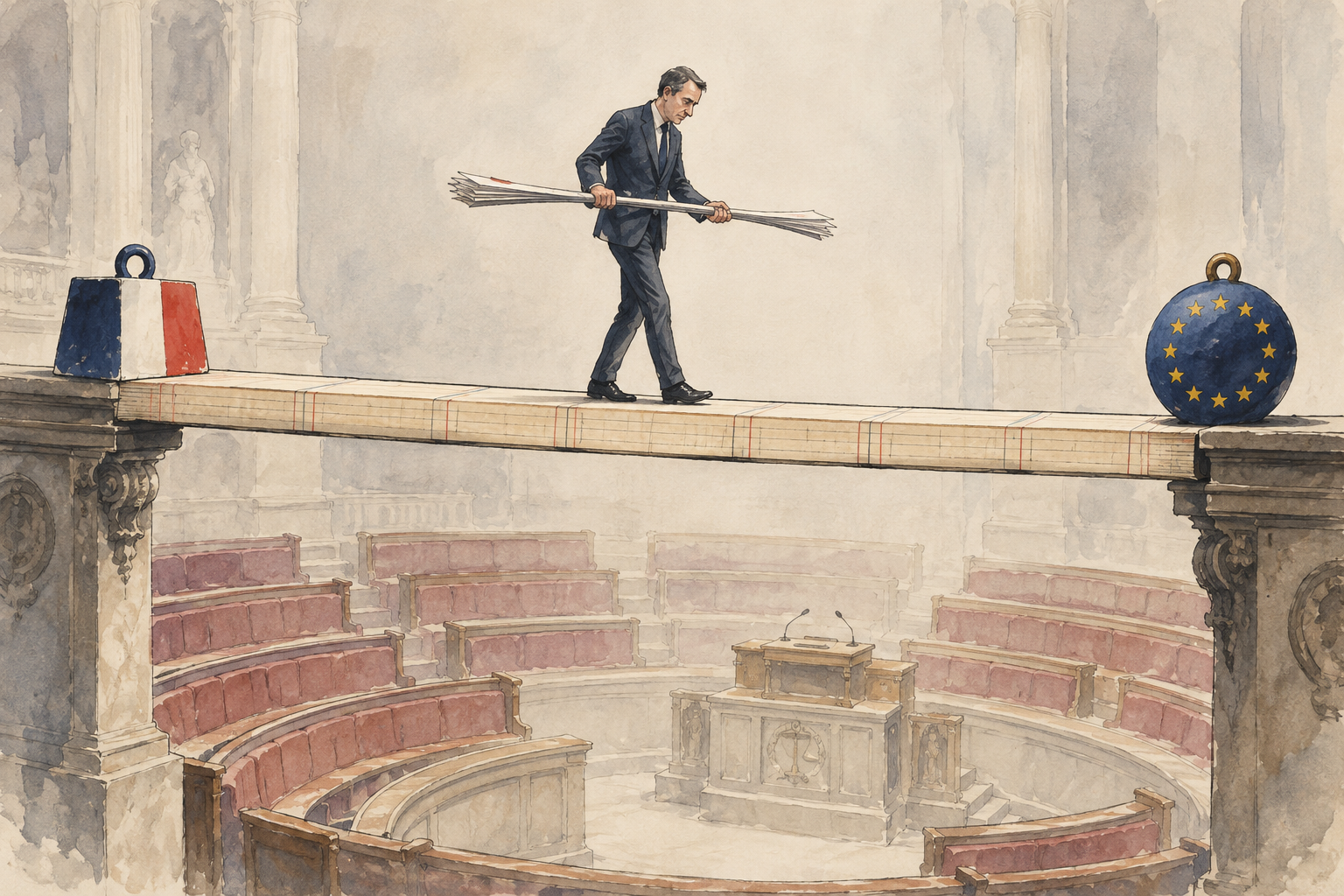
The immediate campaign challenge is that the national and local messages do not always align. Trump’s argument is expansive: data centers mean investment, jobs, AI leadership and competition with China.1 Local opposition is narrower and more concrete: higher electricity bills, water strain, land conversion and infrastructure costs.16
That tension is clearest in Ohio, where Republicans need Husted to hold a Senate seat that Democrats view as central to any path back to the majority. AP reported that Democrats have long listed Ohio, along with states such as North Carolina and Maine, as key races for Senate control, and that Scott described Ohio as effectively dead even.1
The Vandalia rally offered a preview of a likely midterm pattern. Republican candidates in competitive races may embrace the administration’s AI buildout as a growth and national-security agenda while seeking distance from unpopular local costs. Democrats, meanwhile, are likely to keep translating the same buildout into arguments about ratepayers, subsidies and local control.
For Congress watchers, the key development is that AI infrastructure is no longer only a committee-room issue involving permitting, energy supply and industrial policy. It is becoming campaign material. In close races, candidates are being pushed to say not just whether they support the AI boom, but who should pay for it.





Comments