Trump’s Ukraine Energy Ceasefire Claim Faces Early Test as Russia Keeps Striking
Energy ceasefire
A limited pause in attacks on energy infrastructure, separate from a broader ceasefire along the front line.
CHP plant
A combined heat and power plant that generates electricity and provides heating, making it especially important in winter.
Reciprocal compliance
A position in which one side agrees to limit its actions only if the other side does the same.
Critical energy infrastructure
Facilities such as power plants, substations, gas production sites and heating systems that are essential for civilian life and military logistics.
Associated Press
news
Zelenskyy says Russia strikes energy facilities despite Trump claim of an energy ceasefire
Official website of the President of Ukraine
government
Ukraine Is Ready to Refrain From Striking Russian Energy Infrastructure – and We Count on the Same Readiness From Russia – Address by the President
Naftogaz Ukraine
other
Russia hits Naftogaz gas production facility in Kharkiv region
Untracked bias
89% of tracked sources are High factuality
GMA News Online
Trump says Russia and Ukraine reach energy ceasefire 'effective immediately'
The Hill
Backlash grows against Russia diesel deal as Trump claims Ukraine energy ceasefire
Los Angeles Times
Trump says Russia and Ukraine reach ‘energy ceasefire’ but gives no details
ABC News Australia
Zelenskyy appears surprised as Trump announces Russia-Ukraine 'energy ceasefire'
CBS News
Trump announces Russia-Ukraine "energy ceasefire" after calling for Zelenskyy's replacement
Bias and factuality ratings from Media Bias Fact Check. Outlets without a rating are marked “Untracked.”
Ceasefire disputed
Trump said Russia and Ukraine agreed to pause energy attacks, but Kyiv says its compliance depends on Russian reciprocity and Moscow has not clearly confirmed the deal.
Kharkiv hit
Ukraine reported strikes on Kharkiv CHP-5 and Naftogaz said a gas production facility in the Kharkiv region was attacked overnight.
Winter pressure
Energy infrastructure remains a central target because damage to power, heat and gas systems can quickly affect civilians during winter.
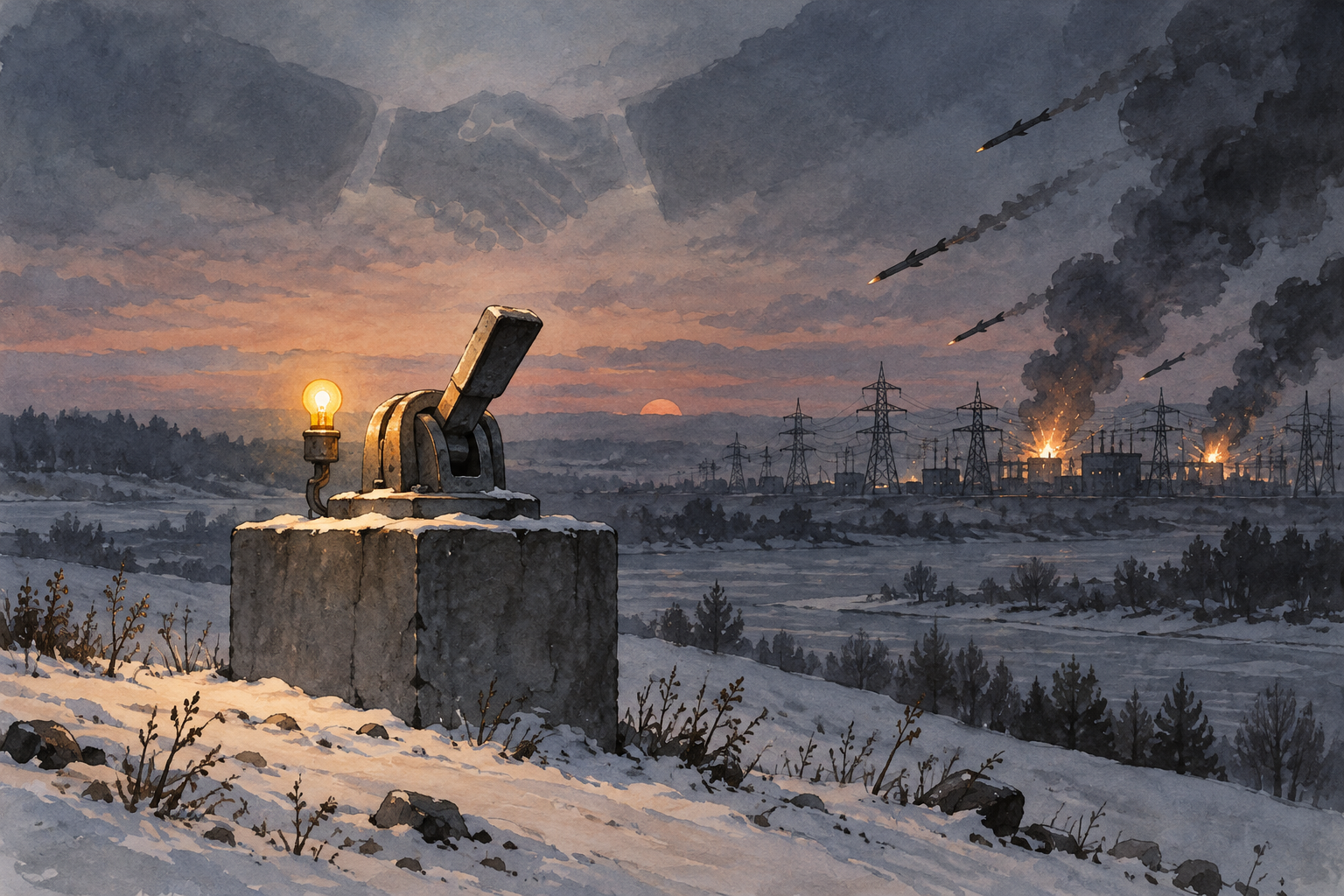
President Volodymyr Zelenskyy said on October 12 that Russia was still striking Ukrainian energy facilities, testing President Donald Trump’s claim a day earlier that Moscow and Kyiv had agreed to an immediate pause in attacks on energy infrastructure.1
The clearest public commitment so far has come from Ukraine. Zelenskyy said Kyiv was ready to refrain from striking Russian energy infrastructure if Russia did the same.2 Moscow, by contrast, has not publicly confirmed a binding ceasefire on energy targets. Kremlin spokesman Dmitry Peskov gave a noncommittal response when asked about the purported arrangement, according to Associated Press reporting, while AFP reported that the Kremlin declined to say whether such a truce was in effect.16
That gap between announcement and implementation is now the central issue. Trump said on October 11 that Russia and Ukraine had agreed to an immediate energy ceasefire. But Zelenskyy told Axios the announcement was news to him and said Ukraine would agree if Russia reciprocated.5 Ukrainian officials also told Radio Free Europe/Radio Liberty they first learned of the purported agreement from Trump’s public statement.7
Zelenskyy has framed Ukraine’s position as reciprocal, not unilateral. In an October 11 address, he said Ukraine was ready not to strike Russian energy infrastructure and expected the same readiness from Russia.2
That formulation matters. It leaves Kyiv room to continue attacks on Russian refineries, fuel depots and energy-linked military logistics if Moscow keeps targeting Ukrainian power and heating systems.
Zelenskyy reinforced that point on October 12, warning that Ukraine would respond if Russia did not accept or observe a halt to energy strikes.6 Radio Free Europe/Radio Liberty similarly reported that Zelenskyy said Ukraine would stop refinery attacks if Russia halted its attacks on Ukrainian energy infrastructure.7
The Ukrainian government is therefore not rejecting an energy ceasefire. It is demanding a matching commitment and observable behavior from Russia before treating the arrangement as real.
Events on the ground quickly complicated Trump’s announcement. Zelenskyy said Russia continued to hit Ukrainian energy facilities after the claimed ceasefire, including attacks linked to Kharkiv’s power system, gas production and a gas station.1
Ukraine’s presidential office said Russian forces struck Kharkiv CHP-5, a major combined heat and power plant, on October 11. It also said Russia had carried out more than 200 strikes on electricity facilities over the previous week.2 The Kyiv Independent reported that Russian attacks targeted energy infrastructure in several oblasts and included the Kharkiv CHP-5 strike after Trump’s ceasefire claim.8
Naftogaz, Ukraine’s state energy company, said on October 12 that Russia had attacked a gas production facility in the Kharkiv region overnight. The company reported a fire at the site and damage to critical equipment.3
The reported hit is significant because gas production is part of Ukraine’s winter resilience. Damage to extraction, processing or transport infrastructure can affect heating, electricity generation and industrial supply even when the immediate target is not a power plant.
The AP report described the continued strikes as part of a broader Russian campaign against energy sites ahead of winter, when damage to power generation, heating plants, substations and gas infrastructure can have cascading effects on civilians and the military alike.1
Russia’s public position is the most opaque part of the episode. Peskov did not clearly confirm a ceasefire on energy infrastructure, and the Kremlin’s refusal to validate the arrangement has left Trump’s claim without a matching statement from Moscow.16
That ambiguity may be deliberate. A formal ceasefire on energy targets would constrain one of Russia’s most persistent wartime pressure tools: long-range strikes meant to degrade Ukraine’s electricity grid, heating networks and fuel supply before and during winter. Remaining noncommittal allows Moscow to avoid openly contradicting Trump while preserving military flexibility.
Ukraine has its own incentives to retain leverage. Kyiv has used long-range strikes against Russian oil refineries and energy assets to raise the economic cost of the war, disrupt fuel supplies and pressure Russia’s export revenues. Zelenskyy’s conditional language signals that Ukraine is prepared to pause those attacks only if Russia stops targeting Ukrainian energy systems first or at the same time.27
European Union foreign policy chief Kaja Kallas said on October 12 that the EU would welcome an energy ceasefire if it held, but added that Europe had not seen Russia stick to it. She also emphasized the need to protect Ukraine’s energy system before winter.4
That response reflects a broader diplomatic reality: an energy ceasefire is meaningful only if both sides define the covered targets, verify compliance and respond to violations in a way that does not immediately collapse the arrangement. So far, the public record shows a U.S. claim, a conditional Ukrainian acceptance and no clear Russian confirmation.
For Ukraine’s partners, the priority is not only whether a diplomatic statement exists, but whether Ukrainians keep heat and power through winter. Energy defense has become a core part of military aid and civilian resilience, alongside air defense systems, repair equipment, transformers, generators and emergency fuel supplies.
Energy infrastructure remains one of the war’s most consequential target sets because it links battlefield pressure to civilian endurance. Strikes on power plants, substations, heating facilities and gas infrastructure can force blackouts, disrupt water systems, shut down public transport, strain hospitals and weaken industrial output.
Winter magnifies those effects. In cold weather, damage to electricity and heating systems can quickly become a humanitarian crisis. Even partial outages can force rolling blackouts, reduce heating in apartment blocks and compel emergency repairs under repeated attack.
For Russia, that creates pressure on Ukraine’s government and population. For Ukraine, attacks on Russian energy assets can impose costs on Moscow, disrupt fuel logistics and show that Russia’s own infrastructure is vulnerable.
That is why a narrow energy ceasefire would be militarily and politically significant if implemented. It would not end the war, stop fighting along the front or resolve disputes over territory. But it could reduce the immediate threat to civilians and critical systems during the most dangerous season for Ukraine’s grid.
For now, the arrangement remains unproven. Trump has claimed a deal. Kyiv says it is ready if Russia reciprocates. Moscow has not clearly committed. And the reported strikes on Kharkiv power infrastructure, Naftogaz gas facilities and other energy targets suggest that, at least in the first hours after the announcement, the war’s energy front remained active.138





Comments