Trump’s Washington statue demand tests Smithsonian independence in anniversary fight
Board of Regents
The Smithsonian’s governing body, including the vice president, the chief justice, members of Congress and citizen regents.
National Museum of American History
A Smithsonian museum on the National Mall that presents U.S. political, social, cultural and technological history.
Infinity
A kinetic modernist sculpture by José de Rivera outside the National Museum of American History, dedicated in 1967.
Semiquincentennial
The 250th anniversary of the United States, which has become a focal point for disputes over national commemoration.
Trump Archive / Truth Social
social
RT: am calling on the Smithsonian Institution to honor the Life and…
Associated Press
news
Trump wants the Smithsonian Institution to install George Washington statues and exhibit
The Guardian
news
Trump asks Smithsonian to install ‘Colossus statue’ of George Washington with exhibit
Untracked bias
50% of tracked sources are Mixed factuality
The Daily Beast
Trump Soft Launches Smithsonian Takeover With 30-Foot George Washington Statue
Breitbart
Trump wants the Smithsonian Institution to install George Washington statues and exhibit
SeattlePI
Trump wants the Smithsonian Institution to install George Washington statues and exhibit
Bias and factuality ratings from Media Bias Fact Check. Outlets without a rating are marked “Untracked.”
Specific Demand
Trump asked for a five-year George Washington exhibit, an 11-foot Flag Hall statue and a 30-foot outdoor statue.
Governance Test
The Smithsonian is outside the executive branch and governed by a Board of Regents, limiting direct presidential control.
250th Year
The request escalates a broader White House campaign over how national museums present U.S. history during the semiquincentennial.
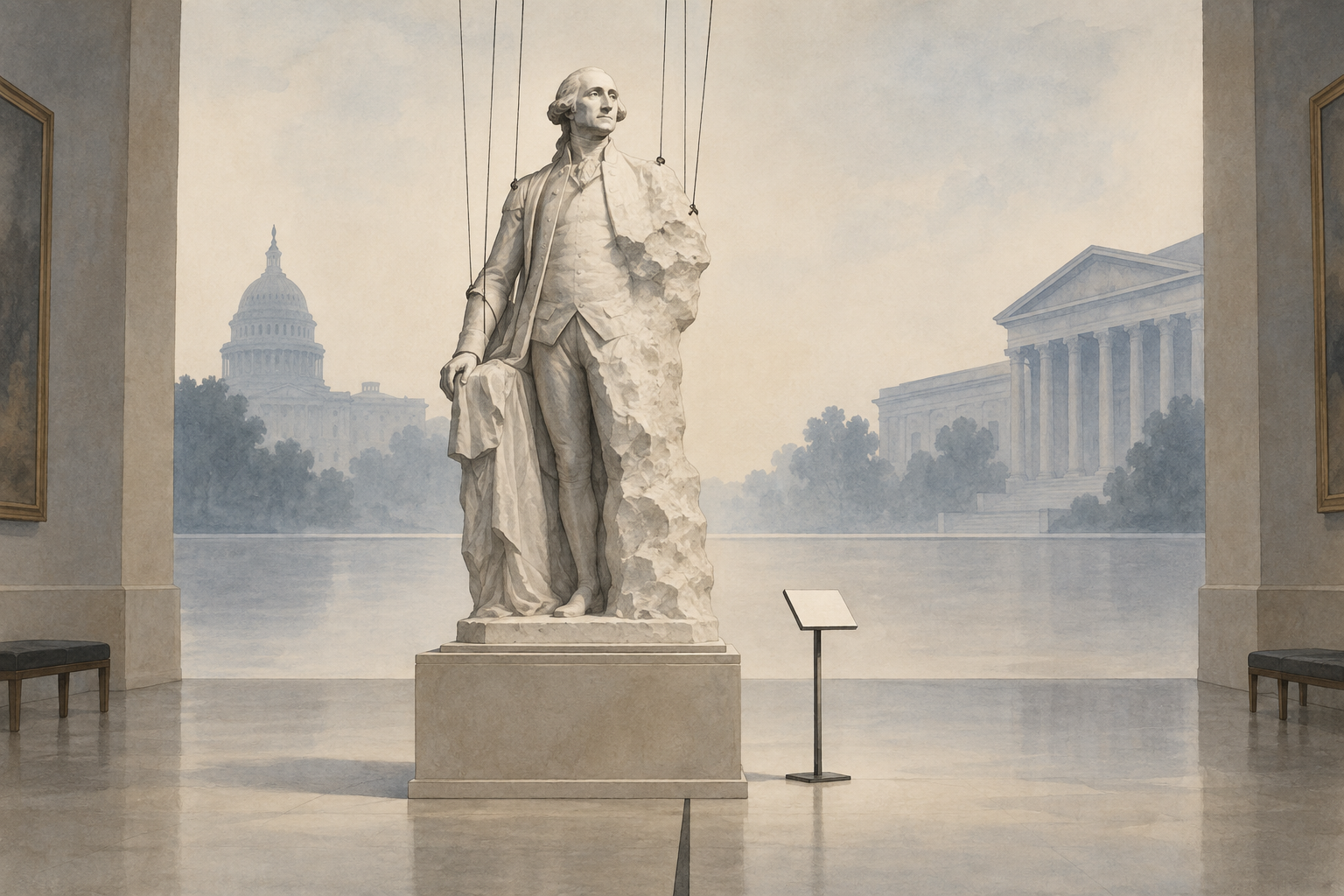
President Trump late September 12 called on the Smithsonian Institution to create a five-year George Washington exhibition at the National Museum of American History, install an 11-foot Washington statue in the museum’s Flag Hall by Constitution Day on September 17, 2026, and replace the outdoor “Infinity” sculpture with a 30-foot Washington “Colossus.”1
The request is the most specific test yet of Trump’s effort to reshape Smithsonian programming during the nation’s 250th-anniversary year. Earlier White House actions focused on broad claims that Smithsonian exhibits were insufficiently patriotic or too centered on oppression and social conflict.
The new demand moves the dispute from narrative criticism to a direct request: change a major museum’s exhibition plans and public art footprint on an expedited political timetable.23
Trump’s Truth Social statement said the proposed exhibit should begin immediately and run through February 22, 2032, the 300th anniversary of Washington’s birth. He also asked that the 11-foot statue featured at a recent Freedom 250 IndyCar event be installed in Flag Hall and dedicated on Constitution Day. A 30-foot statue would later replace “Infinity” outside the museum.12
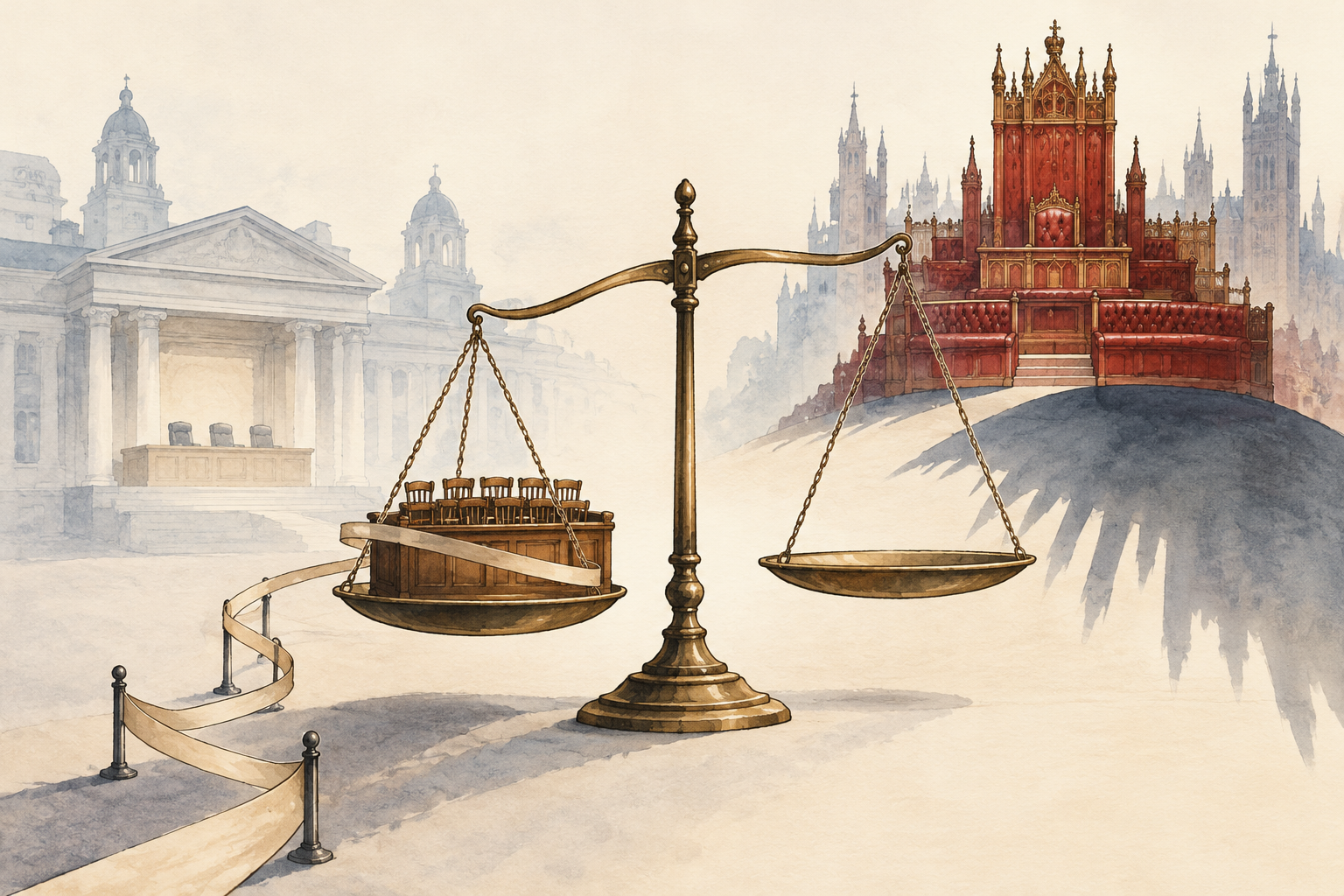
The core legal and institutional question is whether Trump can compel the Smithsonian to comply. Reporting by the Associated Press and The Guardian noted that the Smithsonian operates outside the executive branch and is overseen by a Board of Regents that includes Vice President JD Vance, Chief Justice John Roberts, members of Congress from both parties and citizen regents.23
That structure does not make the Smithsonian immune from political pressure. Congress provides a large share of the institution’s funding, owns or supports key public assets, and has oversight power. Conservative commentary in National Review argued that congressional funding gives lawmakers a legitimate interest in Smithsonian direction, while warning that cultural interventions can be mishandled.6
But operational decisions about exhibitions, acquisitions, installations and removals generally run through Smithsonian leadership and governance channels, not the ordinary presidential chain of command.
The practical result is a leverage contest, not a simple order. The White House can use public pressure, budget proposals, executive-branch coordination, appointments to related boards and congressional allies. The Smithsonian and its regents can point to institutional independence, museum standards and board fiduciary obligations.
Trump’s September 12 demand builds on earlier White House directives. AP reported that a March executive order targeted Smithsonian funding for programs the administration described as advancing “divisive narratives” and “improper ideology.” A subsequent White House report criticized the institution for not doing enough to highlight Washington and other founders.2
The Guardian reported that the administration issued a 162-page report accusing the museum of emphasizing oppression, social justice and division at the expense of shared national achievements.3
In July, Trump ordered signage outside the National Museum of American History notifying visitors that exhibits should be renovated consistent with that report. The Guardian reported that those signs had not appeared as of its September 12 account.3
The Daily Beast reported that Trump had also ordered an internal review of eight Smithsonian museums to align programming with the administration’s emphasis on American exceptionalism. It also reported that the Smithsonian did not immediately respond to its request for comment on the new statue-and-exhibit demand.4
No institutional acceptance of Trump’s request was reported in the cited accounts.
The requested replacement target is not incidental. “Infinity,” a kinetic modernist sculpture by José de Rivera outside the museum, was dedicated in 1967. NewsFinale reported that the museum identifies it as the first modern artwork commissioned by the federal government for the National Mall through its Art and Architecture Program.5
Trump called the sculpture “strange” and argued that it tells visitors nothing about America, while presenting Washington as a more fitting symbol for the country’s founding story.15
That framing makes the proposed removal a symbolic confrontation between modernist public art and commemorative statuary. It also pits professional museum judgment against presidential messaging.
The timing raises the stakes. The United States is marking its 250th anniversary year, and Trump has made statues a recurring element of his Washington cultural agenda, including a proposed “Garden of Heroes” and other public-art interventions.23
The immediate benchmark is September 17, 2026, Trump’s requested deadline for the 11-foot Flag Hall statue dedication.
If the Smithsonian does not install it, the episode will clarify the limits of presidential persuasion in the absence of board action or a congressional mandate. If it does, attention will turn to whether the regents, museum leadership or Congress authorized the installation, and whether similar pressure could reshape other museums.
The larger question is whether the Smithsonian dispute becomes a precedent for direct White House influence over federally chartered cultural institutions. Trump’s request is framed as a celebration of George Washington. Its governance significance is broader: who decides what the national museum displays, especially when history itself becomes an arena of executive politics.




Comments