Trump threatens White House ban for CNN, MS NOW and Politico, escalating press-access fight
White House hard pass
A standing credential that allows a journalist regular access to the White House complex, subject to security and press-office rules.
Press pool
A small group of journalists allowed into events where space is limited; pool reporters share notes, quotes and footage with the broader press corps.
Viewpoint discrimination
Government action that penalizes or favors speech because of the speaker’s opinion or editorial position; it is heavily constrained by the First Amendment.
AP access litigation
Ongoing litigation involving Associated Press access to White House events that has become a reference point for disputes over retaliation and presidential press access.
Associated Press
news
Trump targets more news outlets, saying he will ban CNN, MS NOW and Politico from the White House
CBS News
news
Trump says he's banning CNN, Politico and MS NOW from the White House
Axios
news
Donald Trump says he's banning CNN, MS NOW and Politico from White House
Untracked bias
100% of tracked sources are High factuality
Bias and factuality ratings from Media Bias Fact Check. Outlets without a rating are marked “Untracked.”
Ban threatened
Trump said he would bar CNN, MS NOW and Politico from the White House over what he described as unfavorable coverage.
Access unclear
Multiple reports said journalists from the targeted outlets remained on White House grounds after the announcement.
Legal stakes
Press advocates said a coverage-based ban would raise First Amendment concerns, including possible viewpoint discrimination.
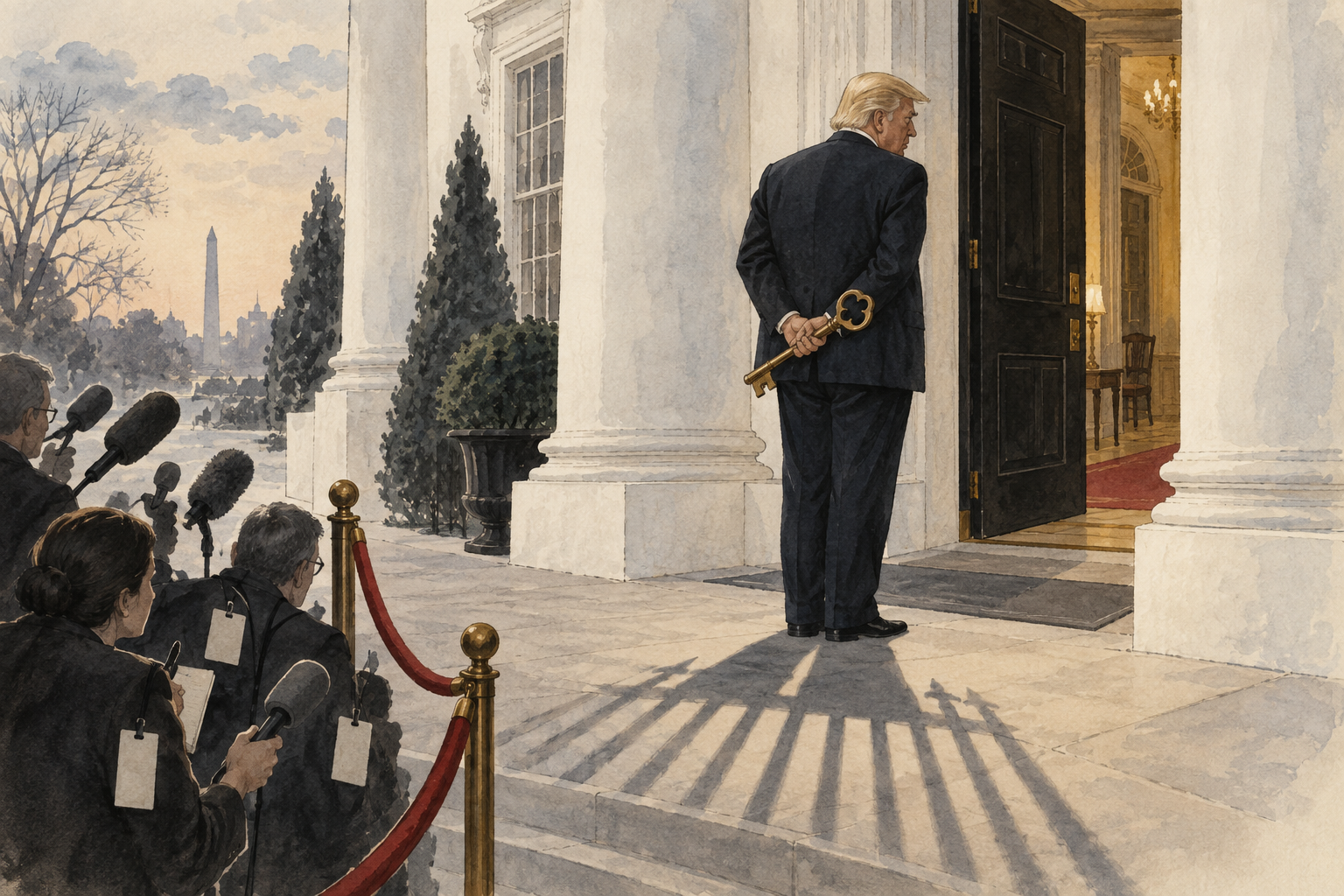
President Trump said Friday that he was barring CNN, MS NOW and Politico from the White House, a threat aimed at specific news organizations that quickly raised First Amendment and press-access questions. As of Friday afternoon, however, there was no clear sign the threatened ban had been implemented. Journalists from the targeted outlets remained on White House grounds, according to multiple news organizations.125
Trump’s September 18 statement accused the outlets of unfavorable coverage and singled them out for exclusion. The Associated Press reported that journalists for CNN, MS NOW and Politico were still present at the White House late Friday. CBS News reported the same as of 4:45 p.m.12 AFP separately reported that CNN and MS NOW journalists remained on White House premises after the announcement, and the Los Angeles Times said it remained unclear whether the threatened ban had been implemented.46
The White House did not immediately explain how any ban would work. Axios reported that the White House declined to comment beyond Trump’s post.3 The lack of detail left unresolved whether the threat would affect hard passes, day passes, briefing room access, press pools or entry to specific presidential appearances.
CNN and Politico issued statements objecting to the threat, according to CBS News, Axios and ABC News.235 ABC News also reported a response from White House Correspondents’ Association President Jacqui Heinrich, who criticized the prospect of excluding news organizations from White House access.5
The WHCA and press-freedom advocates cast the issue as larger than a dispute between the president and three newsrooms. AFP reported reactions from the WHCA and the Reporters Committee for Freedom of the Press. The Reporters Committee separately said a ban based on coverage would be unconstitutional viewpoint discrimination.47
The targeted outlets regularly cover the White House for national audiences. If implemented, a ban could affect not only their reporters’ physical access to the complex but also their ability to join press pools that distribute coverage of smaller presidential events to the broader press corps.
The threatened exclusions come against a long-running legal backdrop over how far the White House may go in controlling press access. Courts have generally recognized that the White House can maintain security and orderly operations. But access decisions involving journalists can trigger constitutional scrutiny when they appear to be based on a news organization’s viewpoint or coverage.36
Axios connected the threat to D.C. Circuit precedent on White House press credentials and to the ongoing AP access case.3 The Los Angeles Times also placed Friday’s threat in the context of earlier disputes over CNN reporter Jim Acosta’s access during Trump’s first term and current litigation involving AP access to White House events.6
Those precedents are likely to matter if the administration moves from threat to enforcement. A central question would be whether the White House can lawfully restrict access to specific outlets because of the content or tone of their coverage, or whether doing so would amount to retaliation against protected newsgathering and speech.
The AP litigation is especially relevant because it concerns whether the administration may limit a news organization’s access to certain White House events under circumstances the outlet says are punitive. Friday’s threat broadens that debate by naming additional organizations and tying potential exclusion directly to complaints about coverage.36
For now, the key unresolved fact is whether the White House has taken concrete steps to enforce Trump’s statement. Reports Friday found targeted-outlet journalists still on site, and no public evidence of a completed credential revocation had emerged in the initial hours after the announcement.12456
Enforcement could take several forms: canceling permanent hard passes, denying day passes, excluding reporters from pooled events, barring entry to the briefing room or limiting access to the White House campus. Each mechanism could raise different practical and legal issues, especially if applied only to outlets criticized by the president.
The Atlantic, in an analysis published the same day, placed the threatened ban within a broader pattern of pressure on media organizations and argued that such actions intensify concerns about government retaliation against speech.8 Press-freedom advocates made a similar point more directly, warning that access decisions based on coverage would undermine constitutional protections for the press.7
Unless the White House clarifies or enforces the threat, the episode remains a warning rather than a completed ban. But even as a threat, it has already renewed debate over whether the executive branch may use access to official events as leverage against disfavored news coverage.





Comments