U.N. extends Haiti force, but mandate buys time more than security
Gang Suppression Force
A U.N.-authorized international security force created to help Haitian authorities fight armed gangs and restore public order.
UNSOH
The United Nations Support Office in Haiti, which provides logistics and operational support to the Gang Suppression Force but does not command counter-gang operations.
Artibonite
A key agricultural region north of Port-au-Prince that has become an important test of whether security operations can extend beyond the capital.
Inverted pyramid
A news-writing structure that presents the most important facts first, followed by context and background.
United Nations Security Council
government
Security Council resolution 2829 (2026) [on extension of mandate of Gang Suppression Force (GSF) in Haiti until 31 March 2027]
UN Meetings Coverage and Press Releases
government
Adopting Resolution 2829 (2026), Security Council Renews Haiti Gang Suppression Force for Six Months
United Nations Support Office in Haiti
government
Security Council extends Gang Suppression Force and UNSOH mandates
Untracked bias
100% of tracked sources are High factuality
Anadolu Agency
UN Security Council extends Gang Suppression Force mandate in Haiti for 6 months
Reuters via Investing.com
UN renews Haiti force mandate for six months after fresh gang killings
TV5MONDE
ONU: le Conseil de sécurité prolonge de six mois la force contre les gangs en Haïti
Bias and factuality ratings from Media Bias Fact Check. Outlets without a rating are marked “Untracked.”
Mandate extended
The U.N. Security Council renewed Haiti’s Gang Suppression Force until March 31, 2027, in a 12-0 vote with three abstentions.
Force understrength
The GSF has roughly 1,500 to 1,600 personnel deployed, far short of its planned 5,500-member strength.
Artibonite exposed
Recent attacks in Artibonite after a GSF patrol showed that operations outside Port-au-Prince have not yet produced lasting civilian protection.
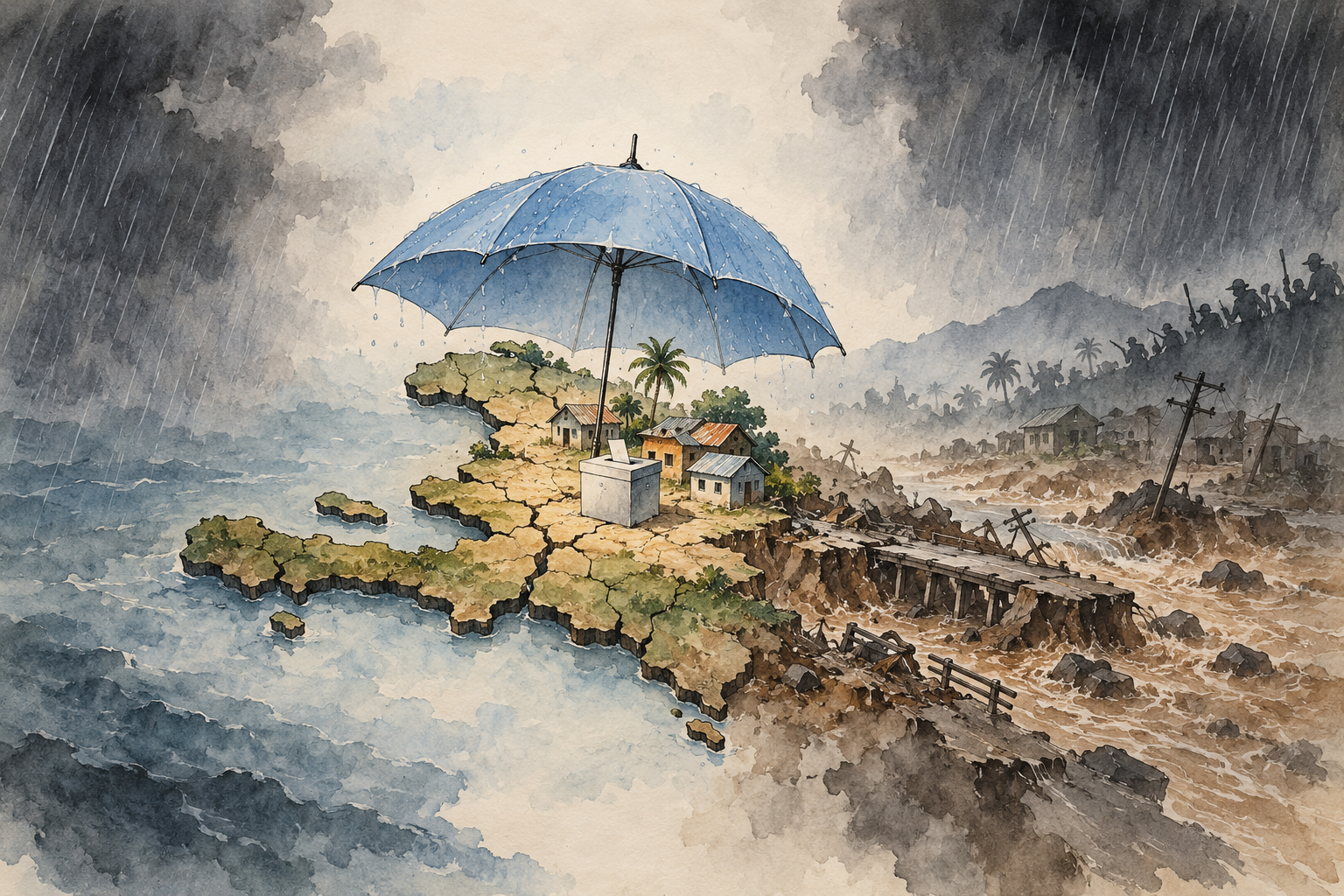
The U.N. Security Council has extended Haiti’s Gang Suppression Force for six months, giving Haiti’s transitional authorities and foreign backers more time to prepare for planned December elections. But the move does not resolve the central obstacle to a credible vote: expanding gang control and an international force still far below its intended strength.1
Resolution 2829, adopted on September 29, renews the force’s mandate until March 31, 2027. The decision came after fresh killings in Artibonite and a rise in kidnappings underscored the limits of the security response beyond Port-au-Prince.17 The vote was 12-0, with China, Russia and Pakistan abstaining amid concerns over funding, personnel and effectiveness.24
The extension preserves the U.N.-authorized framework through Haiti’s planned December 13 presidential, legislative and local elections and a constitutional referendum, with final results expected by March 7.49 But the mandate does not add troops, guarantee financing or show that Haitian authorities can secure voting in areas where gangs have expanded their reach.
The Gang Suppression Force was designed as a more robust successor to the Kenya-led Multinational Security Support mission, with a planned strength of 5,500 personnel and 50 civilian staff.5 It has not reached that level. U.S. Ambassador Mike Waltz told the Council that about 1,500 personnel were deployed and another 4,000 were expected in coming months. Other reporting put the force at about 30 percent of its intended size.46
That gap is the core reason the renewal looks more like a political stopgap than a security turning point. The Council kept the mission alive and signaled support for elections, but the force remains too small to provide sustained coverage across a country where gangs control large areas and key transport routes.49
UNSOH, the U.N. Support Office in Haiti, said it now supports more than 1,500 GSF personnel and expects to back a much larger deployment by the end of the year. Its role is logistical and operational, including accommodation, food, fuel, medical care and deployment support.3 That backing matters, but logistics can become security only if pledged personnel arrive, stay deployed and hold ground after operations.
The sharpest test is outside Port-au-Prince, especially in Artibonite, Haiti’s breadbasket region. UNSOH said the GSF’s first deployment outside the capital took place in August in Artibonite, a step meant to show the mission could move beyond protecting the metropolitan core.3
Events in late September showed both the promise and the risk of that expansion. GSF members came under fire during a patrol in Artibonite, returned fire and killed three armed men, according to the force. After the personnel left the area, gang members attacked civilians.5 Reuters reported that at least 11 people were killed and homes burned in what a local mayor described as retaliation after the GSF operation against illegal toll booths.4 Haitian outlet Le Quotidien 509 reported around 20 deaths in two attacks attributed to gangs in Bas-Artibonite.8
The pattern matters for the mandate’s real-world impact. A mobile patrol can disrupt a gang position, but without enough personnel to remain, protect residents and prevent reprisals, tactical gains can leave civilians exposed. Artibonite is therefore a measure of whether the GSF can become a stabilizing force outside Port-au-Prince or remain a limited-response deployment tied to episodic operations.
The Associated Press reported a separate late-September incident in Petite-Rivière, where gangs held hundreds of civilians for two days after police arrested gang members. At least eight people were killed and 10 injured, according to a local civil-society spokesperson cited by AP.7 The incident reinforced that insecurity is no longer only a capital-city crisis and that local communities may face retaliation when security forces act without sustained control.
The Security Council resolution stresses the need for security conditions conducive to free and fair elections.15 Haiti has not held national elections in roughly a decade, and the country has been without an elected president since Jovenel Moïse was assassinated in July 2021.67
The electoral calendar now makes security a political deadline. Haiti is scheduled to vote on December 13, before the renewed GSF mandate expires on March 31, 2027.4 The extension gives international backers a window to scale up deployments and support Haitian police. But it also creates a narrow test: whether enough territory, polling sites, roads and state offices can be secured in less than three months.
Kidnappings add another layer of pressure. AP reported that at least 81 people were kidnapped between April and June, a 42 percent increase from the first quarter, and that kidnappings are again rising after a brief decline.7 High-profile abductions and mass kidnappings can intimidate officials, candidates, voters and election workers, especially if gangs can strike areas previously considered safer.
CFR’s Global Conflict Tracker describes Haiti’s conflict status as worsening, estimating that gangs control about 90 percent of Port-au-Prince and three of Haiti’s 10 provinces, while more than 1.4 million people have been displaced.9 Al Jazeera, citing U.N. figures, reported more than 1.5 million displaced and 1,408 killings between April and June alone.6 Those conditions raise the risk that elections could proceed legally but remain politically contested if large segments of the population cannot safely participate.
For the United States, Panama and other supporters, the renewal keeps a necessary instrument alive. Haiti’s government had urged the Council to continue the mandate, and Prime Minister Alix Didier Fils-Aimé’s office described the extension as an important step toward restoring security.25 Haitian officials have also emphasized efforts to train more police officers and soldiers, while saying international support remains essential.7
For abstaining Council members, the concern is that the GSF may reproduce earlier international missions’ weaknesses: inadequate staffing, uncertain financing and limited results. Reuters reported that China, Russia and Pakistan cited concerns over funds, personnel and efficacy.4 Al Jazeera noted broader skepticism rooted in Haiti’s history of foreign intervention and past abuses.6
The renewed mandate changes the diplomatic timeline more than the security balance. It prevents a lapse in international authorization, reassures Haiti’s transition authorities and gives troop-contributing countries more time to fulfill pledges. But unless the force expands quickly and can hold territory outside Port-au-Prince, especially in Artibonite, the extension will not by itself make December’s elections credible.
That leaves Haiti facing a compressed equation: the Council has bought six months for the international mission, but the electoral test arrives in less than three.





Comments