U.S. to deploy NMESIS anti-ship system to Japan’s Yonaguni for drills

NMESIS
The Navy/Marine Expeditionary Ship Interdiction System is a mobile U.S. Marine Corps ground-based anti-ship missile platform.
Yonaguni
Japan’s westernmost inhabited island, part of Okinawa prefecture, located about 110 kilometers from Taiwan.
Sea denial
A military concept focused on preventing or complicating an adversary’s use of a maritime area, often through missiles, sensors and dispersed forces.
Keen Sword
A recurring U.S.-Japan joint exercise used to practice alliance operations, coordination and readiness.
South China Morning Post
news
US to deploy NMESIS anti-ship system on Japanese island closest to Taiwan for first time
QAB News Headline / Ryukyu Asahi Broadcasting
news
与那国島に対艦ミサイル展開へ 19日からの日米演習
Interesting Engineering
news
US deploys anti-ship missile system to Japan’s island closest to Taiwan
Untracked bias
埼玉新聞
与那国島に対艦装置展開へ 米軍、今月の統合演習
ライブドアニュース
与那国島に対艦装置展開へ 米軍、今月の統合演習
熊本日日新聞
与那国島に対艦装置展開へ 米軍、今月の統合演習
熊本日日新聞
米軍が与那国島で対艦ミサイル装置展開へ
デイリースポーツ
与那国島に対艦装置展開へ 米軍、今月の統合演習
大分合同新聞
与那国島に対艦装置展開へ
大分合同新聞
米軍が与那国島で対艦ミサイル装置展開へ
徳島新聞
米軍が与那国島で対艦ミサイル装置展開へ
琉球朝日放送
与那国島に対艦ミサイル展開へ 19日からの日米演習
联合早报
美军将首次在日本与那国岛部署先进反舰导弹系统
澎湃新闻
日美将举行大规模联合实战演习,新型岸舰导弹首次部署至与那国岛
新浪新闻
#日本最西端将首次部署美军新型岸舰导弹#
香港01
日防卫省:美军首度在与那国岛部署反舰导弹系统 距台湾110公里
世界新闻网
美军将在与那国岛部署反舰导弹系统 距台湾最近日本岛屿
世界新闻网
10月美日联演 美军新型飞弹首次部署日本与那国岛
on.cc东网
利剑联演月中上演 美日地对舰导弹将首部署与那国岛
International Press
Estados Unidos desplegará por primera vez misiles antibuque en isla Yonaguni
茉莉花新闻网
美军将首次在与那国岛部署反舰导弹系统 参加日美“利剑”演习
凤凰网
美军导弹悍然登上与那国岛,近得能望见台湾山脉
Bias and factuality ratings from Media Bias Fact Check. Outlets without a rating are marked “Untracked.”
Yonaguni deployment
The U.S. will bring NMESIS to Yonaguni, Japan’s westernmost island, during joint drills beginning October 19.
Near Taiwan
Yonaguni lies roughly 110 kilometers from Taiwan, giving the exercise strategic and diplomatic sensitivity.
Temporary move
Japan’s official framing presents the deployment as exercise-related, not an announced permanent basing change.
The U.S. military will deploy its NMESIS anti-ship missile system to Yonaguni, Japan’s westernmost inhabited island, during U.S.-Japan joint exercises scheduled to begin this month, according to Japan’s Okinawa Defense Bureau.1
Yonaguni sits roughly 110 kilometers from Taiwan. The planned deployment, reported by regional and Okinawa media, will take place during the Keen Sword exercise window starting October 19.
Local reporting said the Okinawa Defense Bureau disclosed that both NMESIS and the Marine Air Defense Integrated System, or MADIS, would be brought to the Japan Ground Self-Defense Force garrison on Yonaguni for the drills.2
Japanese authorities have framed the activity as regular alliance training meant to improve coordination and readiness, not as a permanent basing decision. Defense-focused reporting said the deployment is temporary, with no announcement that NMESIS will remain on Yonaguni after the drills conclude.4
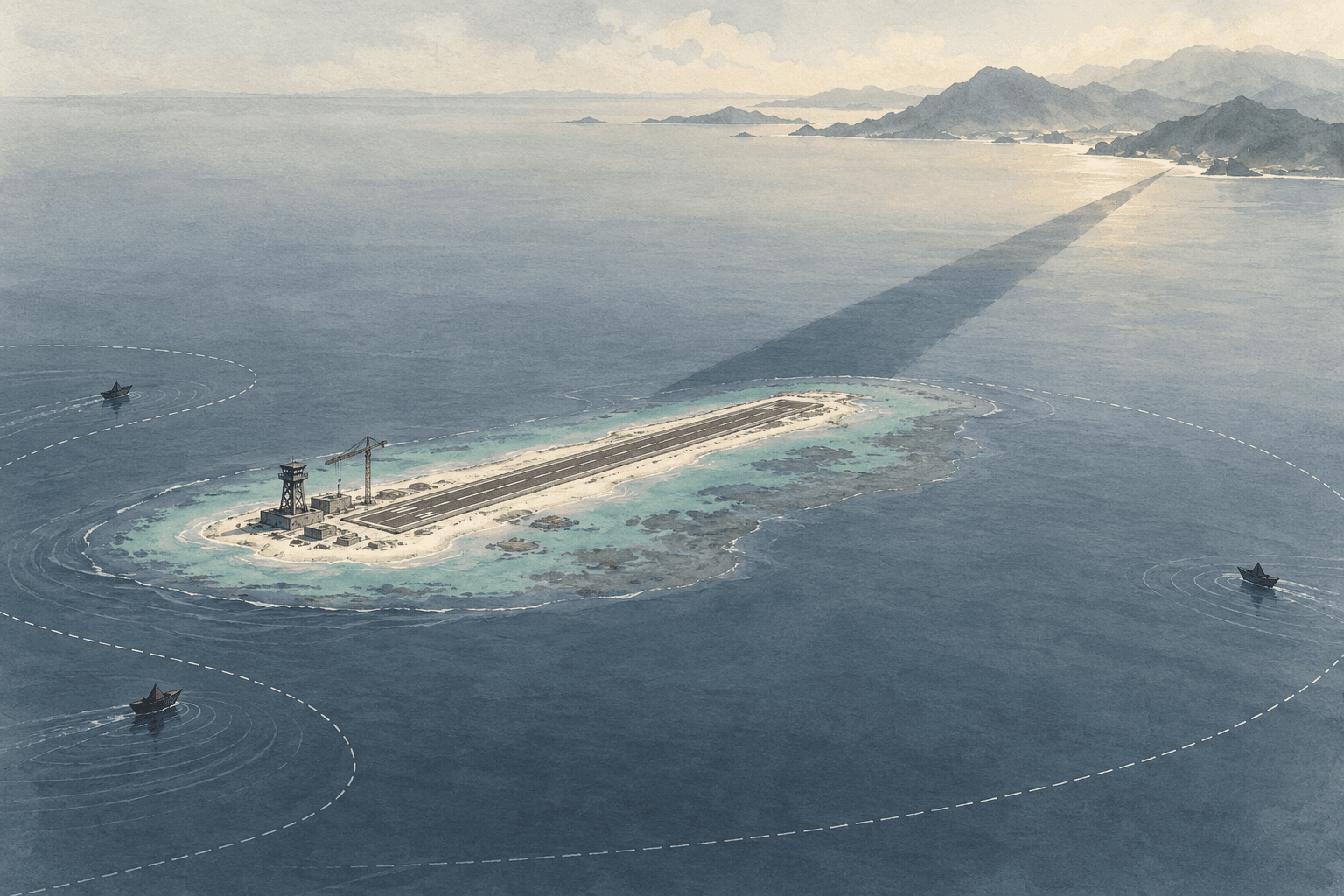
Even so, the exercise carries a broader policy signal. By moving a mobile anti-ship system onto one of Japan’s southwest islands closest to Taiwan, Tokyo and Washington are practicing concepts intended to complicate an adversary’s naval movement through the first island chain. Analysts and defense reports describe NMESIS as a sea-denial weapon suited to distributed operations across islands and coastal areas.3
The deployment would mark the first known time the U.S. has brought NMESIS to Yonaguni, according to reporting citing Japanese defense authorities.1 The island sits at the far western edge of Okinawa prefecture, closer to Taiwan than to Okinawa’s main island, giving the exercise unusual geographic sensitivity.
NMESIS, short for Navy/Marine Expeditionary Ship Interdiction System, is a U.S. Marine Corps ground-based anti-ship missile platform. It is designed to be mobile and dispersed, supporting the Marine Corps’ shift toward smaller units operating across contested littoral areas.3
Defense reporting has linked the system to the Marine Corps’ littoral regiments, including the 12th Marine Littoral Regiment, which is structured for operations in the Indo-Pacific’s island chains.6 The system’s appearance on Yonaguni follows earlier U.S. and Japanese efforts to practice moving missile and air-defense capabilities across the Nansei, or southwest, islands.6
Tokyo’s public framing is expected to focus on training, alliance interoperability and defensive readiness. The Okinawa Defense Bureau’s disclosure described the systems as part of the joint exercise, not as a change in permanent force posture.2
That distinction matters politically. Japan has been strengthening defenses in its southwest islands for years, including units and facilities on Yonaguni, Ishigaki and Miyako. But it has also sought to avoid presenting each exercise as a direct escalation with China.
The temporary deployment gives Tokyo and Washington room to test logistics, command relationships and mobility without announcing a standing missile presence on Yonaguni. At the same time, the exercise demonstrates that the alliance can move anti-ship assets into areas near key maritime approaches if required.4
Beijing is likely to object diplomatically, particularly because of Yonaguni’s proximity to Taiwan and NMESIS’ anti-ship role. Chinese officials have frequently criticized Japanese and U.S. military activity near Taiwan and opposed Japan’s missile buildup along islands close to China’s coast and surrounding waters.5
The deployment also comes as Japan and China continue to manage a strained relationship shaped by disputes over Taiwan, the East China Sea, military activity around the Senkaku Islands and broader U.S.-China competition. For Beijing, the movement of a U.S. anti-ship missile system to Yonaguni is likely to be framed as an alliance step aimed at containing China or interfering in the Taiwan question.1
Still, the exercise does not by itself indicate an imminent crisis. Available reporting describes a scheduled training deployment during a defined exercise period, not an emergency movement or permanent installation.4
For alliance planners, the significance lies less in the deployment’s duration than in what it rehearses. Sea-denial concepts rely on the ability to disperse sensors, missiles and air-defense systems across islands, making it harder for an opposing navy to operate freely.
Yonaguni’s location makes it a valuable test case. A mobile anti-ship launcher there would sit near sea lanes between Taiwan and Japan’s southwest islands, an area central to allied planning for contingencies in the East China Sea or around Taiwan.3
The exercise reflects a broader trend: Japan and the United States are turning deterrence policy into practical training. That includes moving systems, testing access to remote garrisons and integrating U.S. Marine Corps concepts with Japan’s island defense posture.6
For Tokyo, the challenge is to strengthen deterrence without foreclosing diplomatic management of the China relationship. For Washington, the Yonaguni deployment shows how U.S. forces could use allied territory to support distributed operations in a conflict while staying within the public frame of a temporary exercise.





Comments