Von der Leyen’s SOTEU sets up autumn fights on budget, defence and climate

State of the Union address
The annual speech by the European Commission president to the European Parliament, used to review EU action and set priorities for the year ahead.
MFF
The multiannual financial framework, the EU’s long-term budget plan; the next cycle under discussion covers 2028-2034.
CBAM
The carbon border adjustment mechanism, an EU system intended to align the carbon cost of certain imports with EU climate rules.
European Democracy Shield
A Commission-backed framework aimed at strengthening democratic resilience, including against foreign interference and hybrid threats.
La Milano
news
EU, from defense to economy and Ukraine: Von der Leyen heads toward the State of the Union address
NewsBriefing.eu
news
Netherlands and Spain demand EU minimum age covering social media, games and AI
VPNLab
news
Netherlands and Spain ask the EU to set one minimum age for social media
Untracked bias
Bias and factuality ratings from Media Bias Fact Check. Outlets without a rating are marked “Untracked.”
16 September
Von der Leyen is scheduled to deliver the 2026 State of the Union address in Strasbourg on 16 September.
Budget fight
Parliament’s committee position on the single market and customs programme seeks a 10% increase over the Commission proposal.
Defence test
MEPs are set to debate the Defence Readiness Omnibus package as the Commission promotes readiness projects through 2030.
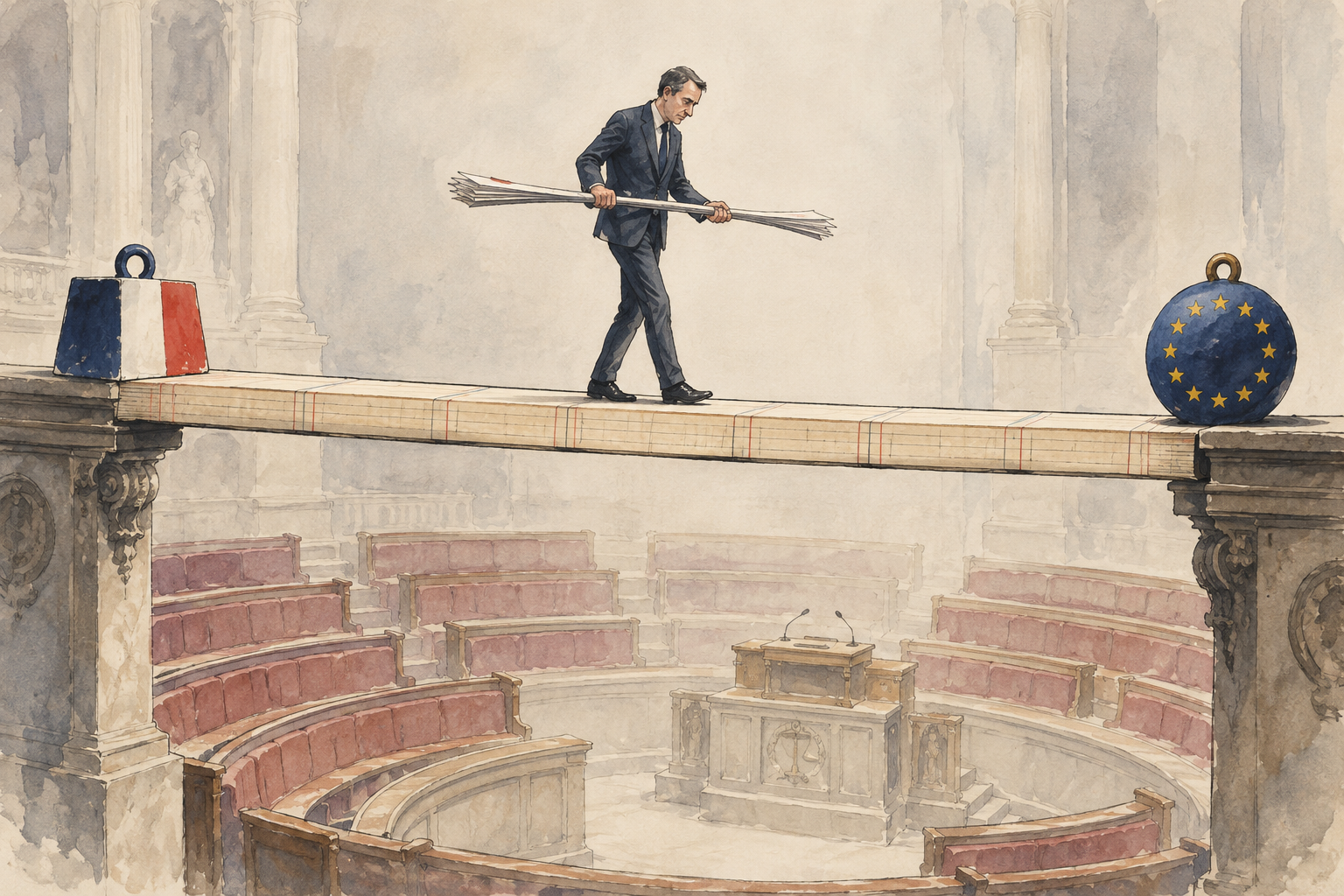
Ursula von der Leyen’s 2026 State of the Union address will set the terms for an autumn of institutional bargaining in Brussels, as the Commission moves from broad priorities to legislative positioning and the European Parliament prepares to push back on budget, defence, enlargement, democracy and climate files.
The Commission president is scheduled to address the European Parliament in Strasbourg on 16 September. The Commission presents the speech as the annual moment to set priorities for the year ahead and review delivery so far.7 Parliament’s research service has framed the September plenary around SOTEU, calling it one of the key moments in EU legislative planning and noting that it gives MEPs a chance to hold the Commission to account and shape the agenda.6
That makes this year’s speech a negotiating signal as much as a policy address. Von der Leyen will speak as the institutions begin translating the 2024-2029 mandate into detailed positions. The 2028-2034 multiannual budget is moving into sectoral debates, defence-readiness files are already in interinstitutional negotiation, democracy-shield proposals are becoming more concrete, and climate legislation is entering Parliament’s amendment-and-vote stage.6
The largest institutional test is the next EU long-term budget. During the same plenary week, Parliament is due to vote on its position on the proposed single market and customs programme within the 2028-2034 multiannual financial framework. According to Parliament’s research service, the relevant committee wants to raise the programme’s budget by 10% compared with the Commission proposal and limit the Commission’s ability to shift money between policy areas.6
That is an early marker for the wider MFF fight. MEPs are likely to use the SOTEU debate to press von der Leyen on whether the Commission’s budget architecture can finance strategic autonomy, industrial policy, enlargement, Ukraine support and climate investment without hollowing out traditional EU spending lines.
For the Commission, the speech is a chance to defend flexibility as a tool for crisis response. For Parliament, the opening bid is likely to be more control, more ring-fencing and clearer links between political priorities and budget lines. The tension is familiar, but this cycle is sharper because the Union is trying to fund competitiveness, defence and enlargement at the same time.
Defence will be another central pressure point. The Commission’s SOTEU material highlights defence readiness, including a roadmap to 2030 and flagship projects such as Eastern Flank Watch, a European Drone Defence Initiative, a European Air Shield and a European Space Shield.7 Recent reporting on von der Leyen’s pre-SOTEU positioning also points to airspace surveillance and defence capacity as issues likely to feature in the speech.4
Parliament is not waiting for the address to define its interests. MEPs are expected to debate the Defence Readiness Omnibus package during the same plenary week. The package is intended to speed up permitting, facilitate defence investment and simplify defence-product transfers and procurement inside the EU. Parliament has already sought changes aimed at reducing administrative burdens and supporting small and medium-sized companies.6
The likely parliamentary challenge is therefore not whether the EU should do more on defence, but how. MEPs may press the Commission on industrial capacity, procurement fragmentation, access for smaller suppliers and how EU instruments fit with NATO and national defence planning. Von der Leyen’s answer will matter because defence policy is increasingly tied to the budget debate: readiness ambitions require predictable money, not only regulatory simplification.
Ukraine and enlargement are also likely to shape the tone of the address. The Commission’s SOTEU page lists the opening of negotiations on the first cluster in Ukraine’s accession process in June 2026 and says the EU has agreed additional support for Ukraine’s budget and military needs for 2026 and 2027.7 La Milano’s preview similarly frames Ukraine, defence and the economy as expected pressure points in the Commission-Parliament accountability exchange.1
For MEPs, enlargement is no longer only a geopolitical pledge. It is becoming a question of institutional capacity, money and sequencing. Parliament is likely to seek clarity on how the Commission will reconcile Ukraine’s accession path with rule-of-law conditions, agricultural and cohesion-policy implications, and the next MFF.
The SOTEU setting gives von der Leyen room to present enlargement as part of Europe’s strategic independence. But the autumn negotiations will test whether that narrative can withstand detailed scrutiny of costs, timelines and institutional reform.
Democracy protection is another area where Parliament is already staking out a role. The September plenary includes consideration of a report from Parliament’s Special Committee on the European Democracy Shield. The report supports a proposed EU centre for democratic resilience and says it should have a legal act and a budget, while also stressing threats from foreign and hybrid interference, investigative journalism and media literacy.6
The Commission has listed the European Democracy Shield and civil-society strategy among key actions from the past year, describing them as measures to strengthen democratic resilience across the Union.7 The institutional question is whether the Commission will keep the file at the level of coordination and soft-law support, or accept Parliament’s push for stronger legal and financial architecture.
This is likely to be one of the sharper accountability moments in the SOTEU debate. MEPs can be expected to ask how democracy-protection tools will avoid duplication, how they will protect civil society without politicising funding decisions, and how the EU will address foreign interference while respecting national competences and fundamental rights.
Climate policy will provide one of the clearest examples of Parliament turning Commission proposals into negotiating positions. During the plenary week, MEPs are set to debate and vote on files linked to the carbon border adjustment mechanism, a temporary decarbonisation fund and the market stability reserve for emissions allowances.6
The differences are already visible. Parliament’s environment committee wants to expand CBAM coverage to more downstream goods than the Commission proposed and has recommended changes to the proposed decarbonisation fund and emissions-market reserve rules.6 Those positions suggest MEPs will use SOTEU week not simply to hear the Commission’s climate framing, but to mark the boundaries of Parliament’s own negotiating mandate.
For von der Leyen, the challenge is to connect climate ambition to industrial competitiveness. The Commission’s SOTEU materials emphasise electrification, energy infrastructure and low-carbon industrial policy as part of the EU’s effort to become more independent and prosperous.7 Parliament’s response is likely to focus on whether the Commission can protect industrial competitiveness without weakening emissions-market integrity or diluting climate finance.
The SOTEU debate is also drawing positioning from national governments. The Netherlands and Spain have urged the EU to establish a common minimum age covering social media, games and AI, in an intervention timed before the address and aimed at shaping the Commission’s expected child-safety and digital agenda.2 Secondary reporting has described the same Dutch-Spanish push as part of the pre-SOTEU effort to influence the legislative process.3
That intervention illustrates the wider dynamic around the speech. Capitals, Parliament and the Commission are all trying to shape the agenda before legislative proposals harden. The Commission has already pointed to child online safety in its record, including an action plan against cyberbullying and technical work on age verification.7
The issue is likely to land at the intersection of digital regulation, fundamental rights and enforcement capacity. Parliament’s reaction will depend on whether the Commission frames child safety as a narrow age-verification file, a broader platform-governance measure or part of a larger online-safety package.
The most important outcome of the 16 September address may not be any single announcement. It will be how von der Leyen orders the Commission’s priorities before Parliament begins turning them into legislative demands.
The Commission’s pre-speech messaging has centred on independence, security, competitiveness, Ukraine, democracy and citizens’ protection.5 Parliament’s plenary agenda shows where those themes will meet institutional resistance: budget control, defence-industry rules, democracy safeguards, customs and climate legislation.6
SOTEU is therefore best read as the opening move in an autumn negotiation. Von der Leyen will set the Commission’s narrative; MEPs will test whether the money, legal bases and political trade-offs match it.





Comments