White House drops NIH grant order after appropriators object
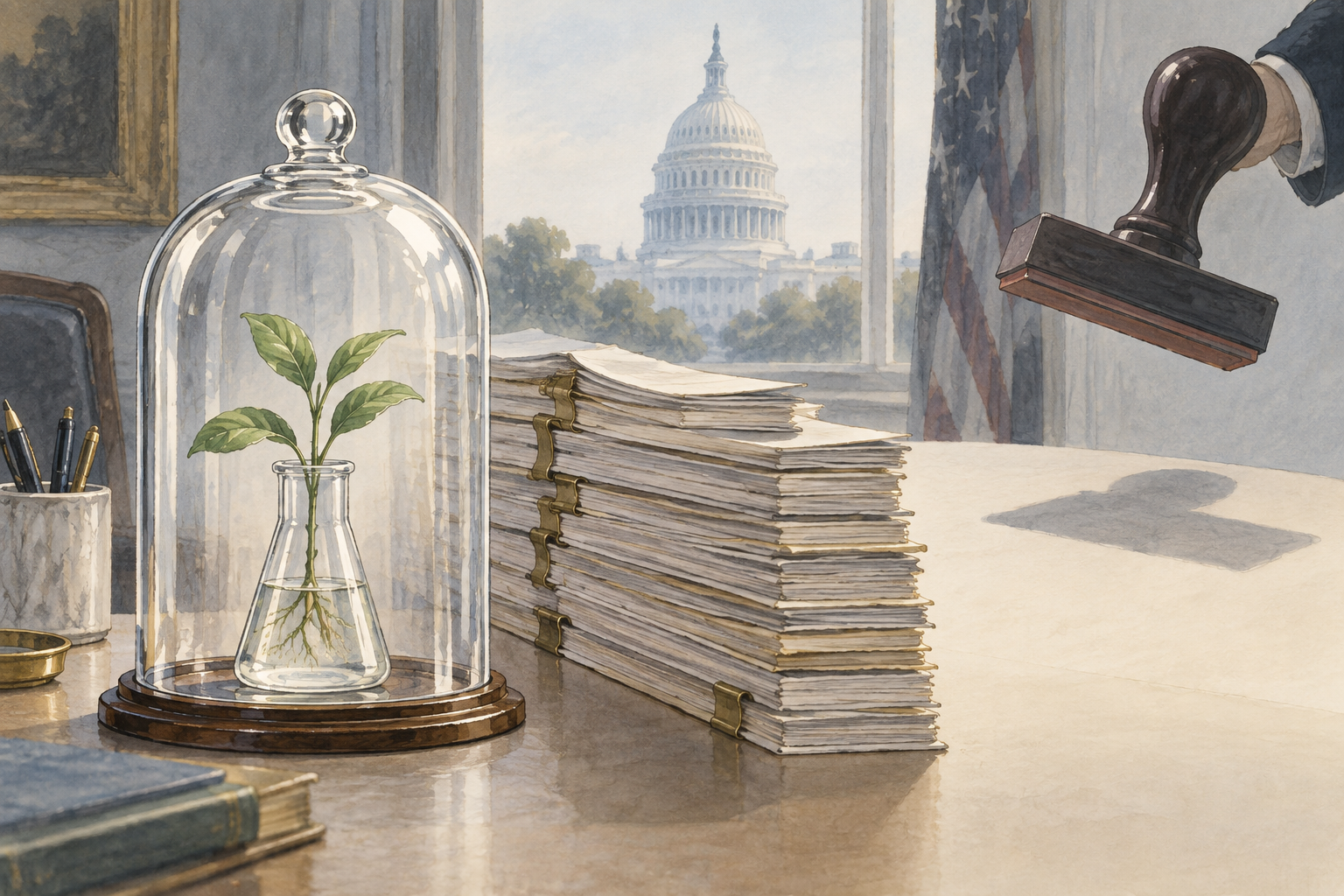
NIH grantmaking
The National Institutes of Health awards federal funding for biomedical research, typically through peer review and scientific evaluation.
Continuing resolution
A temporary spending law that keeps the government funded, often while Congress negotiates longer-term appropriations bills.
OMB Uniform Guidance
Government-wide rules managed by the Office of Management and Budget that shape how federal grants and awards are administered.
Political-appointee review
A process in which presidentially appointed officials, rather than career scientific reviewers alone, would have a role in approving or blocking grant awards.
Roll Call
news
White House drops executive order for tighter NIH purview
Semafor
news
Trump administration backing off NIH grant order amid pushback
U.S. Senate Committee on Appropriations, Minority
government
Murray on Trump Admin Scrapping Plans for Executive Order to Empower Russ Vought to Kill NIH Research
Untracked bias
100% of tracked sources are High factuality
Bias and factuality ratings from Media Bias Fact Check. Outlets without a rating are marked “Untracked.”
Order dropped
The White House scrapped a proposed executive order that would have expanded political review of NIH grantmaking.
NIH protected
Senate appropriators objected that biomedical research awards should remain based on scientific merit rather than political ideology.
CR leverage
A September continuing resolution temporarily delayed related OMB grant-rule changes, giving Congress leverage over the administration’s plans.
The White House has dropped plans for an executive order that would have given the Trump administration greater control over National Institutes of Health grantmaking, according to Roll Call reporting published September 23.1
The retreat followed objections from Senate Appropriations Chair Susan Collins, R-Maine, and Vice Chair Patty Murray, D-Wash.1
The abandoned order would have followed a broader Office of Management and Budget push to reshape federal grant rules by requiring political appointee review of discretionary awards and expanding agencies’ power to end grants “for convenience.”1 Congress had already used a September continuing resolution to delay those OMB grant-rule changes, creating a temporary statutory check while lawmakers negotiate longer-term funding.13
Collins warned the administration not to proceed, saying NIH biomedical awards should be based on scientific merit and value rather than political ideology. She urged the White House to send Congress legislation if it wanted additional NIH changes instead of acting by executive order.1 Murray welcomed news that the order had been shelved but said Congress needs stronger legal protections to keep political appointees from influencing medical research funding decisions.3
The draft order emerged from administration discussions over how to give the White House and OMB more influence over NIH awards. Semafor reported that the administration was backing off an initial plan that would have given the president greater influence over NIH grant decisions after Collins pressed OMB to abandon the effort.2
STAT reported that the plan contemplated a commission of political appointees, including OMB Director Russell Vought, with veto power over grant awards.4 Chemical & Engineering News reported that the proposed board would have added political approvals to NIH research funding. The idea followed reports of White House concerns about grants seen as inconsistent with administration priorities.5
The proposal landed amid a broader dispute over whether the administration can redirect, delay or cancel scientific awards Congress has funded. Roll Call reported that the executive order idea followed OMB’s May Uniform Guidance proposed rule, which would have affected grantmaking across the federal government, not only NIH.1
The key congressional lever was appropriations language in the September continuing resolution. Roll Call reported that the stopgap funding law, which funds the government through mid-December, contains a provision delaying implementation of the OMB grant-rule changes.1 Murray’s office said Democrats had secured language in the recently enacted CR to block OMB’s attempt to politicize federal grantmaking.3
That provision did not permanently rewrite NIH law. But it gave appropriators a near-term tool: If the White House moved ahead with an executive order resembling the delayed OMB rule, lawmakers could argue the administration was undermining Congress’ spending conditions.
Collins made that point directly in her warning to NIH Director Jay Bhattacharya and Vought, according to Roll Call. She said the proposed order would undercut the CR language and the government’s objective of funding biomedical research on scientific grounds.1 Semafor reported that Collins also said she would continue using the Appropriations Committee to block implementation if the order were issued.2
The retreat does not end the fight over White House control of research funding. Murray said the scrapped order was only one scheme and called for additional legal protections to stop funding and staffing cuts, prevent political appointee meddling and ensure grantmaking is guided by prospects for medical breakthroughs.3
Collins’ position points in a different but overlapping direction. She did not rule out NIH reforms, but said the administration should submit a legislative proposal to Congress rather than impose changes by executive order.1 That stance reinforces appropriators’ institutional claim that Congress, not OMB alone, should set the boundaries for federally funded biomedical research.
Health-policy outlets described the episode as a bipartisan warning shot. STAT reported the planned executive order appeared “dead” after pushback from Collins and other lawmakers. C&EN tied the retreat to both Republican and Democratic objections and to the CR provision blocking the OMB rule.45
The next test is whether lawmakers move beyond temporary funding restrictions. The current stopgap expires in December, and any full-year spending bill could become the vehicle for more durable limits on political review of NIH grants.
For now, appropriators have shown they can use spending language, oversight letters and bipartisan pressure to force the White House to back away from a direct intervention in biomedical grantmaking.






Comments