Disney’s Streaming Reshuffle Signals a Wider Monetization Push
Direct-to-consumer
A media business model in which a company distributes content directly to viewers through owned services such as Disney+ or Hulu, rather than only through third-party distributors.
Proprietary ad technology
Advertising software and systems owned or controlled by a media company, used to target, sell, deliver and measure ads on its platforms.
Franchise strategy
The coordinated management of intellectual property so that shows, characters and story worlds can generate value across streaming, television, consumer products, games, experiences and other businesses.
One Disney model
An operating approach that seeks to connect Disney’s businesses more tightly so content, data, marketing and consumer relationships can be used across the company.
The Walt Disney Company
other
Adam Smith Named Chairman, Direct-to-Consumer, Disney Entertainment
Reuters via Investing.com
news
Disney names insider Adam Smith as chairman of streaming business
Los Angeles Times
news
Disney doubles down on tech, naming former YouTube executive as head of entertainment streaming business
New DTC Chair
Disney named Adam Smith chairman of direct-to-consumer, giving him oversight of Disney+ and Hulu across product, engineering, ad technology, programming strategy, partnerships and analytics.
Franchise Focus
Joe Earley moved into a newly created television franchise and content strategy role aimed at better leveraging Disney’s IP and content library.
Adtech Priority
The restructuring places proprietary advertising technology, data and platform integration closer to the center of Disney’s streaming strategy.
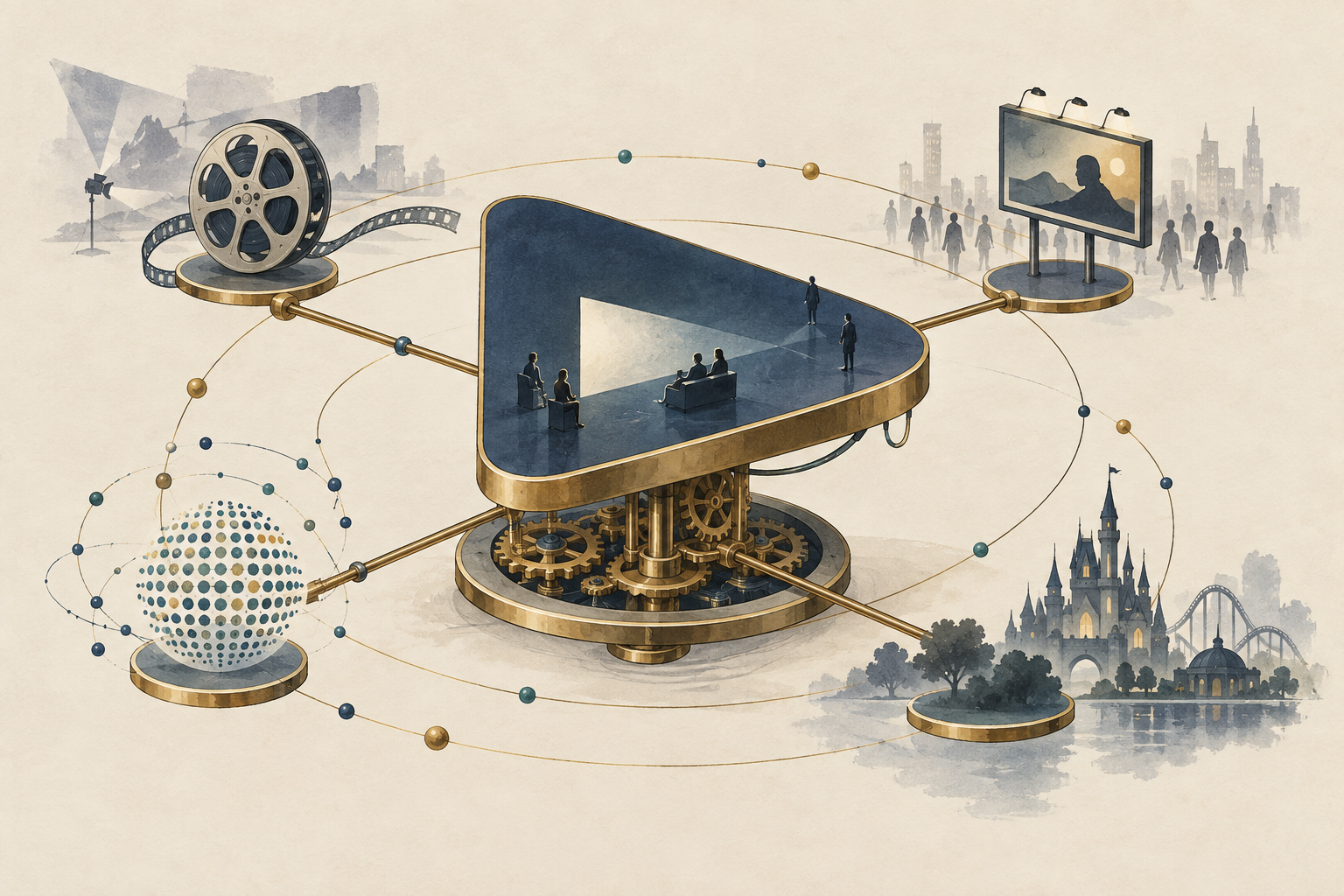
Disney’s latest leadership changes point to a further shift in how the company manages streaming: not just as a distribution channel built around subscriber growth, but as a central operating layer connecting Disney+, Hulu, advertising technology, audience data and franchise development.
On September 17, Disney named Adam Smith chairman of direct-to-consumer for Disney Entertainment, giving him oversight of Disney+ and Hulu across product, engineering, advertising technology, programming strategy, viewer experience, partnerships and data analytics.1 Reuters described the move as a sharpening of Disney’s focus across its direct-to-consumer platforms, with an emphasis on proprietary ad technology, emerging technology, engagement and advertising growth.2
At the same time, Disney moved Joe Earley, previously one of the senior executives overseeing streaming, into a newly created role focused on television franchise and content strategy.5 The shift separates day-to-day streaming platform execution from a broader mandate to develop and extend television franchises across Disney’s portfolio. Disney appears to be reorganizing around two linked priorities: making its streaming platforms more technologically and commercially effective, and managing intellectual property more deliberately across windows, formats and consumer touchpoints.
The clearest signal is the scope of Smith’s mandate. Disney is not only putting Disney+ and Hulu under a direct-to-consumer chairman; it is also bundling product, engineering, ad technology, programming strategy, viewer experience, partnerships and analytics under one executive structure.1 For media executives, that points to a model in which streaming is less a standalone business unit and more a shared infrastructure layer for monetizing content and audiences.
That marks an evolution from the industry’s earlier streaming phase, when subscriber additions, global launches and content volume dominated the discussion. Disney still needs scale, retention and engagement. But the leadership structure suggests management attention is moving toward monetization quality: how well the company can target advertising, promote franchises, manage user experience, cross-sell content and potentially connect streaming behavior to other Disney businesses.
The Los Angeles Times described the appointment as a doubling down on technology, citing Smith’s background at YouTube and Google and Disney+’s role as a broader digital centerpiece for the company.3 That background is strategically relevant. YouTube’s business is built on scaled engagement, recommendation systems, creator and content ecosystems, advertising infrastructure and continuous product iteration. Disney’s streaming business is different, but the choice suggests the company wants more of that technology-platform discipline inside its premium entertainment environment.
Smith’s appointment also comes as Disney continues to bring Disney+ and Hulu closer together. The more integrated the services become, the greater the value of unified product design, shared data, common ad systems and coordinated programming strategy.
For advertisers, a more integrated Disney+ and Hulu offering could simplify buying and measurement while expanding the addressable audience across family, general entertainment and adult-skewing programming. For Disney, the potential upside is higher ad yield, better churn management and more precise audience segmentation.
The risk is execution complexity: combining brands, interfaces, data systems and programming logic without weakening the distinct consumer propositions that made each service valuable.
TheWrap’s analysis argued that the restructuring points toward streaming as a tech-forward, companywide monetization layer tied to Disney+ and Hulu integration, adtech, data analytics and a broader “One Disney” model.4 That framing aligns with the responsibilities Disney assigned to Smith. The structure gives one executive oversight of many of the levers that will determine whether streaming becomes a higher-margin platform business or remains an expensive content-delivery mechanism.
The leadership change is especially important for Disney’s advertising strategy. Reuters highlighted proprietary ad technology and advertising growth as part of the rationale for the new structure.2 Disney’s announcement also placed advertising technology and data analytics within Smith’s area of responsibility.1
That combination is critical. In subscription streaming, revenue growth historically came from adding users and raising prices. In hybrid streaming, the revenue equation increasingly depends on ad load, targeting, inventory quality, measurement, frequency management and the ability to package audiences across platforms.
Proprietary ad technology can give Disney more control over that stack, reduce dependence on third parties and allow the company to integrate viewer data, content context and campaign delivery more tightly.
For media companies, this is becoming a strategic dividing line. Owning premium content is no longer enough; the monetization system around that content is becoming just as important. Disney’s reorganization suggests it wants direct-to-consumer to operate not only as a consumer product, but also as an advertising and data platform.
Earley’s move is the other half of the restructuring. Disney created a television franchise and content strategy role for him, with reporting that connects the position to strategic franchise development, international content, production, labor relations and creative talent development.6 Deadline-sourced reporting also tied the role to using Disney intellectual property and the company’s content library to deepen engagement and create new growth opportunities.8
That suggests Disney is trying to manage television content with more of the franchise logic long associated with its film, consumer products and parks businesses. The question is not only whether a show performs on Disney+ or Hulu, but whether it can support repeat viewing, spinoffs, international adaptation, consumer products, live experiences or broader engagement across the Disney ecosystem.
This approach could be especially important as streaming economics become more disciplined. If content budgets are under scrutiny, Disney has an incentive to prioritize programming that can travel across platforms and business lines. Earley’s new role appears designed to make that evaluation more systematic.
The changes do not mean subscriber growth is irrelevant. Scale still matters for streaming economics, negotiating leverage, data quality and advertiser demand. But Disney’s structure now points to a more mature operating model in which subscribers are one input among several.
The prior co-president structure, noted in trade coverage of the leadership shift, reflected an earlier phase in which streaming leadership was split across operational responsibilities.7 By appointing Smith chairman of direct-to-consumer and moving Earley into franchise and content strategy, Disney appears to be clarifying accountability: Smith manages the platform and monetization engine; Earley focuses on content strategy and franchise leverage.
Dow Jones reporting also placed the appointments in the context of Disney’s broader 2026 leadership overhaul, suggesting this is not an isolated personnel move but part of a continuing reconfiguration of Disney Entertainment.5
For media and entertainment executives, the key question is whether Disney can turn organizational design into operating advantage. The strategy requires coordination across product, content, advertising, data, distribution and franchise management — areas that often move at different speeds and follow different incentives.
Three indicators will show whether the model is working. First, Disney+ and Hulu integration should produce measurable improvements in engagement, churn reduction and ad monetization. Second, proprietary ad technology should increase advertiser demand without harming the consumer experience. Third, Earley’s franchise role should help Disney identify which television properties can generate value beyond a single season or platform window.
The broader implication is that the streaming wars are entering a new phase. Competitive advantage is no longer only about who has the largest catalog or the fastest subscriber growth. It is about who can connect content, technology, data and advertising into a coherent monetization system. Disney’s latest leadership changes suggest it wants streaming to become the connective tissue of that system.





Comments