Euro-Area Inflation Revision Leaves Energy Problem Intact
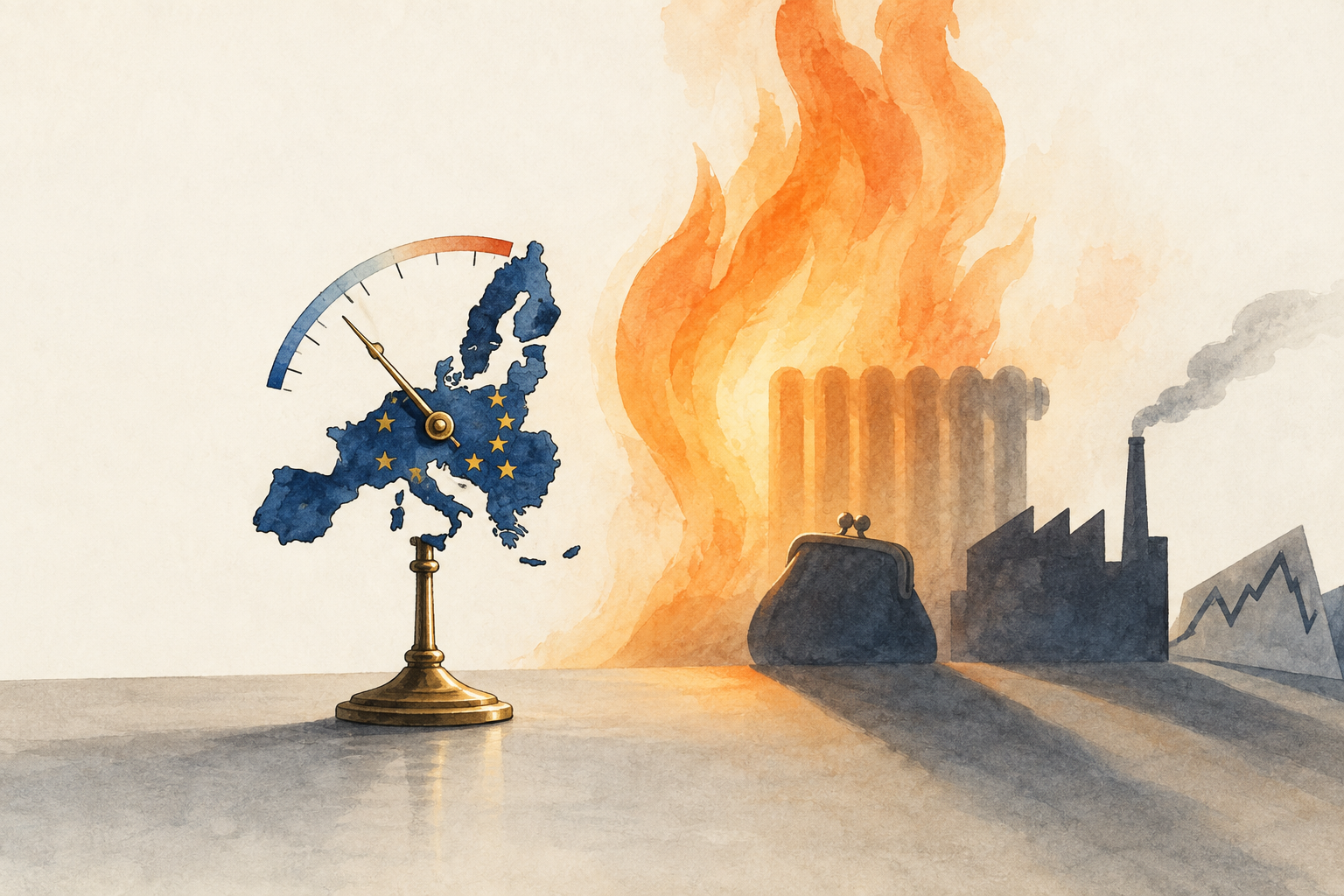
HICP
The Harmonised Index of Consumer Prices is the euro area’s standard inflation measure and the benchmark used by the ECB to assess price stability.
Sector rotation
A shift in investor preference from one part of the equity market to another, often driven by changes in growth, inflation or interest-rate expectations.
Duration-sensitive stocks
Equities whose valuations depend heavily on cash flows far in the future, making them more vulnerable when bond yields rise.
Stagflation risk
A market concern that inflation remains elevated while growth weakens, a combination that can pressure both earnings and valuation multiples.
Inflation Revised
Eurostat’s final August estimate put euro-area inflation at 3.2%, down from the 3.3% flash reading but up from 2.9% in July.
Energy Driver
Energy contributed 1.29 percentage points to the annual inflation rate, keeping the focus on cost pressures rather than pure demand strength.
Rotation Risk
Cyclicals may benefit when oil and yields ease, but rate-sensitive and margin-exposed sectors remain vulnerable to renewed bond-market pressure.
Euro-area inflation was revised slightly lower in August, but not enough to change the market narrative. Eurostat’s final reading put annual HICP inflation at 3.2%, below the 3.3% flash estimate but still above July’s 2.9% and meaningfully above the European Central Bank’s 2% target.1
The key detail for equities is composition. Energy contributed 1.29 percentage points to the annual rate, making the latest acceleration look less like a broad demand boom than another cost shock.1
That distinction matters for sector rotation. Energy-led inflation is awkward for equity markets because it can lift headline nominal revenues in some areas while squeezing household purchasing power, industrial input costs and valuation multiples elsewhere. It is particularly challenging after recent ECB tightening and a global repricing in bond markets, where higher yields have already raised the hurdle rate for long-duration assets.35
The move from a 3.3% flash estimate to a 3.2% final reading is directionally helpful, but too small to change the macro setup. Inflation is still accelerating from July and remains above target.1 Eurostat’s supporting data show energy inflation running at 14.3% in August, underscoring that the headline increase is being driven by a volatile but economically important component.2
For investors, the August report is less about the 0.1 percentage-point downward revision than the persistence of an inflation impulse central banks cannot comfortably ignore. Market-facing coverage framed the release in those terms: a modestly softer final print, but one still above the ECB’s target and linked to energy-driven price pressures after recent policy tightening.3
The immediate equity-market implication is a more selective cyclical trade. Industrials, autos, miners and consumer discretionary names can benefit when investors believe global growth is holding up and yields have stopped rising. But energy-driven inflation narrows that path by raising costs and eroding real disposable income.
Recent European trading showed how sensitive the rotation has become to oil and yields. European shares rose as oil slipped and yields stalled, with moves in miners, autos and energy tied to relief from lower oil prices and a pause in the global bond selloff.6 Another market wrap linked European sector gains to stabilising yields, softer oil and the final euro-zone inflation revision to 3.2%.7
That is the key point: cyclicals can rally when oil prices ease and yields stabilise, but the support is conditional. If energy prices resume their climb, the same sectors that look attractive on operating leverage can quickly face margin pressure, weaker demand and higher discount rates.
Miners and energy producers may retain relative support from commodity exposure. Autos, chemicals, travel and retail remain more exposed to the squeeze on consumers and input costs.
The tougher question is what happens to rate-sensitive sectors: real estate, utilities, infrastructure, telecoms and high-growth equities. A 3.2% inflation print does not necessarily guarantee more ECB tightening, but it makes it harder for markets to price a clean turn toward easier financial conditions.
ECB Vice President Boris Vujcic pushed back against oil-fuelled expectations for more rate hikes, suggesting policymakers are watching whether energy shocks feed into broader inflation rather than responding mechanically to oil alone.4 That nuance matters, but it does not fully protect duration-sensitive equities. Even if the ECB avoids validating every increase in oil prices with another hike, global bond markets have already repriced around higher borrowing costs and inflation risk.5
For equity valuation, that keeps pressure on the longest-duration cash flows. Utilities and real estate can look defensive on earnings, but they are also highly exposed to financing costs. Growth stocks face a similar challenge: when yields rise or remain volatile, future profits are discounted more heavily.
Europe’s energy exposure is also tied to currency markets. A stronger U.S. dollar can worsen the region’s energy bill because many global energy commodities are priced in dollars. Euronews reported that European markets opened higher after a Fed hike as the dollar reached a seven-week high, while Treasury-yield repricing remained central to the cross-asset backdrop.8
That leaves European investors watching three linked variables: oil, the euro-dollar exchange rate and sovereign yields. A benign mix — softer oil, stable yields and a firmer euro — would support a broader equity rally. A more adverse mix — higher oil, a stronger dollar and rising yields — would reinforce stagflation concerns and favour defensive balance sheets over broad cyclical exposure.
The issue is not confined to the euro area. The Bank of England’s September policy summary highlighted energy-price pass-through, upside inflation risks and restrictive financial conditions, while maintaining Bank Rate at 3.75%.9 The accompanying inflation-target correspondence also underlined the policy challenge created when inflation overshoots are tied to energy and external cost shocks.10 Associated Press coverage described the BoE as holding rates while warning that persistent energy volatility could still require further hikes.11
That global context matters for Europe because the valuation channel is international. U.S. markets also reacted to the mix of lower oil and easing bond pressure after a Federal Reserve hike, showing that the same oil-yield trade is shaping risk appetite beyond the euro area.12
The final August inflation print is not a major data surprise, but it is a reminder that Europe’s disinflation path remains vulnerable to energy. The downward revision from 3.3% to 3.2% reduces the headline shock, not the investment problem.
For sector allocation, that argues for caution on indiscriminate cyclical rotation and continued scrutiny of rate-sensitive equities. Energy-linked inflation can support commodity producers and some value sectors, but it also acts like a tax on consumers and a margin headwind for importers and energy-intensive industries.
Until oil, yields and the euro move in a more durable direction, European equity leadership is likely to remain tactical rather than broad-based.








Comments