Kroger’s sales cut shifts grocery debate from inflation to resilience

Identical sales excluding fuel
A same-store sales measure that strips out fuel, helping investors assess underlying grocery and pharmacy demand without volatile fuel revenue.
Inflation pass-through
The ability of retailers to raise shelf prices as supplier and operating costs rise, supporting nominal sales even if volumes are flat or down.
FIFO operating profit
A profit measure using first-in, first-out inventory accounting; grocers often use adjusted FIFO metrics to compare operating performance across periods.
Basket fragmentation
A consumer behavior pattern in which shoppers split grocery spending across multiple retailers to find better prices, promotions or convenience.
Guidance cut
Kroger lowered full-year identical-sales guidance excluding fuel to 0.2%-0.8% from 1.0%-2.0% while maintaining adjusted EPS and operating-profit targets.
EPS beat
Second-quarter adjusted EPS was $1.09, above the $1.05 consensus cited by MarketBeat, while revenue was broadly in line.
Flat food prices
US food-at-home CPI was flat month over month in August and up 2.2% year over year, limiting the inflation tailwind for grocers.
Kroger’s second-quarter report delivered a split signal food-retail investors should not ignore: adjusted EPS beat expectations, but the company cut its full-year identical-sales outlook excluding fuel to 0.2%-0.8% from 1.0%-2.0%. It kept adjusted EPS guidance at $5.10-$5.30 and adjusted FIFO operating-profit guidance at $5.0bn-$5.2bn.4
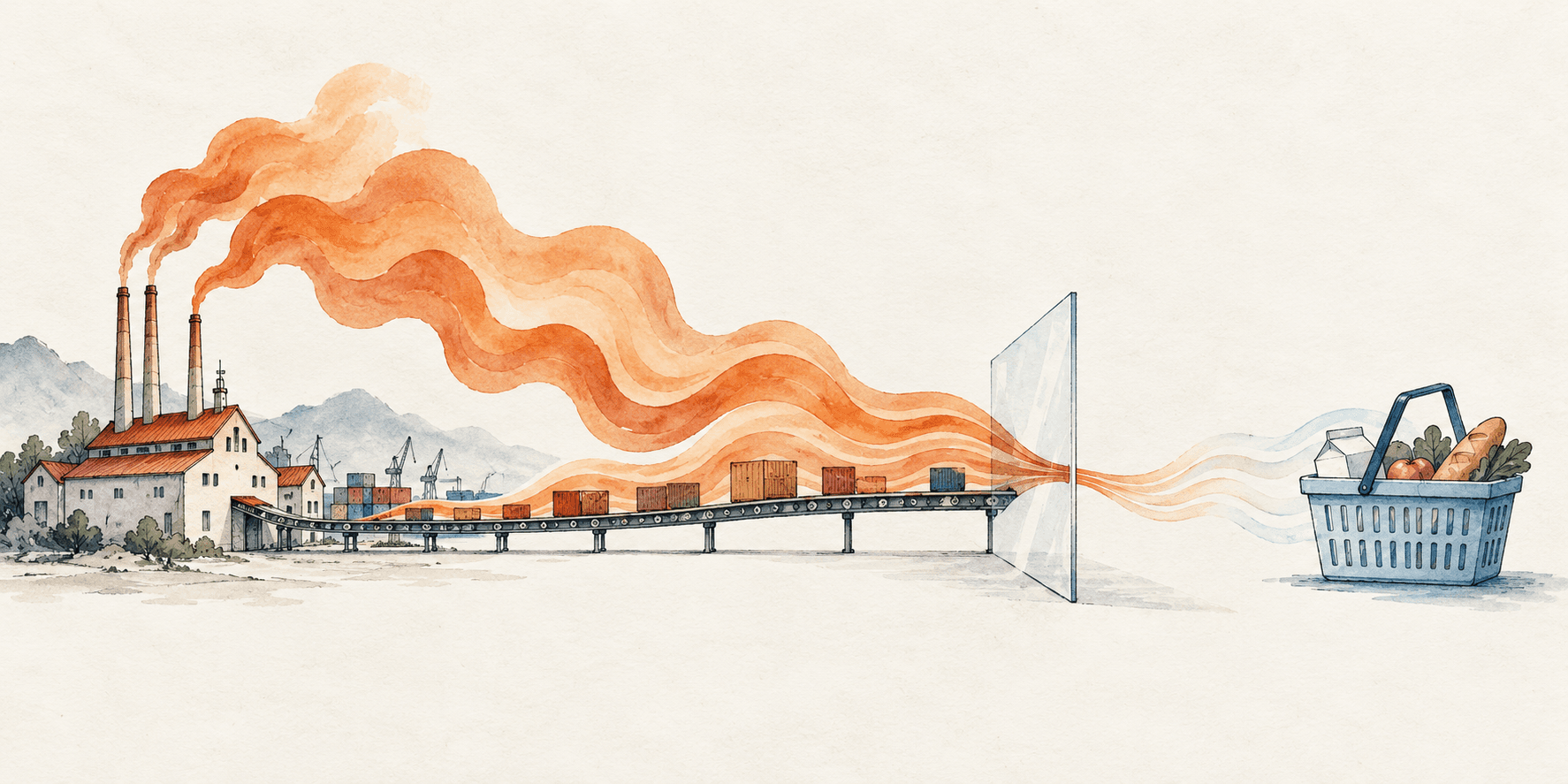
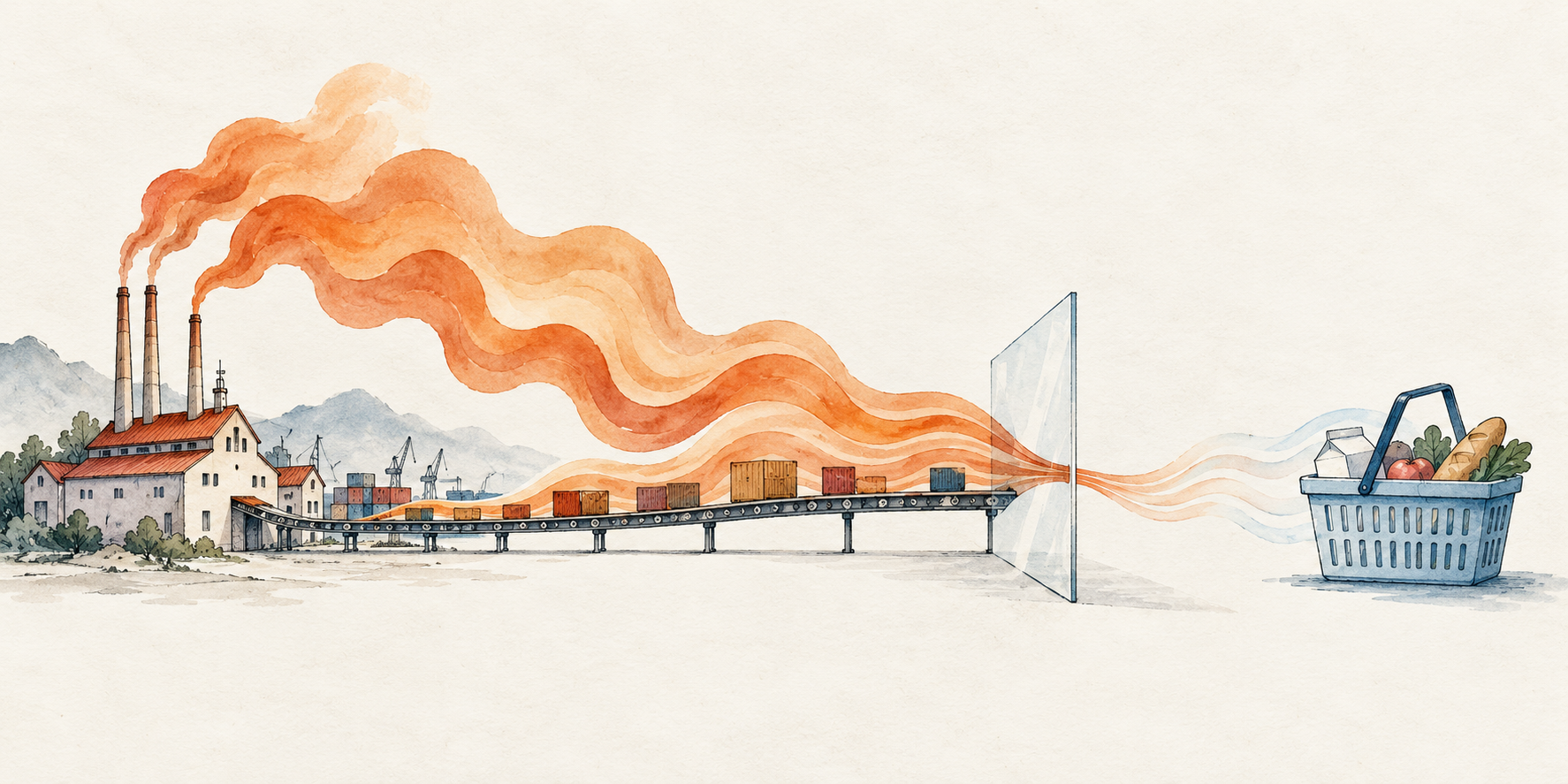
That combination shows the market story moving from inflation pass-through to volume resilience, value positioning and cost control.
The headline numbers were not weak in isolation. Kroger reported Q2 adjusted EPS of $1.09, above the $1.05 consensus shown by MarketBeat, on revenue of $34.62bn versus expectations of $34.64bn.1 Total sales rose to $34.6bn from $33.9bn a year earlier, and identical sales excluding fuel increased 0.2%.4
But that 0.2% same-store growth, down from 3.4% in the prior-year quarter, is the more important datapoint for a sector whose recent revenue growth has been heavily supported by food inflation.4
Reuters framed the cut as evidence of cautious consumer spending even in essentials. Its follow-up report noted that Kroger maintained profit targets because cost controls and higher-margin businesses helped offset softer demand.78
For investors, that is the crux. Food retail still has defensive qualities, but the earnings algorithm is becoming less about price-led sales growth and more about whether grocers can protect traffic, baskets and margins at the same time.
Kroger’s guidance cut is notable because grocery inflation is no longer doing the same work for retailers. The August CPI report showed US food-at-home prices were flat month over month and up 2.2% year over year, compared with a 3.4% increase in all-items CPI and a 16.3% rise in energy.3
In that context, a 0.2% identical-sales increase excluding fuel is not a simple inflation story. It points to limited room for real volume growth once price effects, pharmacy headwinds and category disruptions are considered.
Management’s call commentary reinforced that view. Kroger said traffic increased in the quarter but acknowledged a challenging macro backdrop, including the impact of fuel above $4 on consumer spending, softer industry top lines and customers’ continued focus on value.2 The company also said a Cyclospora outbreak cost roughly 35 basis points of identical sales excluding fuel, while lower drug prices in pharmacy reduced sales by about 140 basis points.2
Those explanations matter, but they do not change the broader read: shoppers may still be visiting stores, but basket expansion is harder to achieve.
That distinction is crucial for listed grocers globally. Traffic can hold up because food is non-discretionary; average basket size and mix are where household stress appears. Consumers can buy more private label, reduce fresh or prepared-food purchases, split baskets between retailers, buy only on promotion, or shift trips to discounters and clubs.
The demand signal is not a collapse. It is a grind: more trips do not automatically mean higher like-for-like sales.
The clearest implication is that pricing power is narrowing. During the inflationary phase, retailers could grow nominal sales through higher shelf prices even when volumes were weak. Kroger’s updated outlook suggests that phase is less reliable. If food-at-home CPI is flat month on month and consumers are more value-sensitive, further price increases risk traffic leakage and basket fragmentation rather than automatic revenue capture.311
Kroger’s margin bridge shows the trade-off. Gross margin was 22.4% of sales versus 22.5% a year earlier. The FIFO gross-margin rate excluding fuel and other items increased 13 basis points, helped by e-commerce profitability, media, pharmacy mix, sourcing initiatives and tariff refunds. That was partly offset by shrink, transportation costs and greater value delivered to customers.4
In other words, margin support came less from blunt pricing and more from mix, alternative profit pools and operating initiatives.
That makes the investment case more complex. A grocer can hold earnings while sales slow, but only if productivity, procurement, retail media, fuel, pharmacy or private-label economics keep offsetting lower operating leverage. Kroger’s operating, general and administrative rate excluding fuel and adjustments rose 33 basis points, reflecting wage investment, healthcare costs and sales deleverage, partly offset by productivity initiatives.4
This is the sector’s pressure point: low like-for-like growth magnifies every cost increase.
For European-listed food retailers, the Kroger signal is most relevant where companies have US exposure, face intense discount competition or have limited room to keep pushing price. Ahold Delhaize is the most direct read-across because of its large US business. eMarketer cited Numerator analysis showing Kroger, Albertsons and Ahold Delhaize USA lost market share in the 12 months ended June 30, while Amazon and Whole Foods, Costco and Walmart gained.11
That suggests the issue is not simply weaker US consumer demand. It is also a redistribution of grocery spend toward platforms, clubs and scaled value retailers.
For continental European grocers such as Carrefour, Ahold Delhaize, Jerónimo Martins and Colruyt, the lesson is that value credentials are becoming more important than headline food inflation. If customers are shopping across banners, discounters and online platforms, traditional supermarkets can no longer rely on convenience and assortment alone. They need sharper private-label ranges, more targeted promotions, loyalty economics and cost savings that can be visibly reinvested at the shelf.
That favors operators with scale, strong own-brand penetration and proven price perception. It is less favorable for mid-market formats caught between hard discounters on price and premium or online competitors on differentiation.
Kroger’s experience shows that maintaining profit guidance can support equity sentiment in the near term. But weak like-for-like sales raise questions about the sustainability of earnings growth if cost savings have to fund price investment for longer.
The UK read-across is similarly competitive. A September 2026 Basketr tracker covering 167,285 products across 13 UK supermarkets found 37,305 active deals. Tesco had the largest number, with 6,707 deals and an average saving of 26.3%.15 The same tracker showed large item-level price gaps, including a £3.07 gap between the cheapest and most expensive 500g beef mince products and a £2.61 gap for 1kg basmati rice.15
Those gaps matter for investors in Tesco, Sainsbury’s, Ocado and other UK-listed food retailers because they show how visible savings opportunities have become to consumers. When shoppers can identify large differences on staples, pricing architecture becomes strategic rather than tactical. Promotional intensity may defend traffic, but it can also dilute gross margin unless offset by supplier terms, private-label mix, data monetisation and productivity.
Tesco and Sainsbury’s enter that environment with stronger scale than many peers. Ocado’s exposure is more tied to online grocery economics and partner confidence. The Kroger signal does not imply UK demand is about to weaken by the same magnitude, but it does imply that investors should scrutinize like-for-like sales quality: how much is volume, how much is price, how much is mix, and how much is promotional pull-forward.
Kroger’s reaffirmed profit guidance is meaningful. The company said adjusted e-commerce sales grew 20% and Kroger Precision Marketing profit grew 24%, while management pointed to cost savings, pharmacy and fuel performance, and improved e-commerce profitability as drivers of adjusted EPS growth.4 MarketBeat’s summary also highlighted that e-commerce and retail media accelerated even as the sales outlook was reduced.1
But the investment conclusion is not simply bullish. Cost control can bridge a period of soft demand, yet it cannot indefinitely compensate for weak comps if wage, shrink, logistics and price-investment pressures persist.
The more defensive interpretation is that high-quality grocers can still defend earnings in a low-growth sales environment. The more cautious interpretation is that the sector’s top-line safety is being repriced.
For global consumer and retail investors, Kroger’s Q2 should be treated as a sector signal rather than a company-specific stumble. Grocery remains resilient relative to discretionary retail, but resilience is no longer synonymous with pricing power.
The new scorecard is traffic retention, real volume, private-label strength, promotional discipline, loyalty data, alternative profit pools and cost savings. Kroger beat EPS and kept the profit guide; the market’s next question is whether that formula still works if consumers keep buying groceries more carefully.





Comments