Primark’s delivery U-turn tests margins before ABF split

Like-for-like sales
A retail sales measure that compares revenue from stores or channels open in both periods, stripping out the effect of new openings or closures.
Demerger
A corporate separation in which a company splits businesses into distinct entities, often so investors can value them independently.
Fulfilment economics
The cost and efficiency of processing online orders, including picking, packing, delivery, returns and customer service.
Operating margin
Operating profit as a percentage of sales; for Primark, it is a key measure of whether low prices and new digital services can remain profitable.
Delivery reversal
Primark will offer home delivery in Great Britain, reversing its long-standing resistance to direct-to-consumer ecommerce.
Sales pressure
ABF expects Primark fourth-quarter like-for-like sales to fall around 3.0%, with continental Europe down around 4.3%.
Fulfilment bet
Primark is taking on Sheffield fulfilment infrastructure after a £90m transaction involving Debenhams distribution-centre automation and lease reassignment.
Associated British Foods has given Primark the online growth lever investors have long wanted. It has also added an execution burden at a sensitive point in the group’s break-up timetable.
The company said on 10 September that Primark will offer home delivery in Great Britain, reversing its long-standing reluctance to enter direct-to-consumer ecommerce. The announcement came with a weaker trading update: Primark like-for-like sales are expected to fall around 3.0% in the fourth quarter, with continental Europe down around 4.3%, while full-year adjusted operating margin is expected to be around 10%. ABF also reiterated that the planned separation of Primark from its food businesses is expected in December 2027.1
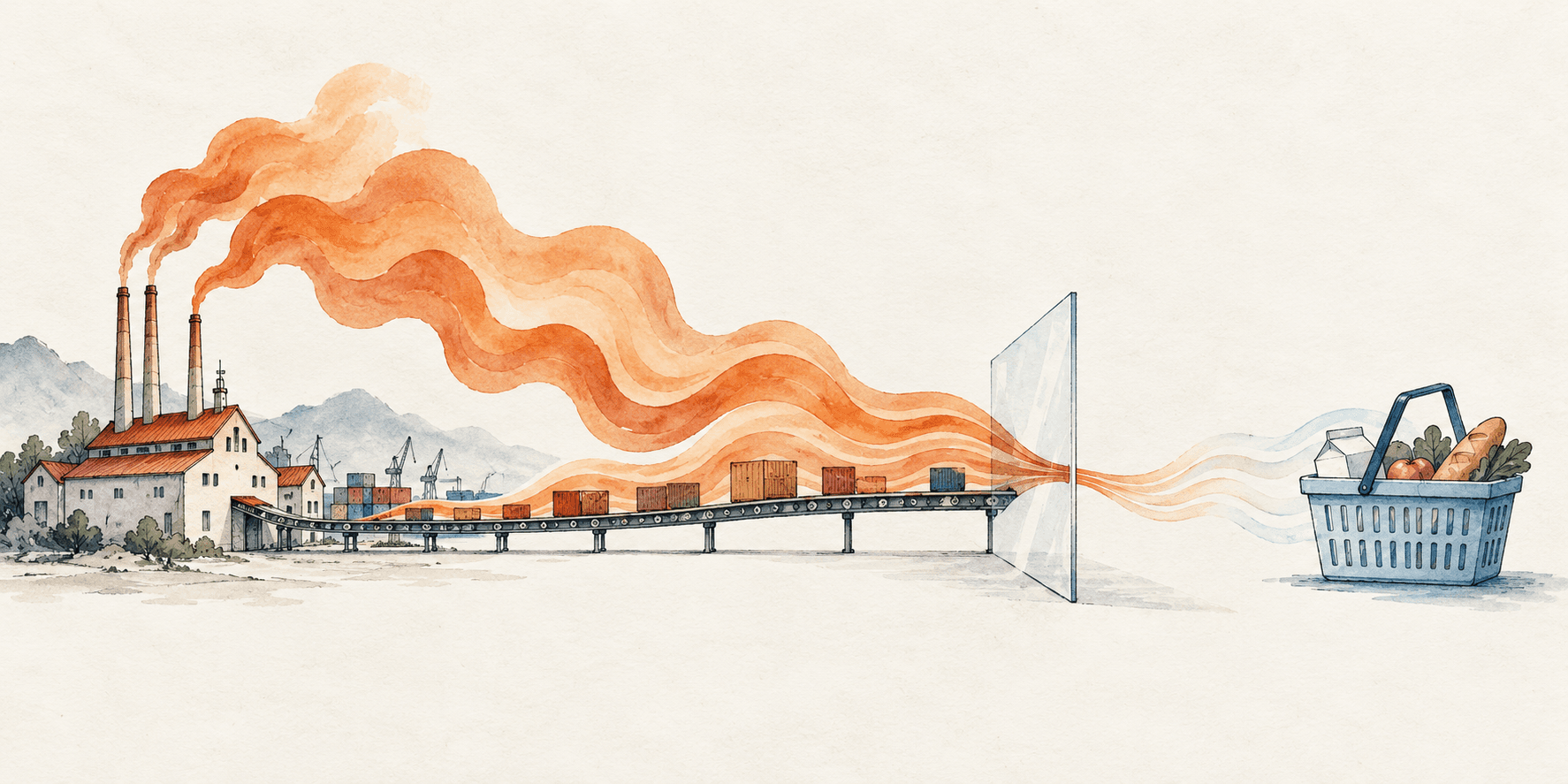
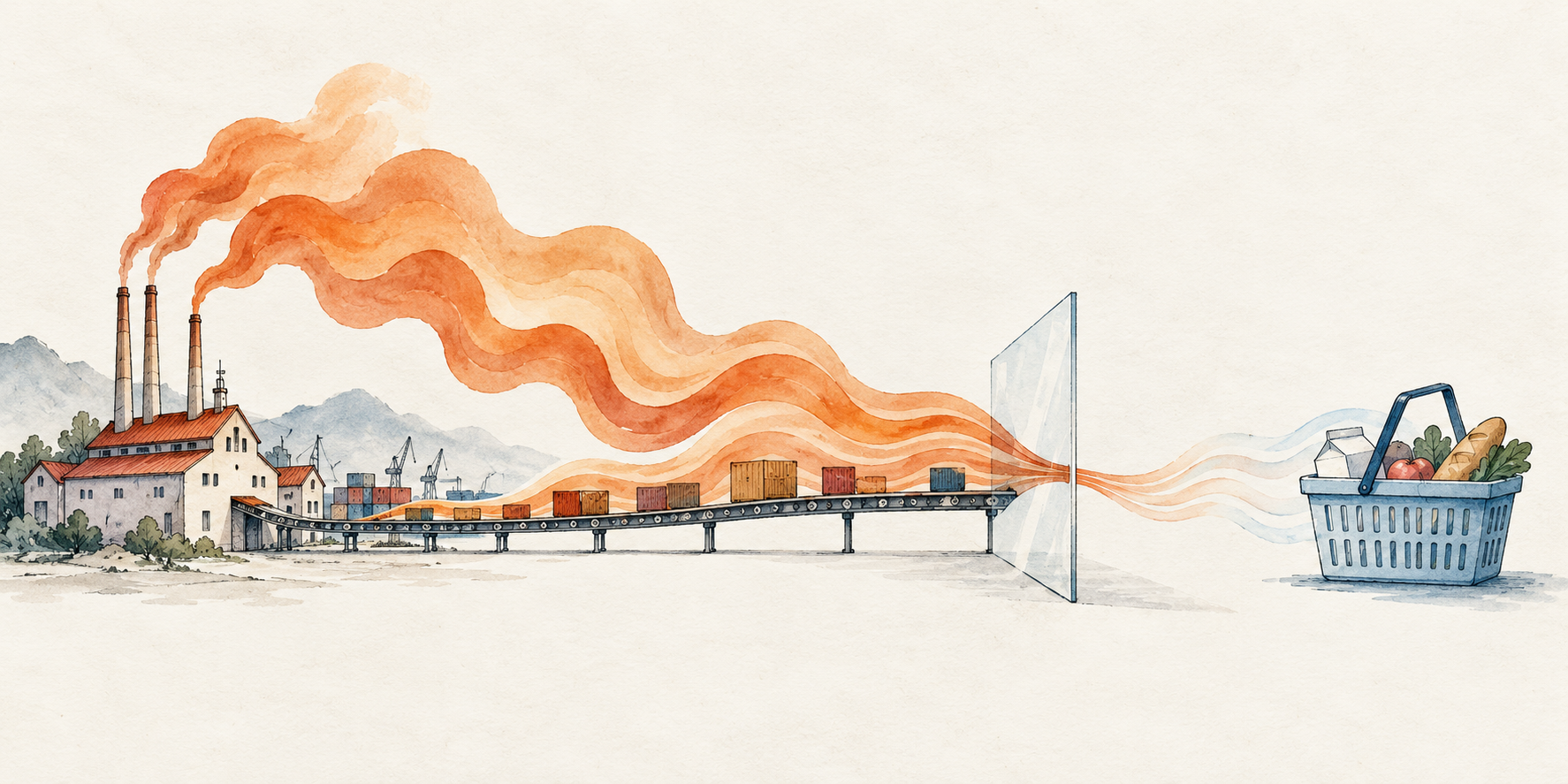
For UK equity investors, that combination matters. Home delivery may strengthen Primark’s standalone equity story by closing a structural gap versus online-enabled apparel peers. But it also tests whether Primark can add a higher-service digital channel without diluting the low-cost, high-footfall model that underpins its valuation. The announcement is therefore less a bullish read-across on consumer demand than a margin and credibility test before demerger.
Primark’s historic case against home delivery was simple: ecommerce economics were hard to reconcile with very low average selling prices, thin fulfilment margins and a store-led treasure-hunt model. Reuters noted that the retailer had previously resisted direct-to-consumer online sales even as competitors built sizeable digital operations.4
That stance is now changing. Primark said customer expectations had moved on and that progress with Click & Collect had given it confidence to expand its digital proposition.2 ABF’s RNS said the company is investing in a fulfilment facility in Sheffield to support the new home-delivery operation.3
The shift should remove one bear point in a standalone Primark valuation. A retailer with more than 450 stores but no home-delivery option in its largest UK market risked looking strategically incomplete after separation. Adding delivery gives management a route to larger online baskets, wider product discovery and richer customer data, while keeping stores central to the brand.
But the timing also points to pressure. The delivery decision was announced in the same update as weaker like-for-like sales, notably in continental Europe, where trading remains soft.1 That makes the pivot look partly defensive. Primark is not launching home delivery into accelerating underlying demand; it is doing so while trying to stabilise growth ahead of a corporate separation.
The potential upside is clear. A credible home-delivery offer could reduce the discount investors apply to Primark for lacking a full ecommerce channel. It may also support a cleaner equity narrative when ABF separates Primark from the food businesses: a global value-fashion retailer with a large store estate, a developing digital channel and a path to customer-data monetisation.
The risk is that the same channel exposes costs the store model has largely avoided. Picking, packing, returns, last-mile delivery and customer-service infrastructure can quickly erode economics in low-ticket apparel. That is why ABF’s guidance that Primark’s full-year margin should be around 10% matters. Investors will want evidence that online growth does not come at the expense of the profitability that has historically set Primark apart from many fashion peers.1
Reuters reported that ABF’s chief executive pointed to improved home-delivery economics, but also noted that the company did not provide a launch timetable or detailed financial targets for the service.5 That leaves the market with an execution question, not a clean earnings upgrade.
The key investor debate is not whether Primark needed ecommerce capability. It did. The question is whether the company can design home delivery as an extension of its low-cost operating model, rather than as a concession to industry norms that weakens returns.
The Sheffield fulfilment investment is the clearest sign that Primark is moving beyond a trial. Boohoo Group’s Debenhams business said it sold distribution-centre automation and reassigned the lease at the Sheffield site to Primark Stores Limited for £90m in cash.11 Retail reports also linked the facility to Primark’s planned home-delivery launch.10
That gives Primark infrastructure, but it also adds fixed-cost discipline to the investment case. Automated fulfilment can support scale and efficiency, but it requires volume, systems integration and inventory accuracy. For a retailer whose competitive advantage has been built on simple operations, low prices and store productivity, that complexity is not trivial.
The geographic scope is also narrower than a headline reading of “UK delivery” might suggest. The service is planned for Great Britain — England, Scotland and Wales — with Northern Ireland excluded for now, according to reports.12 That limitation is commercially understandable. It also reinforces that this is an operational rollout, not just a website switch-on.
The online pivot would look more convincing if Primark’s core like-for-like trends were stronger. Instead, ABF’s update showed fourth-quarter Primark like-for-like sales expected down around 3.0%, including a sharper fall in continental Europe.1 Sharecast reported that full-year Primark like-for-like sales are expected to decline 2.6%, with fourth-quarter total sales growth partly offset by weaker underlying demand.7
That matters because the demerger case depends on investors valuing Primark as a focused retailer with visible growth, not as a mature value chain playing digital catch-up while demand weakens in important markets. The Guardian linked the delivery move directly to the planned split and reported analyst expectations around the future valuation of Primark and the remaining food operations.6
Market reaction suggests investors are not yet willing to capitalise the online option without evidence. Reuters reported that ABF shares fell more than 11% after the announcement and trading update.5 That points to concern not about ecommerce in principle, but about the mix of weaker sales, limited financial detail and new execution demands.
Primark’s home-delivery reversal improves the company’s strategic completeness before separation. It gives management an answer to one of the most persistent questions about the business and may broaden the future investor base for a standalone Primark.
But it does not solve the growth case by itself. Until ABF discloses launch economics, delivery charges, return rates, basket-size assumptions and incremental capital needs, investors should treat the move as optionality rather than earnings certainty.
The demerger timetable makes that distinction important. With separation expected in December 2027, Primark has roughly 15 months to show that home delivery can support, not dilute, its core proposition.1 If Sheffield scales efficiently and the digital channel lifts customer engagement without pressuring margins, the standalone Primark story becomes more compelling. If fulfilment costs rise while like-for-like sales remain negative, the online reversal could become the first major execution risk of the post-ABF investment case.
For now, Primark has closed a strategic gap. It still has to prove that doing so does not open a margin one.





Comments