US inflation shock is setting the price for UK and European duration

Duration
A bond’s sensitivity to changes in interest rates; higher duration assets typically fall more when yields rise.
PPI
The Producer Price Index measures prices received by producers and can signal pipeline inflation before it reaches consumers.
Gilts
UK government bonds; their yields are a benchmark for UK borrowing costs and mortgage-rate expectations.
Bear-flattening
A yield-curve move in which short-term yields rise faster than long-term yields, often because markets price tighter central-bank policy.
U.S. Bureau of Labor Statistics
government
Producer Price Index News Release summary - 2026 M08 Results
Reuters via MarketScreener
news
US producer prices increase as expected in August; but key details firmer
Reuters via MarketScreener
news
Wall St slips after hotter-than-expected producer inflation data
PPI shock
US final-demand PPI rose 0.4% in August and 5.4% year-on-year, with energy and diesel central to the move.
Oil channel
Brent’s move above $100 has turned US inflation data into a pricing input for UK and European duration.
Rate pain
UK homebuilders fell 2.15% as gilt yields surged and investors repriced rate-sensitive equity sectors.
US inflation risk has become the price-setter for global duration. Producer prices rose 0.4% in August and 5.4% from a year earlier, with energy and diesel costs doing much of the damage. The print landed as investors awaited the August CPI release due on September 11, ahead of the Federal Reserve’s September 15-16 meeting.12
The market implication is clear. If CPI confirms the PPI signal, the first move is likely to be higher front-end Treasury yields. The second-round impact will be felt in gilts, Bunds, sterling and rate-sensitive equity sectors. The US inflation story is no longer just a Wall Street valuation problem. After Brent’s renewed break above $100, it is setting the marginal price for UK and European duration.35
The headline number was not just the 5.4% annual PPI rate, slightly above the 5.3% Reuters-polled expectation cited in the market reaction. The composition mattered more. Final-demand goods rose 1.1% in August, final-demand energy rose 4.2%, and diesel fuel jumped 24.1%, accounting for more than a third of the increase in producer-goods prices.13
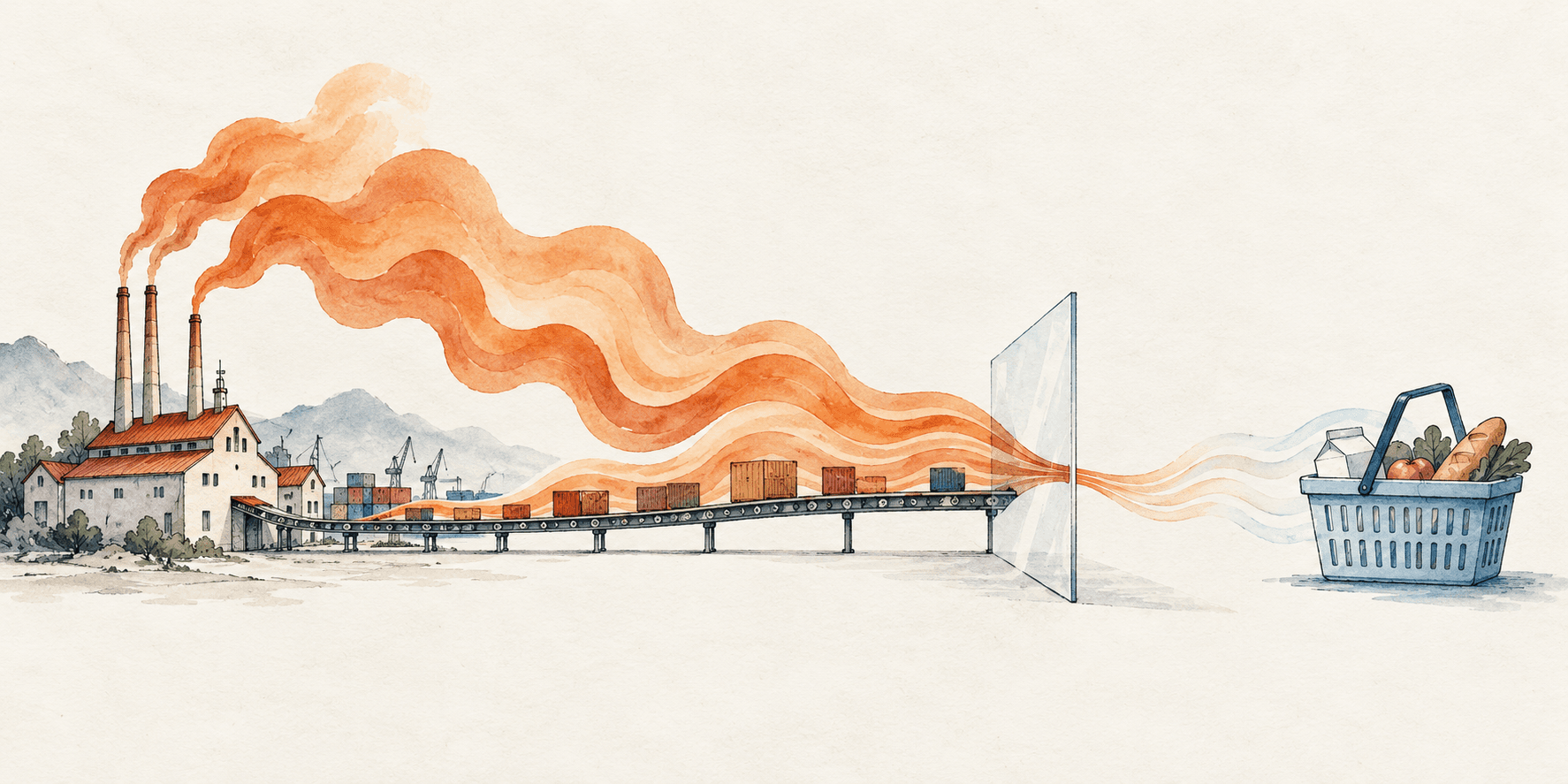
That mix points to a cost shock with a transport channel. The PPI report also showed transportation and warehousing services up 2.3%, while truck transportation of freight rose 2.0%. In macro terms, that is how oil and refined-fuel stress can move from commodity screens into distribution costs, corporate margins and, eventually, consumer prices.1
Reuters reported that economists saw the PPI details as consistent with core PCE potentially rounding up to 0.3% in August. Fed funds futures moved to price roughly a 70% probability of a 25-basis-point Fed hike at the September 15-16 meeting, up from around 62% before the report.2
That is why Friday’s CPI matters asymmetrically. A soft print can restrain hike pricing, but a second upside surprise would validate the market’s shift toward renewed tightening.
The cleanest transmission channel is the US curve. After the PPI release, two-year Treasury yields rose to 4.5287%, their highest since 2024, while the 10-year yield reached 4.9198%, its highest since 2023.3 In the end-of-session update, Reuters reported that 10-year yields rose to nearly three-year highs, 30-year yields hit their highest in more than 19 years, and two-year yields reached their highest in more than two years.4
A second inflation surprise would probably bear-flatten the curve first. Front-end yields would reprice the probability of a September hike and potentially a higher terminal rate. But the longer end is also vulnerable because this inflation shock is arriving through oil, fiscal-risk premia and supply concerns, rather than a simple demand boom. That is a harder backdrop for duration investors because it raises nominal yields even as it threatens future real growth.
Equities are already reflecting that discount-rate shock. The S&P 500 fell 0.58%, the Nasdaq 0.65% and the Dow 0.60% on September 10, with materials and technology among the weakest S&P sectors.4 Higher yields directly pressure long-duration equity cash flows. They also tighten financial conditions for consumers and companies.
The UK is where the US inflation surprise becomes most clearly global. Ten-year gilt yields jumped 10 basis points to 5.378%, their highest since July 2007, while 20-year and 30-year gilt yields reached levels last seen in 1998.6 Five-year gilt yields rose 15 basis points to 4.95%, and two-year yields climbed to 4.87%, their highest since October 2023.6
That is not simply a domestic UK story. Reuters linked the gilt selloff to robust US data, the oil-price rebound and rising global rate expectations.6 The UK also has its own vulnerabilities: a large refinancing calendar, high inflation sensitivity and a housing market that transmits rate expectations quickly.
The primary market confirms the repricing. The UK Debt Management Office sold £5 billion of 4⅝% Treasury Gilt 2030 at an average accepted yield of 4.786%, with total bids of £16.184 billion and a 3.24-times cover ratio.10
Demand was present, but at materially higher funding costs. For macro investors, that distinction matters. Gilts are clearing, but they are clearing at yields that tighten fiscal and private-sector financial conditions.
The European Central Bank’s decision on September 10 reinforced the cross-Atlantic spillover. The ECB raised its three key rates by 25 basis points and explicitly cited Middle East conflict-related inflation pressures, with the deposit rate moving to 2.50% from September 16.9
That changes the read-through from US CPI. A hot US number would not merely lift Treasury yields. It would strengthen the case that the global oil shock is delaying disinflation in economies dependent on imported energy. Reuters’ global markets coverage tied the same session to Brent above $100, ECB tightening expectations and higher yields across German Bunds, French OATs and UK gilts.5
The euro area’s problem is that oil-led inflation is a terms-of-trade shock. Higher rates cannot produce more energy supply, but central banks may still tighten if they fear second-round effects in wages, services and expectations. That makes European duration especially exposed to a US CPI surprise that confirms pipeline inflation rather than contradicting it.
Sterling sits between two forces. Higher global yields and rising UK rate expectations can support the currency mechanically, particularly if markets bring forward Bank of England tightening. But the same oil shock that lifts yields also worsens the UK growth and consumer-income outlook.
Reuters reported sterling around $1.3555 as currency markets remained subdued despite the oil shock, with investors focused on US CPI as the last major release before the September 15-16 FOMC meeting.7 That subdued response should not be mistaken for insulation.
If US CPI is hot, the dollar could regain support from higher front-end US yields. If gilt yields rise faster than Treasuries, sterling may instead trade as a fragile high-yielding currency, supported by rates but capped by recession-risk premia.
For investors, the sterling signal is therefore less directional than diagnostic. A rising pound alongside higher gilt yields would suggest credible rate support. A falling pound alongside higher gilt yields would be more concerning, implying the market is treating UK duration as a risk-premium problem rather than a pure policy-rate repricing.
The equity-sector message is consistent across markets: energy is the relative winner, while long-duration and rate-sensitive sectors are the losers. In London, the FTSE 100 fell 0.57% for its fifth straight decline and the FTSE 250 dropped 0.92%, while energy stocks rose 1% as Shell and BP gained.8
The pain was concentrated where higher discount rates and borrowing costs matter most. UK homebuilders fell 2.15% as government bond yields climbed across the curve, while industrial metal miners dropped 4%.8 In the US, technology and materials led S&P 500 losses after the PPI release, and the broader market weakened as Treasury yields rose.34
If CPI surprises higher, the likely sector playbook is familiar but sharper: pressure on homebuilders, real estate, utilities, leveraged consumer discretionary names and expensive technology; relative support for energy and possibly banks, though banks’ benefit from higher rates would be limited if credit risk begins to rise.
The CPI threshold for markets is now lower than it was before the PPI release. Investors do not need a dramatic upside shock to extend the move. They need only enough evidence that producer-cost pressures are reaching consumers and that the Fed cannot safely look through oil.
The key watchpoints are core CPI momentum, shelter stickiness, energy pass-through, airfares and medical-services components that matter for PCE translation. Reuters noted that airline fares and hospital services feed into the Fed’s preferred PCE inflation gauges, making the PPI details relevant beyond the headline wholesale number.2
For global macro portfolios, the conclusion is that US CPI is functioning as a global duration event. A benign release would allow some relief in Treasuries and gilts. A second inflation surprise would likely push two-year Treasury yields higher, pull the long end with them, lift UK and European yields, test sterling’s rate-support narrative and deepen the rotation away from rate-sensitive equities.
Oil has turned a US data print into a cross-market inflation test.






Comments