EU procurement overhaul tests capitals’ willingness to pool buying power

Regulation vs directive
An EU regulation applies directly in all member states, while a directive must be transposed into national law, leaving more national discretion.
European preference
Procurement rules or award criteria that allow public buyers to favour EU or covered-origin suppliers, products or services under defined conditions.
Best Price-Quality Ratio
An award method that weighs quality factors such as sustainability, social value, innovation or resilience alongside price.
Ordinary legislative procedure
The standard EU lawmaking process in which the European Parliament and Council negotiate and adopt a Commission proposal.
European Commission, DG Internal Market, Industry, Entrepreneurship and SMEs
government
Proposal for a regulation on public contracts and concessions
European Commission
government
COM(2026) 590 final — Proposal for a Regulation on public contracts and concessions
European Commission
government
SWD(2026) 590 — Subsidiarity grid accompanying COM(2026) 590
Single rulebook
COM(2026) 590 would replace the 2014 procurement directives with a directly applicable EU regulation.
€650m savings
The Commission estimates annual administrative savings of €650 million for public buyers and economic operators.
Preference split
France is aligned with a harder European preference approach, while several free-trading capitals warn of costs and weaker competition.
The European Commission opened a politically sensitive fight over control of Europe’s public purchasing power on 9 September, proposing a directly applicable Public Procurement Act to replace the three 2014 directives governing public contracts, utilities and concessions.1
The proposal, COM(2026) 590, would shift the EU from a directive-based model — under which member states transpose common rules into national law — to a regulation that is binding in full and directly applicable across the bloc. If adopted by the co-legislators, it would repeal Directives 2014/23/EU, 2014/24/EU and 2014/25/EU, consolidate procurement rules spread across sectoral legislation, and apply two years after entering into force.2
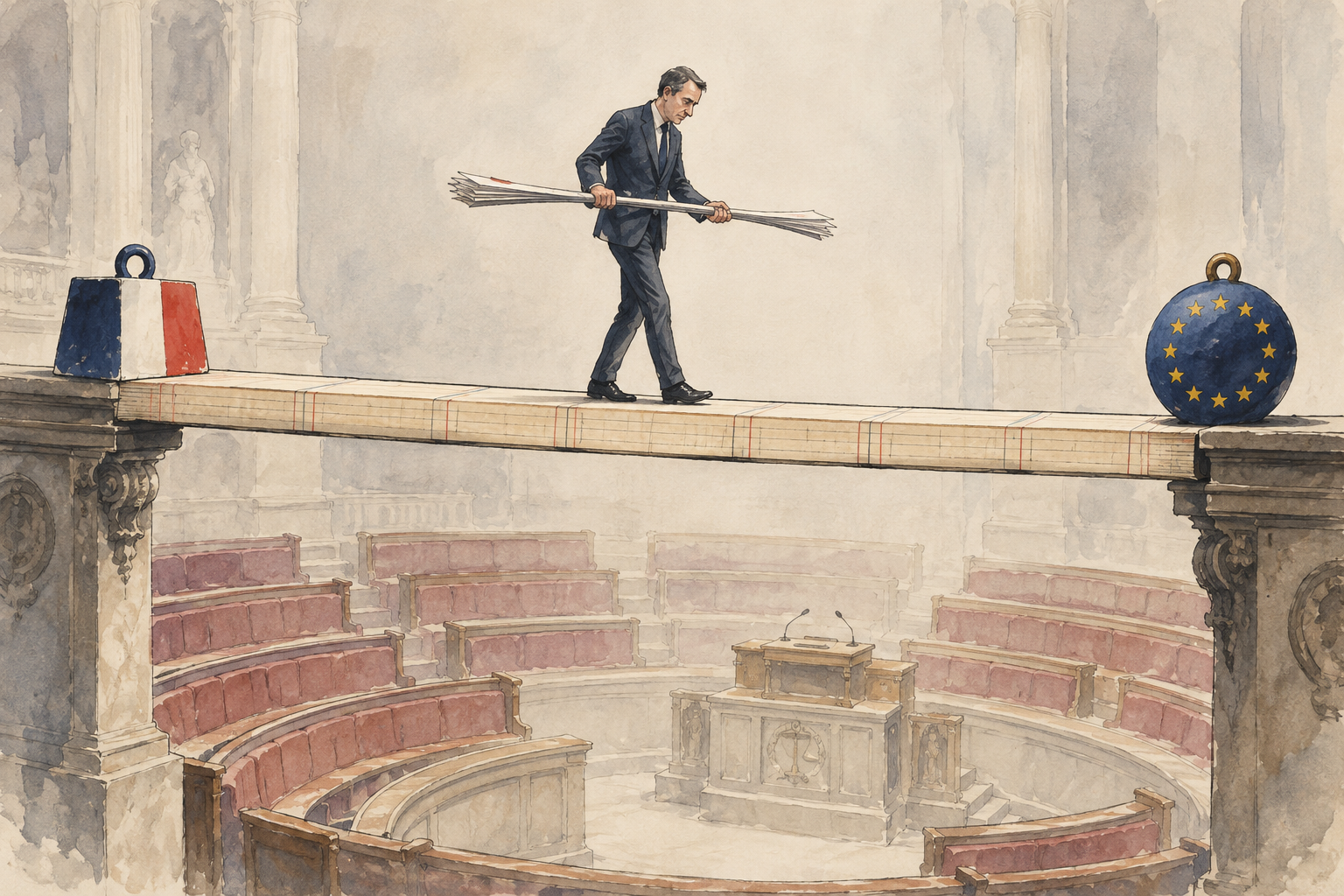
That legal shift is the core sovereignty test. Brussels argues that only a more harmonised EU framework can reduce fragmentation, improve cross-border access and turn public procurement — about 15% of EU GDP — into a lever for competitiveness, innovation and economic security.24 Member states must now decide whether those gains are worth ceding discretion over a policy area that shapes hospitals, schools, infrastructure, energy systems and local services.
The proposal will be negotiated under the ordinary legislative procedure by the European Parliament and the Council of the EU before it can be adopted.7 The hardest Council debate is likely to be less about whether procurement rules should be simplified than about how far the EU should allow, encourage or require public buyers to favour European suppliers.
The Commission presents the Act as a simplification package, but its political content goes further. It would consolidate the existing directives into one legal instrument, reduce the number of main procedures, make negotiations easier, encourage market consultations and add a dedicated innovation procedure for solutions not yet available on the market.27
It would also create an integrated digital procurement marketplace through interoperable national e-procurement platforms. The Commission says companies could submit tenders through connected platforms using a “once-only” principle, reducing repeated documentation requests and improving transparency, data exchange and anti-fraud capabilities.7
The headline cost claim is €650 million in annual administrative savings: €80 million for public buyers and €570 million for economic operators.7 The Commission’s executive summary says the reform is intended to simplify procedures, improve SME and cross-border access, increase transparency and support strategic goals including autonomy, sustainability and innovation.6
The Act would also move award logic away from lowest price. The Commission proposes making the Best Price-Quality Ratio the standard award method, with quality criteria generally carrying at least 30% of the weighting, and 50% for labour-intensive contracts, under a comply-or-explain model.7 Quality may include environmental, social, innovation, security, resilience and European-preference considerations.7
The institutional bet is that a regulation will do what directives have not: produce uniform application. The Commission’s subsidiarity grid says national action alone would fragment the internal market, while an EU-level approach would improve consistency, predictability and interoperability.4
That is a strong centralisation argument. It says, in effect, that procurement above EU thresholds is no longer mainly a national administrative function, but a single-market and geopolitical instrument. The Commission says member states acting alone have limited capacity above procurement thresholds because the area is also shaped by international government-procurement commitments.4
Brussels-based reporting captured the practical consequence: replacing directives with a regulation would remove a significant amount of member-state room for manoeuvre, even as the Commission argues that public buyers would gain operational flexibility inside the common framework.15
This distinction will matter in Council. Governments may accept fewer procedures, better data and interoperable platforms. They may be more reluctant to accept Commission powers and common rules that determine when public buyers can prefer EU-linked bidders, restrict third-country participation or apply origin-based requirements in strategic sectors.
The proposal introduces a horizontal European preference framework for procurement. According to the Commission, public buyers could apply preference requirements by restricting participation, requiring a minimum Union or covered origin, or granting evaluation preferences. The Commission could also restrict access where a market-access analysis finds that a third country has not granted EU operators fair access, or where restrictions are needed to protect essential Union interests.27
The framework is designed to sit alongside the EU’s international obligations and clarify which operators, goods, services and works are covered by procurement commitments such as trade agreements or the WTO Government Procurement Agreement.2 That safeguard is meant to keep “Buy European” politics from becoming legally disorderly protectionism.
But the politics are already divided. Brussels Signal reported that France has pushed for a harder “Made in Europe” standard, while Germany has favoured a looser “Made with Europe” approach open to trusted partners.14 The same report said the Czech Republic, Estonia, Finland, Ireland, Latvia, Malta, Portugal, Slovakia and Sweden warned in a December 2025 joint paper that strong preference rules could raise prices, weaken competition and disrupt supply chains.14
Three broad camps are emerging as negotiations begin. France and like-minded industrial-policy governments are likely to press for a robust preference tool in strategic sectors. Free-trading and smaller open economies are likely to insist on narrow, legally controlled safeguards to avoid higher costs and retaliation. Germany’s position may prove pivotal if it tries to bridge resilience concerns with supply-chain openness.
The Parliament is unlikely to treat the file as a simple deregulation exercise. The Commission’s text already elevates environmental, social and innovation goals, but civil-society groups are pushing for stronger obligations.
Swedwatch said the proposal moves in a promising direction by reducing reliance on lowest price and recognising supply-chain working conditions, but warned that it does not embed mandatory human-rights and environmental due-diligence requirements strongly enough.12 That line of criticism is likely to find allies among lawmakers who want procurement to enforce labour, climate and due-diligence standards more directly.
Business groups are pulling in the opposite direction. BusinessEurope welcomed digitalisation and simplification but warned that procurement should not become a catch-all for every strategic objective, arguing that overloading tenders could reduce competition and increase administrative complexity.11
Sectoral lobbies will also test the promise of simplification. EurEau, the water-sector federation, welcomed consolidation but said the proposal misses a chance to align procurement treatment for drinking-water and wastewater operators, warning that different regimes inside the same sector could preserve complexity and legal uncertainty.13
The procurement proposal was published alongside the Commission’s European Innovation Act package, reinforcing the broader political message: EU rules should help European ideas scale, attract finance and reach public buyers faster.8
The innovation plan includes a common approach for research and development procurement intended to give public buyers legal certainty, help new technologies reach the market faster and make joint R&D procurement across member states easier.8 The Commission says those measures could save public buyers €1 billion a year and generate €25.92 billion in additional annual profits for companies.8
The link matters because procurement is one of the few industrial-policy tools available across all levels of government. If public buyers can specify challenges rather than fixed technical solutions, coordinate across borders and use quality criteria more systematically, procurement can become a demand-side instrument for EU innovation policy, not just an administrative purchasing process.
The central tension is whether European preference can be made compatible with the single market’s anti-fragmentation logic. The Commission’s answer is to centralise preference rules rather than let sectoral or national approaches proliferate. The proposal says future EU preference mechanisms should use the Act as a starting point and warns that divergent sectoral approaches would damage legal certainty, equal treatment and the internal market.2
That is both a safeguard and a power claim. It reassures free-trading capitals that “European preference” will be governed by common rules and international commitments. But it also places the Commission at the centre of market-access analysis, digital procurement infrastructure, delegated updates and the boundary between open competition and strategic exclusion.
For member states, the question is not simply whether they want to buy more European. It is whether they want the Commission and a directly applicable regulation to define the conditions under which all public buyers may do so.
The first test will be Council alignment. If France secures support from governments prioritising industrial autonomy, the preference provisions could harden. If the free-trading coalition expands, the Council may narrow the scope of origin-based tools, strengthen cost and competition safeguards, or require tighter justification before exclusions can be used.
The second test will be Parliament’s committee work. Lawmakers are likely to probe whether the quality-weighting system has enough force, whether due-diligence and environmental criteria should be mandatory in more cases, and whether SMEs benefit from simplification or face new compliance burdens.
The third test will be institutional control. The proposed two-year deferred application gives administrations and companies time to adapt, but it also gives negotiators room to fight over delegated powers, digital infrastructure, data obligations and the balance between public-buyer flexibility and member-state discretion.2
The Commission has framed the Act as a way to make public money work harder for Europe. The negotiations will show whether governments agree on what “for Europe” means: a cleaner single rulebook, a stronger preference for European supply, or a narrower set of safeguards to prevent sovereignty politics from fragmenting the market it is meant to strengthen.





Comments