Rayner’s LGR pause tests devolution against due process

Local government reorganisation
A process by which ministers change council structures, often replacing county and district councils with larger unitary authorities.
Unitary authority
A council responsible for most local government services in its area, rather than splitting functions between county and district councils.
Rewiring the State
A political phrase used to describe shifting power and delivery capacity away from central government and towards regional and local institutions.
No.10 North
A term associated with strengthening central government’s regional presence and linking national priorities more directly to delivery outside Westminster.
Epsom & Ewell Times
news
The shake up of Epsom and Ewell’s local government: was it all a waste of time as Rayner puts pause on LGR elsewhere?
Future Suffolk / Suffolk LGR Hub
government
Government withdraws Suffolk Local Government Reorganisation decision
UNISON
other
Council reorganisation pause must not deepen uncertainty for staff, says UNISON
Untracked bias
100% of tracked sources are High factuality
Bias and factuality ratings from Media Bias Fact Check. Outlets without a rating are marked “Untracked.”
Decisions withdrawn
Government decisions on local government reorganisation in Essex, Hampshire, Norfolk and Suffolk have been withdrawn while 14 other areas are paused.
2027 polls proceed
May 2027 district and borough elections in affected areas are now set to take place on existing boundaries.
Councils seek clarity
Councils and unions warn that the pause risks wasted costs, workforce uncertainty and disruption to service planning.
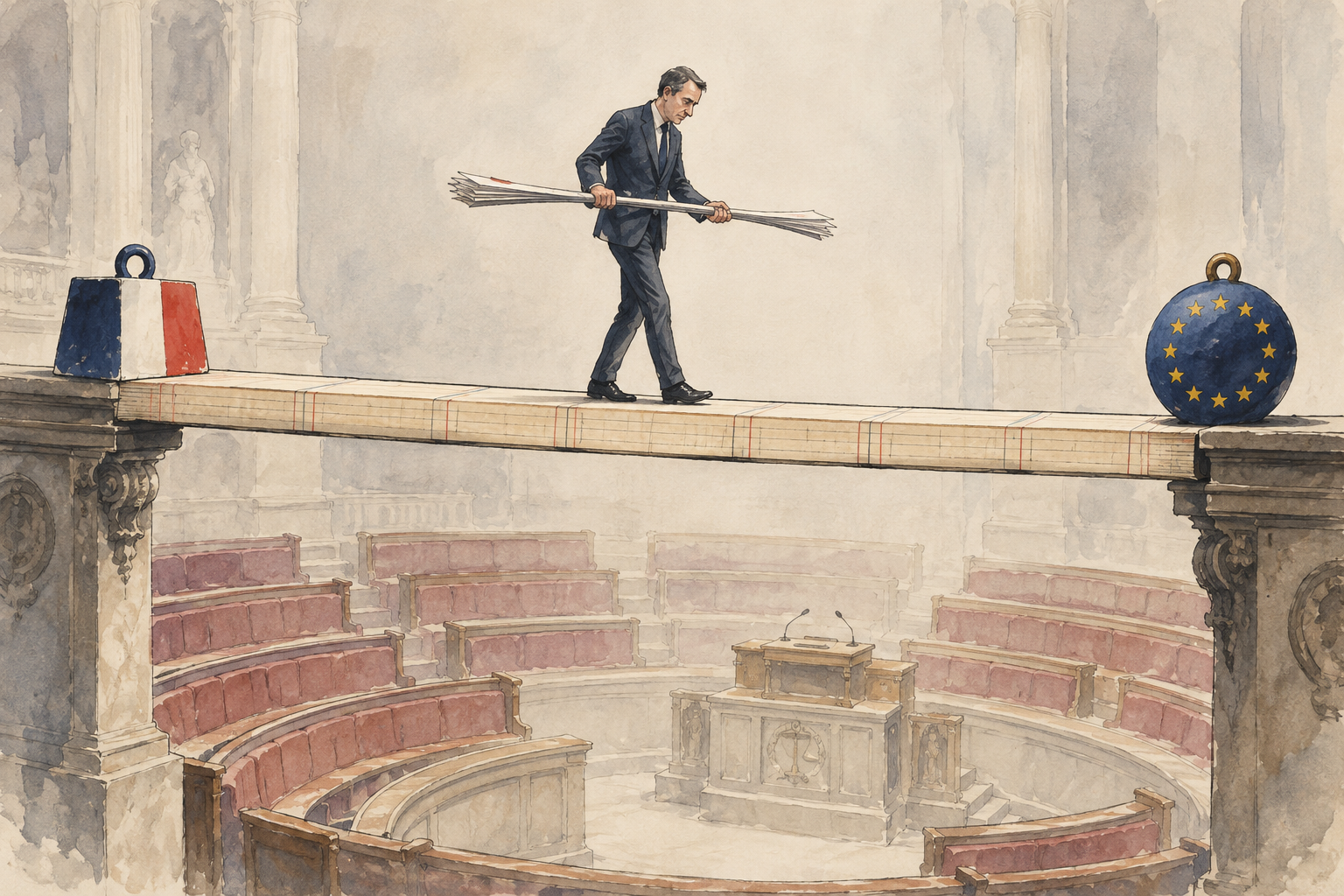
Angela Rayner’s decision to withdraw local government reorganisation decisions in Essex, Hampshire, Norfolk and Suffolk, and pause plans affecting 14 other areas, has turned a flagship part of the government’s “Rewiring the State” agenda into a test of legal resilience, ministerial control and local confidence.
The immediate effect is clear: May 2027 district and borough elections in affected areas are now expected to proceed on existing boundaries, rather than under the new structures ministers had been preparing to impose or approve.2 The wider consequence is more complex. A programme designed to align council restructuring with devolution, mayoral governance and No.10 North’s regional priorities now depends on whether ministers can rebuild a process capable of surviving legal challenge without prolonging uncertainty for councils, staff and voters.
Rayner has defended the pause by citing updated legal advice and looming court cases, arguing that ministers needed to ensure the reorganisation process could withstand scrutiny.6 That explanation may reduce the government’s legal exposure, but it does not remove the political cost. Councils have spent money and officer time preparing for changes that are now suspended or withdrawn, while employees face renewed uncertainty over future employers, roles and services.34
The government’s local government reorganisation programme was intended to replace two-tier county and district systems in selected areas with larger unitary authorities. In theory, that would simplify accountability, reduce duplication and make it easier to pair local services with wider devolution deals.
In practice, the pause has reopened basic questions about process. The Suffolk LGR Hub confirmed that the government had withdrawn its Suffolk decision, paused decisions in 14 other areas, and said May 2027 elections would go ahead under existing arrangements.2 Local reports in Hertfordshire and Cambridgeshire show the same pattern: councils that had been planning for structural change are now preparing for elections and governance arrangements that had appeared to be on borrowed time.710
That matters because the “Rewiring the State” agenda depends not only on passing powers down from Whitehall, but also on deciding which local institutions are ready to receive them. National political analysis has linked the LGR pause to the government’s wider devolution strategy, including the influence of Andy Burnham’s arguments for rewiring central-local relations and the role of No.10 North in shaping regional delivery.8
The pause exposes a tension inside the programme: ministers want speed and alignment, but local government reform is legally constrained, locally contested and operationally disruptive.
The sharpest council response has come from Hampshire. East Hampshire District Council said the government should cover costs incurred as a result of the LGR reversal, arguing that councils had acted on ministerial direction and spent public money preparing for a model now withdrawn.4
In a separate statement, the council said it would not “stand still” while government went “round in circles”, pointing to the impact of renewed uncertainty on local planning, finances, services and decision-making.5 The complaint is not only about wasted preparation. Councils facing possible abolition or merger must decide whether to defer investment, reshape senior teams, renegotiate contracts or proceed as normal despite not knowing what legal entity may exist after 2027.
Public-sector legal analysis has identified similar operational risks across affected areas, including implications for contracts, staffing, service continuity and governance plans tied to devolution.9 Those risks grow the longer the review continues without a clear timetable.
Surrey stands out as an exception. Local analysis in Epsom and Ewell noted that Surrey’s implementation continues while decisions in Essex, Hampshire, Norfolk and Suffolk have been withdrawn and other areas paused.1 That contrast may help ministers argue the programme has not collapsed. But it also creates a patchwork in which some areas continue towards reorganisation while neighbouring or comparable counties wait for revised decisions.
For council workforces, the pause is not an abstract constitutional dispute. UNISON warned that the reorganisation delay must not deepen uncertainty for staff, highlighting concerns over job security, service continuity, funding and the need for ministers to listen to employees as well as council leaders.3
That intervention matters because LGR programmes often depend on staff maintaining existing services while also preparing for new structures. Finance teams, legal officers, planners, social care managers, housing staff and democratic services officers can all be drawn into transition work long before any new authority formally exists.
If the process restarts without a credible timetable, councils could face a retention problem. Senior officers may leave rather than wait for abolition, while frontline staff may be asked to deliver savings, maintain services and absorb transition work at the same time. That would make the government’s promise of more efficient local government harder to realise.
Subsequent questioning in the House of Lords has sharpened the issue of ministerial accountability. The central question for peers and councils is no longer only whether unitary restructuring is desirable, but whether the government can show that the process is fair, lawful and deliverable.
Rayner’s defence — that updated legal advice and potential litigation required a pause — may be prudent.6 But it also invites scrutiny of why decisions were taken before that risk was fully resolved. For councils that supported reorganisation, the pause delays anticipated clarity. For councils that opposed it, the withdrawal confirms concerns that the process was vulnerable. For voters, the effect is more basic: elections in May 2027 will now take place for councils whose future remains uncertain.2710
That creates a democratic awkwardness. Candidates may campaign for seats on authorities that ministers could later decide to abolish or merge. Manifestos may be written without knowing whether councils will retain their current powers. Voters may be asked to choose local representatives while Whitehall is still reconsidering the map.
The government’s wider devolution agenda rests on the idea that local and regional leaders should have clearer powers over economic growth, transport, housing and public service reform. But those powers require stable institutions.
If LGR is used to tidy up the local map before deeper devolution, delays in reorganisation can delay devolution. If devolution proceeds while LGR remains unresolved, new mayoral or combined authority arrangements may have to work with councils whose boundaries and legal status are provisional.
Cambridgeshire and Peterborough illustrate that dilemma. Local reporting has shown how the pause affects an area already familiar with mayoral governance and local structural debate, with leaders now responding to renewed uncertainty ahead of May 2027 elections.7 Hertfordshire faces a similar pause after a July decision affecting St Albans and other councils was put on hold, again with the May 2027 poll expected to proceed under current arrangements.10
The more varied the local picture becomes, the harder it is for ministers to present devolution as a coherent national settlement rather than a sequence of improvised local fixes.
The government’s task is not simply to restart LGR. It must show that any revised process is legally robust, locally intelligible and operationally realistic.
That means setting out why decisions were withdrawn, what legal tests will now be applied, how councils will be reimbursed or supported for sunk costs, and how staff and service risks will be managed. It also means clarifying whether the May 2027 elections are a temporary democratic necessity or a sign that reorganisation has slipped significantly beyond the original timetable.
For Rayner, the pause may still be recoverable if it produces a cleaner process and fewer successful challenges. But the window for doing so without eroding confidence is limited. The longer councils are asked to plan for both continuity and abolition, the more the government’s promise to rewire the state risks being overtaken by the practical burden of keeping the existing one running.




Comments