Ministers drop wider judge-alone trial plan but press on with courts overhaul

Judge-alone trial
A criminal trial heard by a judge without a jury. The government has dropped the broader expansion of this model but still wants it for some complex fraud and financial cases.
Either-way offence
An offence that can be tried either in a magistrates’ court or in the Crown Court, depending on seriousness and allocation decisions.
Magistrates’ sentencing powers
The maximum custodial sentence magistrates can impose. Extending these powers could keep more cases out of the Crown Court.
Remaining stages
The later Commons phases of a Bill, usually covering report stage and third reading before it moves to the House of Lords.
Ministry of Justice / GOV.UK
government
Justice reforms to be rolled out faster as Justice Secretary sets out changes to Courts Bill
The Guardian
news
Ministers drop plans to cut jury trials in England and Wales after outcry
Law Gazette
news
Partial U-turn on jury trial reforms
Untracked bias
100% of tracked sources are High factuality
Bias and factuality ratings from Media Bias Fact Check. Outlets without a rating are marked “Untracked.”
Jury retreat
Ministers have dropped the broader plan for more Crown Court cases to be heard by judge alone.
Commons test
The Courts and Tribunals Bill is due back for Commons remaining stages on 13 October.
Backlog pressure
The government says nearly 81,000 Crown Court cases are waiting to be dealt with.
The government will abandon plans for a wider expansion of judge-alone criminal trials in England and Wales, while pressing ahead with courts reforms that keep ministers on course for a high-stakes Commons vote when MPs return from conference recess.
Justice Secretary Alex Norris said on 4 October that proposals for more Crown Court cases to be heard without juries would be scrapped after ministers heard the “strength of feeling” against them. The Ministry of Justice said serious cases would continue to be heard by juries. The Courts and Tribunals Bill will return to the House of Commons on 13 October with narrower judge-alone powers for complex fraud and financial cases, longer sentencing powers for magistrates, and a plan to let courts decide where certain either-way cases are heard.1
The move is a partial climbdown, not a full retreat. Ministers are trying to defuse a legal and parliamentary backlash over jury trial rights while preserving measures they say are needed to tackle a Crown Court backlog of nearly 81,000 cases, with almost a third waiting at least a year.1
The political question is whether the concession, along with a promised statutory review of the reforms’ impact on ethnic minorities and people from different backgrounds, will be enough to hold support in the Commons and later in the Lords.
The dropped proposal would have created a broader route for some cases to be tried by a Crown Court judge sitting without a jury. It followed recommendations from Sir Brian Leveson’s review and earlier proposals advanced under former justice secretary David Lammy, which ministers framed as a response to long delays for victims, witnesses and defendants.2
But the plan drew sustained opposition from criminal lawyers, MPs and campaigners, who argued it would erode a core safeguard of the criminal justice system without clear evidence that it would significantly reduce delays.2 Legal-sector coverage described the decision as a partial U-turn. Professional bodies welcomed the withdrawal of the proposed Crown Court Bench Division while warning that other parts of the Bill still raise serious fairness concerns.3
The reversal also has Westminster significance because the proposal had become associated with an earlier phase of Labour criminal justice policy. The Independent framed the decision as another move by Andy Burnham’s government away from a Starmer-era reform, while noting that the original plan was introduced to reduce thousands of jury trials and ease pressure on the courts.4
Norris’s argument is procedural as well as political. The Ministry of Justice says dropping the broader judge-alone model will allow the government to move faster on the rest of the reforms by avoiding the time and disruption involved in setting up a new judge-only Crown Court division.1
Three major criminal courts reforms remain central to the government’s approach.
First, magistrates will get longer sentencing powers. The government says this will allow more cases to be completed outside the Crown Court, reducing pressure on judges and juries.1 Critics argue that magistrates’ courts are already under strain, and that expanding their powers could move serious consequences into a system with less capacity and fewer safeguards.5
Second, judge-alone trials will still be available for a narrower category of technical, lengthy fraud and financial offence cases. Ministers argue that such cases can impose heavy personal and financial burdens on jurors because they can last for months.1 Reuters reported that the government intends to keep this element despite legal concern, including the point that judge-alone complex fraud trials have long been debated but remain contentious.5
Third, the Bill will keep changes to the allocation of certain either-way offences. Instead of defendants having the final say over whether to elect Crown Court jury trial in some cases, courts would decide the appropriate venue.1 That remains one of the most politically sensitive parts of the package. LBC reported that critics, including shadow justice secretary Nick Timothy, see it as a restriction on juries “by the back door” because it removes defendants’ election rights while sending more work to magistrates.6
To help secure support, the government has promised a statutory commitment to consider the impact of structural reforms on ethnic minorities and people from different backgrounds, led by an independent reviewer.1
That concession responds to one of the sharper criticisms of the remaining reforms: that removing or limiting jury-election rights may affect groups unevenly. The Guardian reported concerns from the Bar Council that women, Black people, mixed-race people and older people elect jury trials more often than other groups, raising the risk that changes could deepen existing disparities or damage trust among minoritised communities.2
For ministers, putting the review on a statutory footing gives MPs a concrete oversight mechanism to cite when defending the Bill. For critics, it may not answer the more immediate question of whether Parliament should approve reforms before their equality effects are fully understood.
The government’s climbdown removes the most visible flashpoint, but it does not end the legislative risk. The Courts and Tribunals Bill is due to complete its remaining Commons stages on 13 October, leaving ministers little time to sell the revised package to Labour MPs, opposition parties and the legal sector.1
Karl Turner, the East Hull MP and barrister who had the Labour whip suspended after criticising the jury trial plan, welcomed the decision to abandon the proposed Crown Court Bench Division. But he warned that future proposals that are unworkable, fail to protect fair trial rights or undermine access to justice may not secure support in the Lords.7
The Law Society also welcomed the retreat while warning that shifting more cases into magistrates’ courts without sufficient capacity could place further pressure on an already overburdened system.7 The Criminal Bar Association and Bar Council have similarly raised concerns that expanded magistrates’ powers and the removal of election rights still pose risks to trial by jury and court efficiency.5
Victims’ advocates are applying pressure from the other direction. The Guardian reported concern from the Victims’ Commissioner that scrapping the broader judge-alone model could leave victims relying on a plan that ministers had previously argued would not be enough to meet the scale of the backlog.2
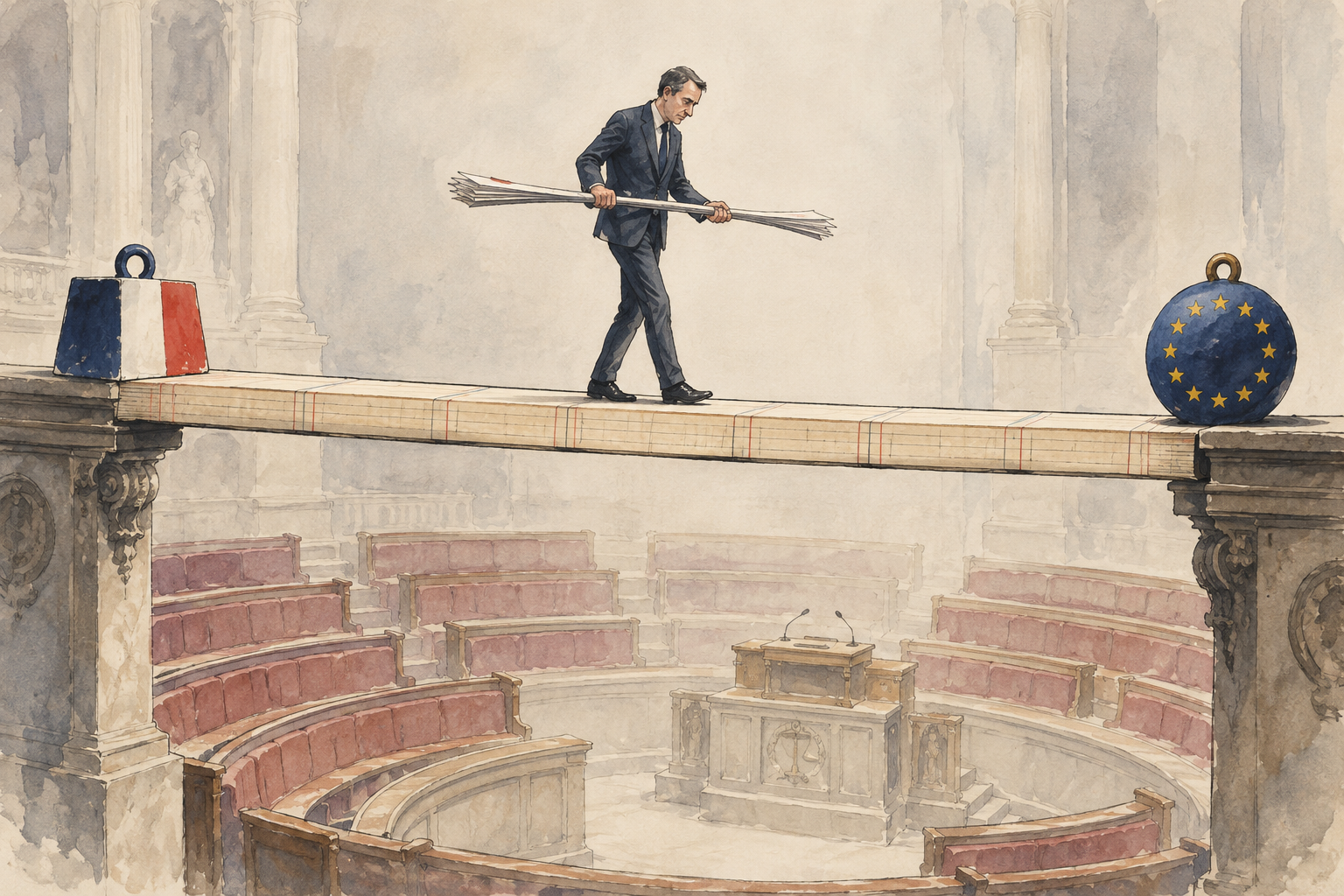
That leaves ministers trying to hold a narrow line: presenting the U-turn as proof that the government has listened, while insisting that the remaining reforms are still substantial enough to reduce delays.
The 13 October Commons stages will be the first major test of whether the revised strategy can survive scrutiny. The government has removed the measure most likely to provoke a rebellion, but the remaining package still touches three sensitive areas: imprisonment powers in magistrates’ courts, the right to elect jury trial, and the treatment of defendants from minority backgrounds.
If MPs accept the statutory review as a credible safeguard, the Bill is likely to move forward with its central architecture intact. If not, ministers could face demands for further amendments before the legislation reaches the Lords, where legal and constitutional objections to criminal justice reform often become harder to manage.
For now, the government has chosen speed and political containment over a more radical restructuring of Crown Court trials. Whether that is enough to reduce the backlog, and enough to satisfy MPs returning from recess, will be tested within days.





Comments